New Launch - India Real Estate Report 2026.

Services
Knowledge Hub
Resources
Tools

Ask Pulse Ai
©PropTech Pulse 2025, All rights reserved.


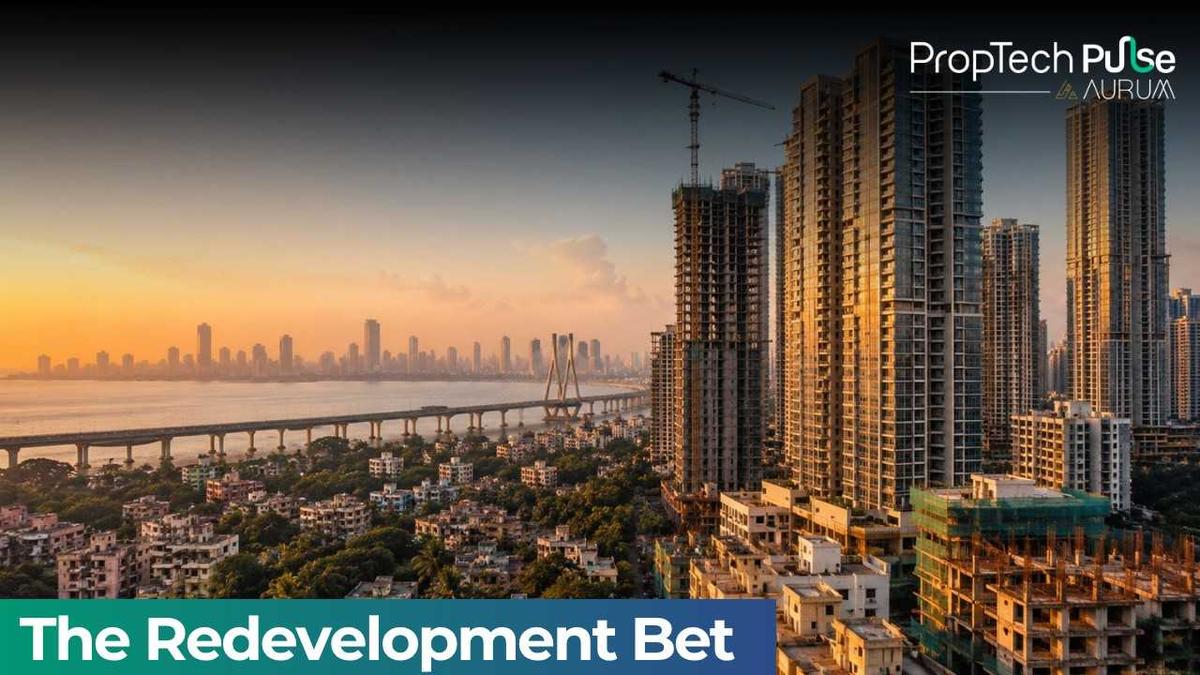
Would you buy a cramped flat today if it meant owning a much bigger one a few years from now? That's the exact bet a growing number of buyers in Mumbai and Pune are making, choosing ageing housing societies over brand-new construction, and the numbers suggest they're not alone.
The trade that's tempting so many buyers
Consider a buyer with a Rs 1 crore budget hunting for a spacious 2 BHK in Pune. A 750 sq ft apartment in his preferred locality runs Rs 1.40 crore, well past what he can spend. What he found instead was a 500 sq ft 1 BHK with a 200 sq ft balcony, priced at Rs 92 lakh, sitting in a society that had already signed a development agreement for next year.
Under that agreement, his existing flat upgrades to a 745 sq ft 2 BHK. He can also buy an extra 200 sq ft from the developer at market rate, landing him a nearly 1,000 sq ft 3 BHK for a total outlay around Rs 1.2 crore, well under the Rs 1.40 crore he'd pay for a smaller, ready flat today.
The catch is time. Possession is three to five years out. During that stretch, the developer pays monthly rent to cover temporary accommodation, which is the only thing making the wait financially bearable rather than just financially risky.
Why this makes sense in land-constrained cities
Property consultants point out this strategy works particularly well in cities like Mumbai and Pune, where buying a genuinely large apartment in an established locality is often unaffordable any other way. Redevelopment effectively allows a buyer to purchase square footage at yesterday's prices and receive it with tomorrow's specifications.
That's the upside case. It's not automatic.
What actually determines whether this pays off
Anuj Mehta, Director at Dhuleva Group, put the range in concrete terms: large-scale redevelopment projects in some of Mumbai's mature micro-markets have delivered returns of 20 to 40% across the project lifecycle, driven by better infrastructure, facilities and building features. But he was equally clear that returns depend entirely on checkable variables, the builder's financial strength and experience, the status of regulatory approvals, project timelines, and the redevelopment agreement itself.
Ram Raheja, Managing Director at S Raheja, narrows the risk down to two things worth genuinely scrutinising. First, the timeline, since these projects live and die on regulatory approval and adequate funding, and a developer with limited financial strength is far more likely to slip. Buyers should judge a developer's actual execution track record, not their pipeline promises. Second, the society's own paperwork: title, members' consent, and the development agreement. Internal disputes within a housing society are often the hidden risk nobody warns you about, and they're the hardest to untangle once you're already invested.
The numbers behind the momentum
This isn't a fringe strategy anymore. Knight Frank India data shows 229 development agreements were signed for old building redevelopment in Mumbai in 2025, up 16% from 196 in 2024. The pace has only picked up. Nearly 70 agreements, roughly 30% of 2025's full-year total, were signed in just the first 74 days of 2026. Since January 2020, 1,094 redevelopment agreements have been signed across Mumbai, unlocking approximately 432 acres of land for redevelopment citywide.
The honest read
Redevelopment bets can genuinely work, and the Pune buyer's math is real, not aspirational. But every upside story here comes wrapped in a specific, checkable condition: a financially sound developer, clean society paperwork, and a timeline you're prepared to actually wait out. Skip the homework on any of those three, and the same strategy that delivers a 40% return for one buyer can leave another one waiting years past a promised date with no larger flat and no easy way out.
Enjoyed this update? Visit PropTech Pulse for more real estate news and market insights.