New Launch - India Real Estate Report 2026.

Services
Knowledge Hub
Resources
Tools

Ask Pulse Ai
©PropTech Pulse 2025, All rights reserved.


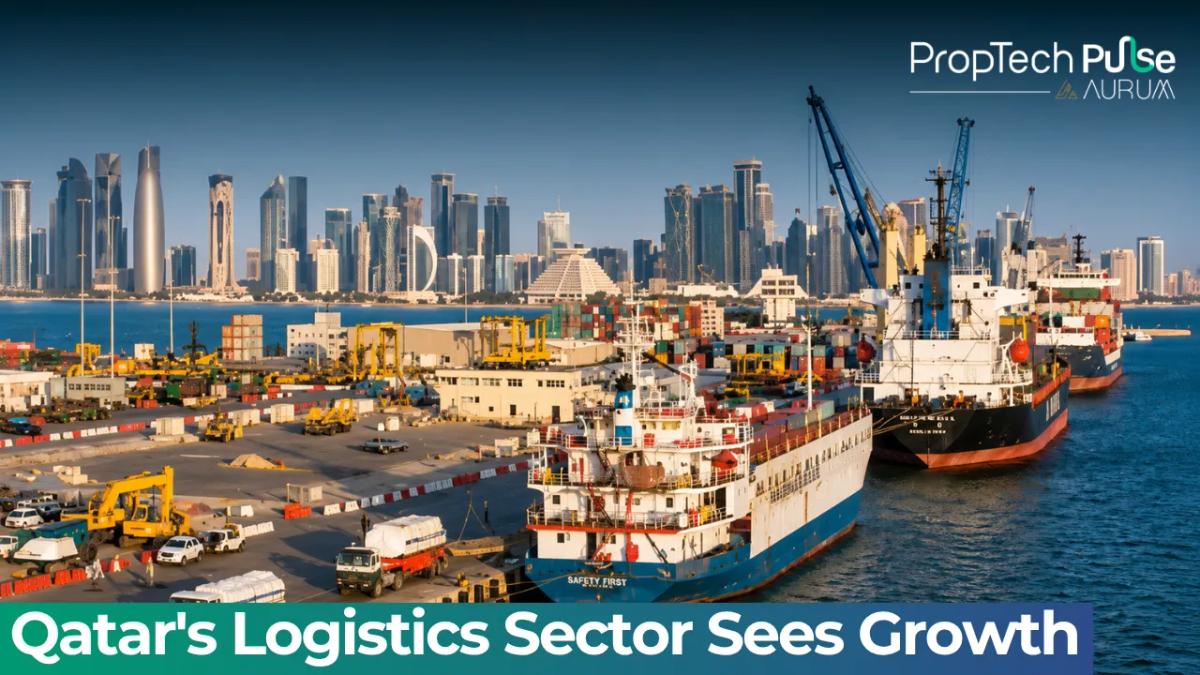
Qatar's logistics and free zones sector continues to strengthen its position as a key pillar of the country's economic diversification strategy, supported by world-class infrastructure, strategic investment incentives, and an expanding logistics market valued at more than QR7.5 billion. According to a report aired by Qatar TV, the country has invested billions of riyals in developing an integrated logistics ecosystem spanning Hamad Port, Hamad International Airport, modern road networks and specialised logistics zones, supporting the objectives of Qatar National Vision 2030.
Two Anchor Free Zones
Qatar's logistics landscape is anchored by two major free zones: Ras Bufontas, located adjacent to Hamad International Airport and Umm Alhoul, situated near Hamad Port. Their strategic locations give businesses rapid access to international markets through both air and sea transport, while offering investment advantages including 100 percent foreign ownership and streamlined business setup procedures.
- Logistics market value: QR7.5 billion+
- Key free zones: Ras Bufontas, Umm Alhoul
- Reach: ~60% of world population within an 8-hour flight
- Market access: 2 billion+ consumers within a 3,000 km radius
- Hamad Port capacity: 7 million+ containers annually
- Hamad International Airport capacity: 50 million+ passengers
Recent Investment Incentives
To strengthen sector competitiveness, authorities introduced significant investment incentives in 2025, cutting annual land rental fees in selected industrial and logistics zones by up to 50 percent. Annual rents for logistics land fell from QR20 to QR15 per square metre, while industrial land rents dropped from QR10 to QR5 per square metre. Qatar has also launched a $1 billion investment incentives programme, covering up to 40 percent of investment costs in strategic sectors including logistics, aimed at accelerating economic diversification and encouraging private sector participation.
Also Read: Hamad Port Rises to 8th Spot Globally in CPPI Rankings
Why Logistics Infrastructure Matters
Industrial affairs expert Dr. Khalid Al Buainain highlighted the fundamental role logistics plays in supporting every productive sector of the economy, stressing that efficient logistics infrastructure is essential for manufacturing, exports, imports, food security and commercial security. He explained that logistics costs covering the import and storage of raw materials, warehousing, transportation, export, and distribution can in many cases exceed manufacturing costs themselves, making effective logistics systems critical to the economic viability of industrial projects.
Hamad Port and Airport's Combined Strength
Dr. Al Buainain also underscored the importance of Hamad Port and Hamad International Airport, both designed with substantial capacity for future growth. He noted that the seamless integration between the port and airport enables efficient multimodal transportation, allowing goods arriving by sea to be re-exported by air and vice versa at competitive logistics costs strengthening Qatar's appeal as a regional distribution and re-export hub. He added that Qatar's location between East and West allows the country to receive raw materials, manufactured goods, and consumer products before re-exporting them to markets across the Gulf, the Middle East, Africa and Europe, often within four to eight hours via air.
Enjoyed this update? Visit PropTech Pulse for more real estate news, investment insights, and property market trends.


