New Launch - India Real Estate Report 2026.

Services
Knowledge Hub
Resources
Tools

Ask Pulse Ai
©PropTech Pulse 2025, All rights reserved.


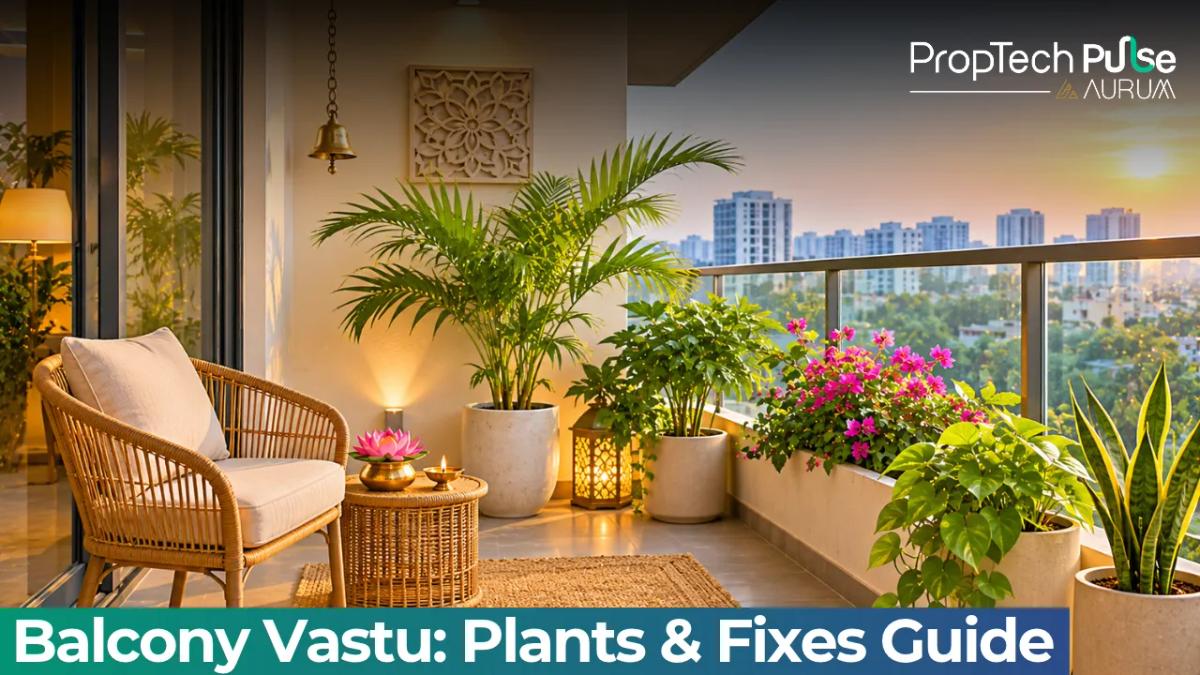
The balcony in most Indian homes channels fresh air and natural light directly into your living spaces. Traditional balcony Vastu guidelines treat this outdoor zone carefully, because your arrangement shapes overall energy flow. You did not choose the orientation your builder did. Small, reversible tweaks inside the railing typically deliver the biggest comfort improvements. Applying basic ideal balcony to room ratio in modern apartments principles prevents you from overcrowding a functional area with unnecessary decor.
Balcony direction as per Vastu
Quick answer
Vastu favours North, East and North-East balconies for maximum airflow and sunlight. South, South-West and West balconies are considered heavier zones that benefit from heavy planters, controlled shading and smart utility zoning rather than complete enclosure.
Vastu Shastra maps directional balance across a building using a grid called the Vastu Purusha Mandala. Each quadrant carries distinct elemental qualities that dictate how sunlight, wind, and movement interact with your interior rooms.
Understanding the balcony direction as per Vastu standards helps you decide whether to enhance the space or simply manage its inherent weight.
North and East balconies receive soft morning light and consistent breezes.
These orientations naturally promote mental clarity and steady airflow through adjacent bedrooms. Adding lightweight seating and low-profile planters here amplifies the calm effect without blocking passage paths.
North-East outdoor zones act as pressure valves for indoor heat buildup.
They stay cooler longer into the afternoon, making them ideal for morning yoga or reading chairs. Light wooden flooring complements this quadrant beautifully by reflecting sunrise glow inward.
West balconies capture harsh afternoon rays and carry heavier acoustic vibrations from street traffic.
They require solid anchoring along the outer perimeter to ground the intense solar load. Drying clothes here works perfectly since the evening wind usually sweeps debris away before humidity sets in.
South and South-West balconies absorb maximum heat and tend to feel physically heavy during peak summer months.
Older texts sometimes recommend sealing these areas completely, which traps stale air and kills cross-ventilation. South facing balcony Vastu fixes actually focus on strategic shading and concentrated mass near the boundaries.
Placing sturdy ceramic containers along the southern railing redirects excess warmth outward while preserving crucial airflow through the center.
Every orientation demands a different maintenance rhythm. North-facing spots dry fastest after rain but accumulate dust quickly.
West-facing rails warm metal handrails by late afternoon, requiring protective padding for bare skin contact. Matching your cleanup schedule to directional weather patterns keeps the space feeling balanced year-round.
South facing balcony Vastu fixes
A south-facing balcony absorbs intense afternoon sun. Older guides often treat this orientation as highly problematic and suggest sealing it off completely. That strategy sacrifices vital ventilation and destroys the connection to outdoor light.
You achieve better results by managing the heat and physical weight strategically.
Move heavier ceramic planters along the southern and western edges of the slab. Vastu logic dictates that concentrated mass anchors heavy energies.
Lighter items naturally float toward the centre or northern sections. Strategic shading beats sealed glass partitions. A retractable awning cuts glare while keeping air circulation wide open. These methods prove that finding a balance between structural Vastu rules and functional balcony interior design is entirely achievable without sacrificing daylight.
Material choice matters significantly in heavy-sun quadrants. Timber slats or teak pergolas create dappled shade that cools ambient temperature faster than solid aluminium louvres.
The gaps between timber boards allow hot air to rise and escape upward. Metal grilles trap heat near the ceiling and radiate it downward during evening hours.
Evening cooling routines shift the entire thermal profile of a South balcony. Opening inner windows immediately after sunset pulls trapped warmth out through the outer railing.
Placing a small oscillating fan facing inward on low speed accelerates the exchange without generating distracting noise. This simple swap reduces next-morning stuffiness by half.
Balcony plants Vastu guide
Balcony plants Vastu guidelines prioritize active growth over rare collections.
Dead foliage traps stagnant air, while dense healthy leaves filter sunlight and regulate ambient temperature effectively.
Tulsi remains the safest recommendation across nearly all regional traditions, particularly when placed near the connecting doorframe.
Flowering varieties like hibiscus or bougainvillea brighten Northern sections effectively.
Avoid mounting thorny plants like cactus near seating areas, and trim dead leaves promptly to stop poor air circulation from accumulating.
You can also look into our guide on auspicious fish placement by direction.
It explains how moving water fits into standard balcony layouts without creating damp spots.
Vine species climb neatly along trellises without demanding excessive soil volume, leaving walking paths clear for daily chores.
Soil drainage dictates long-term success more than fertilizer strength.
Heavy clay mixes suffocate roots in enclosed railing boxes, especially during humid monsoon months.
Mixing coarse sand and crushed brick chips into potting compost creates rapid water exit routes. Dry soil feels lighter to lift and shifts less wind resistance during sudden gusts.
Seasonal pruning windows align with directional energy peaks. Trim fast-growing creepers just before winter settles, when sap flow slows and wounds heal cleanly.
Remove yellowed lower leaves immediately whenever you notice brown spotting, as decaying matter releases methane traces that dull morning freshness.
Leaf shape carries subtle weighting effects in traditional texts. Broad leaves disperse wind gently and cast cool shadows.
Narrow needle-like foliage slices airflow into sharper streams that some residents find overstimulating near sleeping quarters. Choosing rounded leaf profiles creates softer movement patterns along the railing edge.
Washing machine and drying stand placement
Kitchen and utility drain stacks rarely accommodate last-minute redesigns once the concrete sets.
Plumbers route pipes vertically through central cores, which frequently forces washing machines into quadrants that feel counterintuitive.
Vastu clearly positions the Northwest as the most suitable zone for laundry equipment. The Northwest governs air currents and continuous motion, mirroring washing cycles perfectly.
You must avoid the North-East entirely. Placing heavy water machinery there disrupts the quietest corner and blocks morning light needed for meditation. Before mounting new brackets or glass enclosures, confirm whether you can legally extend my balcony or enclose it, because structural alterations require written approval before applying energetic corrections.
If plumbing limits force you toward the South-East, secure the appliance firmly to the wall bracket.
The South-East governs fire energy, so keeping the motor cool and isolated prevents friction-related stresses. Run a quick test cycle early in the morning to ensure vibration does not disturb neighbours waiting for quiet hours.
Rubber anti-vibration mats serve a dual purpose beyond hardware protection.
They absorb mechanical shaking and prevent micro-cracks in tile grout from widening over decades of spin cycles. Place the mat directly under the unit feet, not beneath the drying rack wheels. Dry racks roll freely on hard surfaces, reducing wear on plastic components.
Keeping your balcony clutter-free
Accumulated junk destroys traditional energy flow faster than any misplaced appliance.
Broken patio furniture, discarded tyres, cracked terracotta pots and stacked cardboard boxes block the sole purpose of the balcony: allowing fresh air to penetrate adjacent rooms.
Perform a rapid monthly sweep to remove anything that fails to serve a genuine purpose.
Sweep the floor bone-dry after monsoon showers or immediately after finishing laundry. Standing moisture encourages black mould and stales the atmosphere before it travels through your hallways.
Store garden shears and cleaning chemicals inside the main bedroom or a dedicated utility cupboard. Never line the boundary railing with storage bins. A clear surface instantly transforms the area into a flexible canvas, allowing you to implement foundational small-space interior design techniques that merge strict tradition with everyday convenience.
Vertical hanging baskets free floor square footage without violating walking lanes. Wire mesh pouches hold gardening gloves and spray bottles above head height.
Gravity keeps them securely mounted while keeping hands free for sweeping or rearranging pots. Check mounting hooks quarterly, because thermal expansion loosens cheap plastic anchors faster than steel ones.
Practical tip: Test your proposed arrangement before purchasing large items. Settle a medium ceramic pot in its intended corner and walk through your actual evening routine: dragging in wet bedsheets, hauling out recycling, fetching vegetables from the kitchen. If the pathway narrows or forces awkward sidestepping, slide the planter inward toward the wall immediately.
Quick summary: direction, use, and fixes
| Balcony Direction | Recommended Daily Use | Preferred Plants | Imbalance Fix |
|---|---|---|---|
| North | Meditation, yoga, light seating | Tulsi, jasmine, leafy greens | Add a small tabletop fountain or wind chimes |
| East | Breakfast spot, morning chores | Hibiscus, marigold, curry leaf bush | Keep early morning hours entirely clutter-free |
| North-East | Quiet reflection, herb nursery | Silver vine, peace lily, dwarf ornamental shrubs | Remove all heavy water machinery immediately |
| West | Drying clothes, tool storage | Neem, bamboo grass, drought-resistant succulents | Shift heavy ceramic planters to the outer railing |
| South | Evening shade, utility tasks | Aloe vera, holy basil, hardy outdoor shrubs | Install retractable shading over glass doors |
| Total guidance points applied | 5 core uses documented |
Making adjustments without demolition
You rarely need to hire contractors or disrupt your daily schedule just to restore a balcony's energy balance. Begin by clearing dead vegetation and unpacking stacked boxes until the floor is fully visible.
Slide your washing machine or drying rack toward the Northwest quadrant to align water activity with natural air movement. Position your largest flower pots firmly against the Southern or Western boundaries to ground the space.
Verify that your personal routines still flow comfortably before locking everything in place.
Booking a personalised review eliminates months of trial and error. Pulse Vastu provides a Live Vastu Check that evaluates your exact floorplan and recommends reversible, budget-friendly changes matched to your flat's precise orientation, delivering practical clarity without forcing unnecessary construction.
Walk the perimeter twice at different times of day. Morning walks reveal where dew accumulates and where shadows linger longest.
Evening walks show where streetlights create glare or where neighbour lights spill inward uncomfortably. Mark problem zones with removable tape before moving furniture permanently.
Document your final layout with phone photos. Seasonal changes shift plant heights and shadow angles unpredictably.
Having reference images helps you spot minor drifts before they compound into major flow disruptions. Small mid-year tweaks keep the space aligned without requiring full reorganisations later.
Frequently asked questions
Which balcony direction brings the most positive energy according to Vastu?
The North, East and North-East orientations consistently rank highest in traditional architectural texts. They capture gentle morning breezes and diffuse daylight, creating an airy atmosphere that improves cross-ventilation throughout adjacent living spaces. Even if your developer assigned a South or West balcony, anchoring heavy objects and shifting utility zones usually restores comfortable airflow.
Can we keep a washing machine on the balcony as per Vastu?
Yes, provided you locate the appliance squarely in the Northwest quadrant, which governs movement and airflow patterns. The South-East functions as a reliable secondary option when gravity drainage paths limit your options. Never position vibrating water machinery in the North-East corner, as this disrupts the calmest portion of the flat and blocks natural morning illumination from reaching interior rooms.
Which plants should be kept on the balcony as per Vastu?
Vibrant, well-tended foliage holds far more importance than collecting rare botanical specimens. Tulsi remains the safest recommendation across nearly all regional traditions, particularly when placed near the connecting door. Flowering varieties like hibiscus or bougainvillea brighten Northern sections effectively. Avoid mounting thorny plants like cactus near seating areas, and trim dead leaves promptly to stop poor air circulation from accumulating.
Is a south facing balcony bad as per Vastu?
It carries fire energy and absorbs intense afternoon heat, which explains why tradition assigns solid mass to anchor that zone. You manage solar load effortlessly with retractable awnings or wooden trellises, position sturdy ceramic pots along the southern boundary, and leave the central walking area open. You preserve valuable ventilation and daylight without altering the builder's original structure.
How to improve Vastu for a balcony with heavy western sun?
Stand a tall, durable drying rack or cluster broad-leafed outdoor shrubs in the Western segment to absorb excess solar intensity. Slide lightweight chairs and meditation mats toward the Northern boundary where ambient temperatures remain significantly cooler. Guarantee the floor dries rapidly after evening rainfall, because standing water magnifies harsh rays and attracts insects that disrupt household peace.
Enjoyed this blog article? Visit PropTech Pulse for more interesting blogs.

Ask Pulse Ai anything about real estate

Unlock the Latest in Real Estate
News, Infographics, Blogs & More! Delivered to your inbox.

