New Launch - India Real Estate Report 2026.

Services
Knowledge Hub
Resources
Tools

Ask Pulse Ai
©PropTech Pulse 2025, All rights reserved.


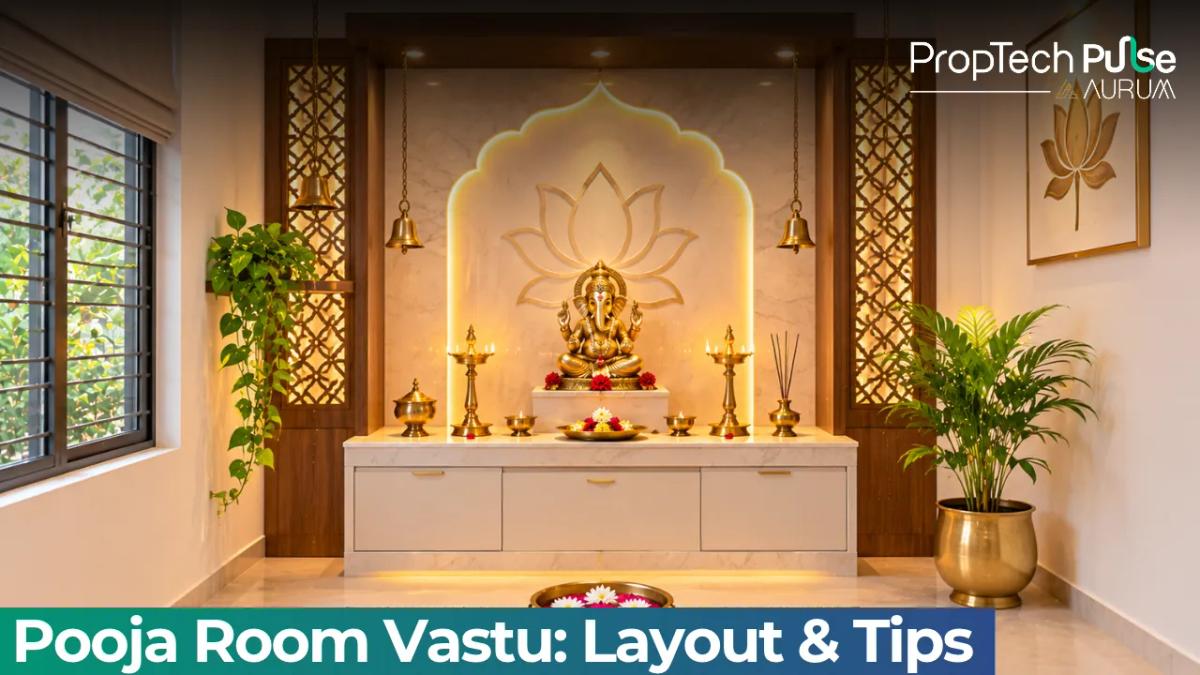
Setting up a pooja space in a modern Indian home rarely requires shifting load-bearing walls or sacrificing precious square footage.
You can align your spiritual corner with tradition while working around the practical limits of a high-rise flat.
The core of pooja room vastu rests on simple directional logic rather than complex construction. This simplicity makes it surprisingly adaptable to apartments.
Here is how to place your mandir correctly, handle unavoidable builder layouts, and keep the energy of the room aligned without turning your living room into a construction site.
The ideal spot for a pooja room according to Vastu
Quick answer
The most auspicious location for a pooja room is the North-East corner of your home. In this space, idols should ideally face West so that you face East while praying. If the North-East is physically unavailable due to modern apartment layouts, the next best option is an East-facing wall or a dedicated cabinet placed on the North wall.
Why the North-East (Ishan Kon) is preferred
Vastu assigns the North-East quadrant, known as Ishan Kon, to the deity of creation and the element of water.
It is traditionally the first part of the house to catch the morning sun. Natural light keeps the space bright and energetically clean.
This corner usually feels the quietest spot in the apartment. It stays away from main door noise and heavy living room traffic.
Even in compact layouts, preserving the North-East corner for a prayer space signals a clear boundary between daily chores and focused worship.
Balancing spiritual needs with modern floorplans takes careful planning. Reading through detailed pooja room design for home ideas layouts and cost gives practical visual references before you book a carpenter.
Mandir direction in flats: Which way should idols face?
Mandir direction in flats follows strict geometric rules. The orientation of your idols determines how you sit while praying. Place them so they face West. You will sit on the East side facing the rising sun.
| Rule | Best Practice | Acceptable Compromise | Strictly Avoid |
|---|---|---|---|
| Location | North-East corner | East wall or North-West corner | South-West corner or under stairs |
| Idol Face | Idols face West (devotee faces East) | Idols face South (devotee faces North) | Idols face North (devotee faces South) |
| Height | Chest level of a seated person | Raised platform with accessible seat | Placed on the floor or above head height |
| Kitchen Setup | North-East corner of the kitchen | North side of the kitchen | Adjacent to the sink or below the stove |
| Always check local builder plans first before committing to a design. |
An alternative that many households use successfully involves placing the idols to face South. In this setup, you sit on the North side and pray towards the South.
While less common than the East-West axis, this arrangement is completely acceptable in Vastu, particularly in larger homes where the main living space flows differently.
Watch out for this: Never place idols so they face North. When gods face North, you face South while praying. This breaks traditional morning energy flow and creates an uncomfortable posture for daily rituals.
Pooja room vastu placement in a flat or small apartment
Pooja room vastu for small apartments demands compromise. Modern builders rarely carve out a dedicated puja room in a two-bedroom apartment.
You are often looking at fitting a mandir into a hallway alcove, beside a television unit, or mounted directly onto a wall. Successful pooja unit placement relies on prioritising the correct zone first, then accepting a smaller footprint that still respects the cardinal directions.
Finding the North-East in a compact layout
If your builder has placed the North-East corner on a bathroom or a utility balcony, do not force the pooja into that wet zone.
Vastu is clear that moisture and toilet odors clash with prayer spaces. Instead, shift your focus to the adjacent East wall or the primary North wall.
A wall-mounted wooden niche works exceptionally well in these scenarios because it takes up zero floor space. You can position a small altar shelf directly over a sofa console, ensuring the base of the unit sits comfortably away from the ground.
Planning your layout alongside religious alignment takes care. Picking up a guide on interior design ideas for hall layout colours and budget helps coordinate mandir wood finishes with your wider furniture scheme.
Wall-mounted units, cabinets, and proper height
Regardless of the mounting method, physical height dictates how the space feels. Idols should rest at roughly the chest level of a person sitting cross-legged on the floor.
In any pooja room vastu checklist, height comes early. This prevents you from craning your neck upward, which causes strain during prolonged evening prayers.
| Apartment Facing | Where the North-East Falls | Practical Mandir Fix |
|---|---|---|
| Main door opens East | Right front corner | Wall-mounted niche on the East wall or closed cabinet in the NE zone |
| Main door opens West | Left front corner | Place a low-height altar on the North wall near the entrance |
| Main door opens North | Front right corner | Utilise the balcony area if enclosed, or set up a portable shrine on the North wall |
| Main door opens South | Front left corner | Move the altar to the East wall immediately inside the foyer for better energy flow |
Flat-pack wooden shrines sold by major furniture retailers often come with adjustable shelves that hit this sweet spot perfectly.
If your apartment forces the pooja space into a narrow corridor, consider keeping the doors of your cabinet closed when you are not actively offering prayers.
A closed door acts as a visual filter, keeping the daily clutter of the hallway hidden from your spiritual space.
Important pooja room vastu dos and don'ts
Once you have picked a spot, basic structural taboos are the fastest way to avoid energetic friction in your home.
Never build under a staircase. The area beneath your stairs carries heavy gravitational weight and constant movement.
Placing a temple directly beneath those steps creates a pressure effect that turns a sacred space into a transit zone.
If your staircase cuts through the North-East entirely, relocate your mandir to the closest available East-facing wall outside the stairwell radius.
Avoid sharing a direct wall with a bathroom or toilet. If your neighbor's plumbing runs behind your mandir wall, it is usually fine.
Vastu primarily concerns the active water usage on your own side of the shared boundary. However, do not let the toilet door open directly into your prayer space.
Practical remedies when the mandir is in the wrong place
Sometimes you inherit a home where the pooja room ends up in the South-West corner simply because the developer maximised living room square footage. Moving a temple after possession feels stressful, but minor shifts can resolve the issue.
You can place a red or maroon colored backdrop behind your idols to symbolize the Earth element and ground the misplaced South-West location.
Alternatively, swapping a glass-fronted cabinet for a solid wood door helps visually separate the area from the rest of the living room.
Need smaller changes like picking auspicious plants or positioning household symbols? Check our guide on vastu fish for home direction species placement rules. It clarifies the layout quickly so you skip a full structural audit.
Pooja room in kitchen vastu: Exceptions and safety
Keeping a prayer space in the kitchen falls under pooja room in kitchen vastu exceptions.
It happens often in older homes where the only unused corner happens to be next to the gas burner. Fire represents transformation, but cooking flames clash violently with the quiet reverence required for temple worship.
If you must place a mandir in your kitchen, the absolute rule is to push it into the North-East corner of the kitchen itself, not the overall house.
This tiny pocket is usually cooler and further away from heavy chopping blocks and exhaust fans. Crucially, maintain clear distance between your shrine and both the cooking stove and the water sink. Do not cook or wash dishes directly in front of your idols.
When decorating a kitchen altar, lean toward warmer earth tones like terracotta red, brown, or silver rather than cool blues. A fresh coat of paint improves the final look. Pair your shrine color with kitchen decoration ideas colours tiles and lighting tips to match your existing cabinetry.
You also need to be selective about which deities reside in a fire-adjacent zone. Traditionally, avoid placing Lord Shiva or a Shivling directly in the kitchen, as the smoke and heat are considered disrespectful to that specific form.
Opt instead for Maa Annapurna (goddess of nourishment), Lord Ganesha (remover of obstacles), or Bhagwan Srikrishna. These figures harmonize well with the domestic rhythm of food preparation without causing ritual conflict.
Making the final choice for your home
Your daily routine dictates whether a strict textbook approach will actually work. Full-time jobs rarely allow textbook renovations.
Run a quick self-assessment using the Pulse Vastu Live Vastu Check tool to see how your actual floorplan aligns with traditional rules.
Start by picking your strongest available corner, such as the North-East or East. Build your mandir at waist-to-chest height.
Face the idols West. Close the cabinet doors when not in use. That simple sequence covers ninety percent of modern apartment requirements.
Frequently asked questions
Where to place a mandir in a flat according to Vastu?
The ideal spot remains the North-East corner, known as Ishan Kon, because it catches the morning sun and stays the calmest in the apartment. If builders have allocated that quadrant to a bathroom or utility area, shift your pooja unit to the nearest East wall or mount a dedicated niche on the North wall to preserve the proper directional alignment.
Can we keep a pooja room in the kitchen?
It is possible to place a temple in the kitchen if absolutely necessary, but you must push it into the North-East corner specifically within the kitchen boundaries. Maintain a clear physical gap between your idols and both the cooking flame and the water sink, as mixing divine worship zones with heavy fire and sewage activity violates core Vastu safety protocols.
Which direction should the idols face during prayers?
Arranging your deities so they face West allows you to sit comfortably on the East side and look towards the rising sun, establishing a highly recommended morning routine. If your room geometry forces a different layout, positioning the idols to face South while you pray towards the North is a fully acceptable alternative that maintains energetic balance.
Is the South-West direction good for a pooja room?
Vastu strictly advises against placing a temple in the South-West zone because that quadrant governs stability, weight, and the Earth element. A prayer space generates upward, lighter energy, which fundamentally clashes with the heavy foundational duties of the South-West. Relocating your mandir to either the North or East side will prevent energetic friction inside your home.
What height should the idols be kept at?
Your idols should rest at approximately chest height relative to someone sitting cross-legged on the floor, which means you do not strain your neck while bowing down. Avoid placing shrines too close to the ground or hanging them excessively high above your head, as both extremes create physical discomfort during extended daily worship sessions.
Enjoyed this blog article? Visit PropTech Pulse for more interesting blogs.

Ask Pulse Ai anything about real estate

Unlock the Latest in Real Estate
News, Infographics, Blogs & More! Delivered to your inbox.

