New Launch - India Real Estate Report 2026.

Services
Knowledge Hub
Resources
Tools

Ask Pulse Ai
©PropTech Pulse 2025, All rights reserved.


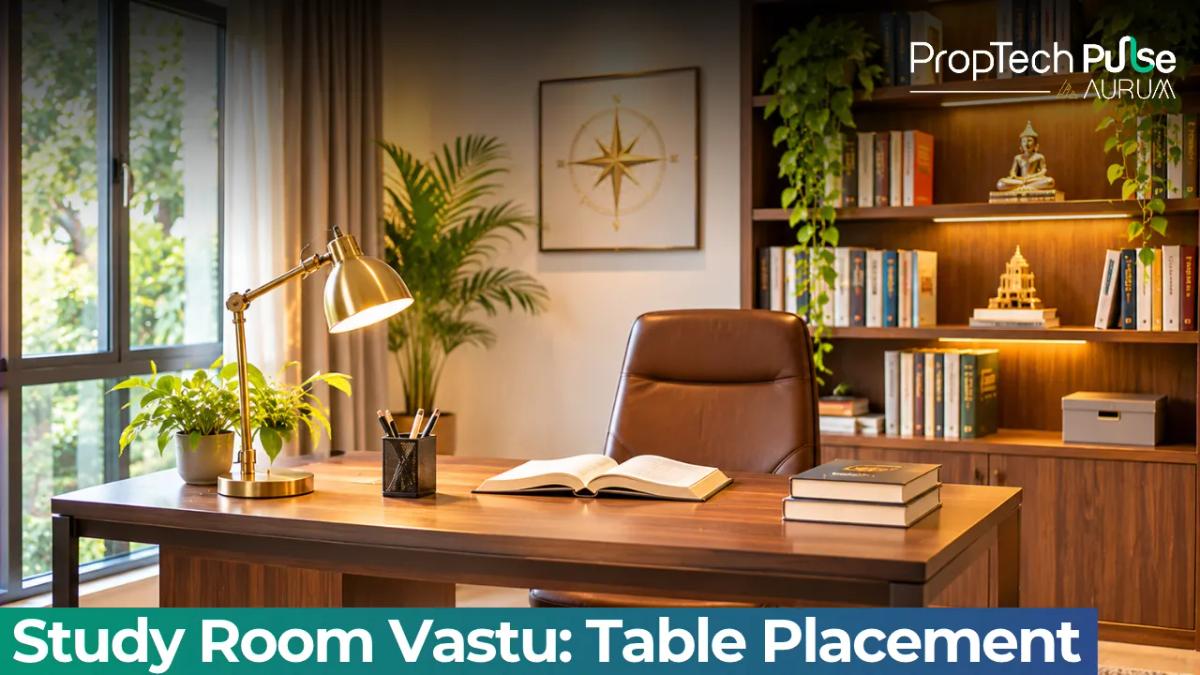
Studying next to a blank partition drains attention quickly. Traditional Indian home design addresses this through careful spatial planning.
Modern apartments rarely provide dedicated floor space, and moving load-bearing walls is simply not an option. However, strategic furniture shifts, facing directions, and thoughtful paint choices realign the room for better focus.
Study Room Vastu: Where to Place the Learning Zone
Quick answer
The optimal zone for a study room as per Vastu Shastra is the Northeast corner of the house. A student should ideally face East or North while sitting at the desk. Avoid placing the desk directly under a structural beam or against a shared wall with a bathroom. Heavy bookshelves belong on the South or West walls, keeping the Northeast side entirely clear and open.
The Northeast quadrant holds the highest frequency of positive energy in a home. In traditional terms, this zone connects to Guru, the planet linked to wisdom and patience.
When a study room Vastu layout occupies this corner, the environment stays calm and the mind absorbs information faster. Beyond just swapping furniture, applying proven study room Vastu techniques ensures the setup supports long hours of reading without causing eye strain.
East sits just below the Northeast, bringing morning sunlight that naturally wakes up brain circuits. North aligns with magnetic energy, reducing mental clutter during revision hours.
Real estate buyers often overlook spatial harmony when prioritising carpet area or connectivity. Integrating basic principles early on, alongside professional Vastu tips for home entrances, saves money later. Rearranging heavy furniture costs less than knocking down masonry.
What happens if the floorplan forces the desk into a less-than-ideal corner?
Many compact flats reserve the West or Southwest quarters for bedrooms because those sides catch cooler afternoon light.
If you must place the learning zone in the Southwest, lay a small red or maroon rug directly beneath the chair. The grounding colour neutralises the earth-heavy energy of the quadrant and restores stability to the sitting position.
Do not leave the desk hovering directly over a concrete slab joint without an insulating layer. Vibration disrupts focus.
Best Study Directions for Students: Which Way Should You Face?
Directionality matters most when the student sits down. The body acts as a conductor, picking up magnetic and solar inputs based on which way the face points.
Sitting upright towards the East captures rising solar energy, which sharpens memory retention. North draws strong magnetic fields that aid concentration and logical reasoning.
Avoid facing South completely. The opposing magnetic pull tends to induce restlessness, short-term memory lapses, and unexpected fatigue during long study sessions.
Different academic streams respond differently to specific alignments. Matching the face direction to the subject matter reduces friction and makes difficult concepts easier to grasp.
- Science, Mathematics, and Computer Studies: Face West. The western zone carries Mars energy, supporting analytical thinking, experimentation, and hard data processing.
- Arts, Humanities, and Literature: Face East. Sun-aligned rays boost creative flow and help absorb abstract subjects quickly.
- Law, Administration, and UPSC Preparation: Face Southeast. The fire zone strengthens argumentation, decision-making speed, and strategic planning skills.
- Finance, Banking, and Commerce: Face North. This direction governs wealth accumulation and helps students memorise numerical formats and tax structures effortlessly.
How to Set Up the Study Room Vastu Layout
Achieving the optimal study room Vastu setup goes beyond the four cardinal points. The physical shape of the desk, the clearance behind the chair, and wall proximity all dictate how comfortably a student settles in for hours.
A cramped or unstable setup drains attention faster than a wrong facing direction ever could.
Shape and material matter. A square or perfectly rectangular tabletop works best. It provides equal support on all sides and prevents visual distortion.
Stay away from triangular desks or circular ones with rounded edges. Both shapes scatter energy and cause distractions. The desk should feature a solid wood base and a firm, opaque top surface.
Glass tops look sleek but transmit floor vibrations and temperature fluctuations. This keeps the brain on low-level alert instead of letting it relax into deep study.
The gap behind the chair is non-negotiable. Push the table right up against a wall or leave exactly six to ten centimetres of breathing space between the backrest and the wall.
A large gap allows too much cold airflow, distracting the spine. Zero clearance blocks the passage of natural energy. A slight gap strikes the ideal balance.
Overhead beams destroy focus. Never position the study table directly underneath a prominent structural beam.
It exerts invisible pressure on the neck and shoulders. This leads to chronic headaches and sleep disturbances.
If the architect already placed a beam across the room, shift the desk sideways until it falls clear of the shadow.
Alternatively, hang a delicate crystal or a gentle wind chime from the beam above the student's shoulder zone. Ensure it swings freely without hitting anything.
Windows demand careful handling. Bright midday sun streaming straight past a laptop screen creates blinding reflections that ruin reading efficiency.
Angle the desk perpendicular to the window instead of parallel to it. Natural light should fall gently onto the left-hand page or keyboard, never directly into the eyes.
Use sheer curtains or frosted privacy film to soften harsh beams.
Windows, Beams, and Shared Walls
Apartment living shares more than just airspace.
Study desks positioned against walls that contain a bathroom plumbing stack or a geyser can cause constant noise interruption and damp-related odours.
Keep the learning zone as far as possible from water-heavy zones in adjacent flats.
If a shared wall is unavoidable, line the opposite side of that wall with thick fabric panels or a high-density acoustic board to deaden sound.
Colours, Lighting, and Storage Rules
Mastering study room Vastu extends further than magnetic alignments; proper paint selection and shelf placement cement a stable atmosphere. Visual pollution causes the same level of mental fatigue as verbal interruptions.
Bookshelf positioning follows a strict weight distribution rule. All heavy shelves must reside on the South or West walls.
These quadrants carry stabilising earth and air elements that handle dense objects without creating instability.
Conversely, the Northeast and East corners should remain completely void of tall furniture. An open space here allows fresh breezes and morning sun to flow uninterrupted through the room.
Stacking boxes or files in the Northeast corner weighs down the wisdom sector of the home.
Wall colours set the baseline mood. Soft pastel green signals growth, renewal, and steady progress.
Pale yellow radiates optimism and actively sharpens cognitive speed. Pure white reflects maximum daylight and prevents the room from feeling enclosed, especially useful for small study nooks tucked inside bedrooms.
Skip dark greys, stark blacks, or deep reds on the eastern and northern walls. These colours absorb energy and push the student toward lethargy.
Lighting setups need two separate configurations.
Daytime study relies entirely on diffused natural light supplemented by warm yellow or soft white ambient lamps.
Evening exam preparation demands brighter, cooler tones to suppress melatonin and maintain alertness.
LED strip lights mounted under the upper shelving provide uniform illumination without casting shadows over notebooks. Ensure no bare bulb shines directly into the student's upward-facing eyes.
Critical check: Before painting or drilling shelves into a rented flat, secure written permission from the landlord. Damaging plasterwork or violating lease terms creates legal hurdles far heavier than any misplaced bookshelf ever could.
Bedrooms and Layout Constraints
In smaller homes, integrating a proper workspace means combining activities. Many families treat a bedroom as both a sleeping pod and a classroom.
Blending these two functions requires strict separation.
Sleep zones promote relaxation and hormone recovery, while study zones demand wakefulness.
Use room dividers, heavy drapes, or a purpose-built wooden console to visually carve the bedroom in half.
Never allow textbooks to pile up on the mattress or bedside drawers. Clutter near the pillow interferes with dream cycles and makes waking up feel sluggish.
For deeper insights on optimising limited floorplans, review our guide on 1 BHK interior design ideas to see how single-room setups manage multi-function zones efficiently.
Kids Room Vastu: Study Tips for Children Bedrooms and Shared Spaces
Focusing on kids room vastu adds another layer of complexity when siblings share a confined footprint.
Balancing individual needs while respecting collective boundaries prevents daily squabbles and ensures each child gets the mental space they require.
Children bedroom vastu principles scale perfectly into shared accommodations if the zoning remains intentional.
Shared desk layouts thrive on symmetry. Place two identical square desks side-by-side facing the same wall.
Give each child an equal amount of horizontal space, ideally nine hundred millimetres per person, and assign opposite cardinal directions if the room width permits.
One faces East, the other faces West. Symmetrical arrangements teach fairness early and remove territorial disputes over better positions.
Sleeping orientation overrides study orientation. The child's head while resting must point South or West.
Feet should never point directly toward the bedroom door, a placement known as the 'death pose' in traditional texts.
Raise the bed frame using sturdy legs so air circulates cleanly underneath the mattress.
Store unused toys and games exclusively on the West side of the closet or shelf unit.
Keeping playthings away from the East quadrant preserves the morning wake-up zone free from debris.
Electronics warrant special caution. Tablets, gaming consoles, and charging cables create electromagnetic interference during overnight hours.
Restrict tech devices to a designated cabinet on the Southwest side, far from the pillow area.
A quiet sleeping quarter sets the biological clock for sharper mornings ahead.
If the apartment layout restricts basic placements, advanced analysis can uncover hidden solutions.
Services like a Live Vastu Check map customised corrections specifically to unique floor plans, bypassing generic advice that rarely fits actual buildings.
For broader perspective on how ancient architecture guides contemporary living, explore articles connecting real estate development with traditional spatial science.
Before You Move the Desk
Consistent application of study room Vastu produces subtle cumulative effects. They do not fix broken study habits overnight.
Once the furniture settles into the suggested zones, test the arrangement for fourteen days.
Track whether late-night revision becomes easier, whether anxiety levels drop, and whether sleep quality improves.
If the new direction creates awkward reaching distances or triggers knee bumps, rotate the chair ninety degrees and compensate by shifting the bookshelf one metre along the perimeter wall.
Balance always wins over rigid dogma.
Small tweaks compound into lasting discipline.
Clear the clutter, angle the desk, tune the lighting, and let the room work quietly in the background while the student does the heavy lifting.
Frequently asked questions
Which direction should a study table face?
A student should ideally face either East or North while seated at the desk. East captures early solar energy that boosts memory retention and visual clarity. North aligns with magnetic currents that strengthen logical reasoning and calm nerves during long reading sessions. Southward seating creates magnetic opposition, often resulting in restlessness, frequent mistakes, and sudden fatigue that interrupts focused study periods.
Where should the study room be located in a house?
The Northeast corner represents the highest wisdom zone in traditional architecture, making it the premier location for a dedicated learning room. East sits directly below the Northeast, welcoming healthy daylight that activates brain circuits. When floorplan limits force the room into the Southwest, place a grounded red rug beneath the chair. This simple step neutralises the heavy earth influence and restores mental stability during long exam prep.
Can we keep a study table inside a children's bedroom?
Yes, merging sleep and study zones works effectively in compact apartments, provided the areas stay visually separated. Install a solid divider, heavy curtain, or room-height wooden cabinet to split the space physically. Never store loose textbooks or active homework materials on the mattress or bedside drawers. Clutter near the pillow interferes with dream cycles and triggers lingering anxiety that makes morning wake-ups unnecessarily difficult and stressful.
What colours suit a study room as per Vastu?
Soft pastel green encourages steady growth and helps process complex diagrams easily. Pale yellow radiates optimism and actively sharpens cognitive speed during intensive math drills. Clean white walls maximize daylight reflection, preventing tiny study niches from feeling cramped or suffocating. Avoid deep greys, pitch black, or intense crimson on eastern walls, because those heavy tones absorb valuable energy and push young minds toward unwanted lethargy.
Are there specific Vastu rules for shared study spaces?
Symmetry eliminates conflict when multiple children occupy one room. Set up identical square desks side-by-side with equal horizontal spacing, ideally nine hundred millimetres per person. Assign opposite compass directions whenever the room width allows, forcing one student to face East while the other faces West. This balanced approach removes territorial arguments, guarantees fair access to morning light, and teaches cooperative behaviour long before adulthood arrives.
Sources
- India National Portal: Building safety and fire code guidelines referenced for residential layout modifications (accessed October 2026)
Enjoyed this blog article? Visit PropTech Pulse for more interesting blogs.



Ask Pulse Ai anything about real estate

Unlock the Latest in Real Estate
News, Infographics, Blogs & More! Delivered to your inbox.

