New Launch - India Real Estate Report 2026.

Services
Knowledge Hub
Resources
Tools

Ask Pulse Ai
©PropTech Pulse 2025, All rights reserved.


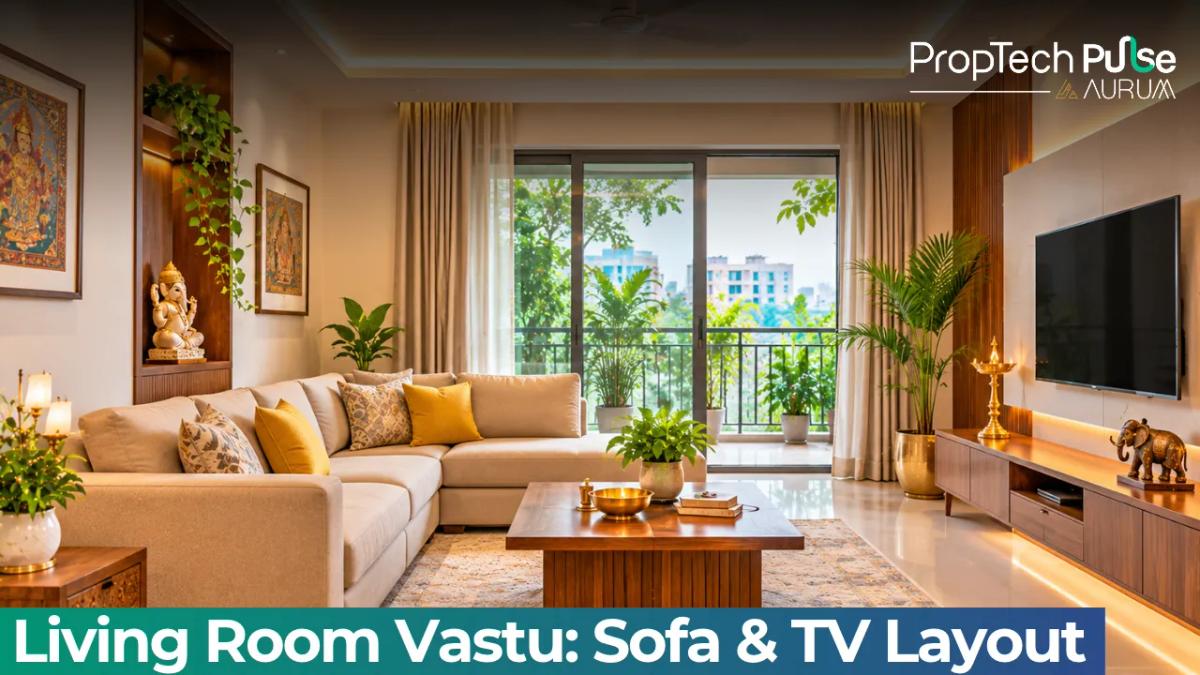
If you want to improve living room vastu in a new home, place the main sofa against the South or West wall. Leave the North and East sides completely free. A well arranged hall vastu for flat spaces creates better air circulation.
Builders often limit layouts, but small tweaks help. Rotating the TV towards the South East works wonders. Keeping a clear path near the entrance beats a full renovation.
This guide walks you through practical steps to align your living area. You can follow these traditional guidelines without structural changes.
Living Room Layout Vastu: Preferred Zones and Orientation
Quick answer
Align the main seating along the South or West wall, reserve the North and East for movement and light, and avoid cluttering the centre of the room.
Traditional texts view the North, East and North-East quadrants as highly receptive. Morning sunlight streams through eastern walls, washing the whole room in bright, natural light.
Keep those zones open. Air moves freely. The West side handles secondary seating or study nooks quite well.
Western exposure brings intense afternoon heat; darker cabinetry absorbs it without adding clutter.
The South-West zone carries a stabilising quality. Pile heavy items incorrectly and airflow stalls instantly. Mastering your living room layout vastu means balancing sightlines over blind rule-following.
To ensure proper orientation alongside traditional principles, refer to our overview on Vastu Shastra in real estate.
| Zone | Suitability | Why |
|---|---|---|
| North, East and North-East | Ideal | Receives maximum morning light and maintains open air currents. |
| West | Acceptable | Provides grounding presence; handles heavier seating and built-ins efficiently. |
| South-West | Discouraged for main seating | Bulkiness can restrict natural ventilation and slow room energy. |
| North-West | Tolerable | Cool wind entry zone; functional unless pathways get narrowed. |
Sofa Direction as Per Vastu: Weight, Shape and Circulation
The sofa anchors the room. Everything else follows its lead. Place the main seating against the South or West wall. Face North or East when seated. Practitioners agree on this every time.
Clear pathways are non-negotiable in compact flats. Keep at least three feet of walking space from the front door. Never jam furniture against the jamb.
Most guides ignore weight distribution. Large sections go South or West. Light armchairs shift North or East.
Air travels freely under the base, so leave two inches of clearance. Dust stays out. Dampness never lingers.
Weight balance: Keep the heavy side on the South or West, and place lighter chairs on the North or East.
Avoid hanging heavy fixtures directly above the seating. Structural pressure translates into mental pressure. People subconsciously brace themselves against visual stressors.
Hall Vastu for Flat: Layout Tips for Compact Spaces
Fixed walls restrict apartment layouts, yet hall vastu for flat interiors still pays off. Start by clearing the exact centre.
Traditional texts label this middle point the Brahmasthan. It usually drops right in front of balcony sliders. Leave it completely bare.
Toss the glass coffee table from the centre. Blocking that zone chokes natural convergence. Carve a smooth circular path around the edges instead.
Footwear storage causes constant headaches. Line shoe racks against the West or South-West walls. Keep muddy boots far from the North-East threshold. Tight footprints benefit from an L-shaped sofa.
The shape wraps corners neatly. A low console divides zones visually if you need separation.
TV Placement Vastu: Fire Element and Screen Height
TVs broadcast heat and harsh digital glow, placing them squarely in the fire element category. The South-East corner naturally hosts this sector. Load-bearing columns often block that exact spot though.
Structural limits make proper TV placement vastu impossible sometimes. Switch to the North or East walls instead. Both carry balanced energy. The North-West wall demands avoidance.
That quadrant governs restless movement, clashing with a stationary TV unit. Mounting height impacts comfort directly. Line the screen center with your seated eyes. Higher mounts ruin neck posture. Hide cables behind slim wood panels for a clean finish. Extending these cable-free ideas elsewhere? Read our guide on open kitchen partitions.
Colours, Lighting and Decor for Positive Flow
Paint dictates the room's mood. Cream, beige and pale grey form a reflective base, bouncing daylight without sensory overload. Coat North and East walls in cool washes.
Terracotta and muted browns suit the heavier West walls perfectly. Matte finishes kill midday glare. Build a layered lighting approach. Recessed downlights wash ceilings evenly while focused floor lamps carve out reading spots. An existing false ceiling design easily conceals dated fixtures, lowering visual noise through a uniform drop.
Position mirrors on North or East walls to capture fresh window light. Tilt them deliberately toward bright art pieces. Leafy plants supply steady vitality. Peace lilies and bamboo thrive indoors; prickly succulents belong drying out on the balcony.
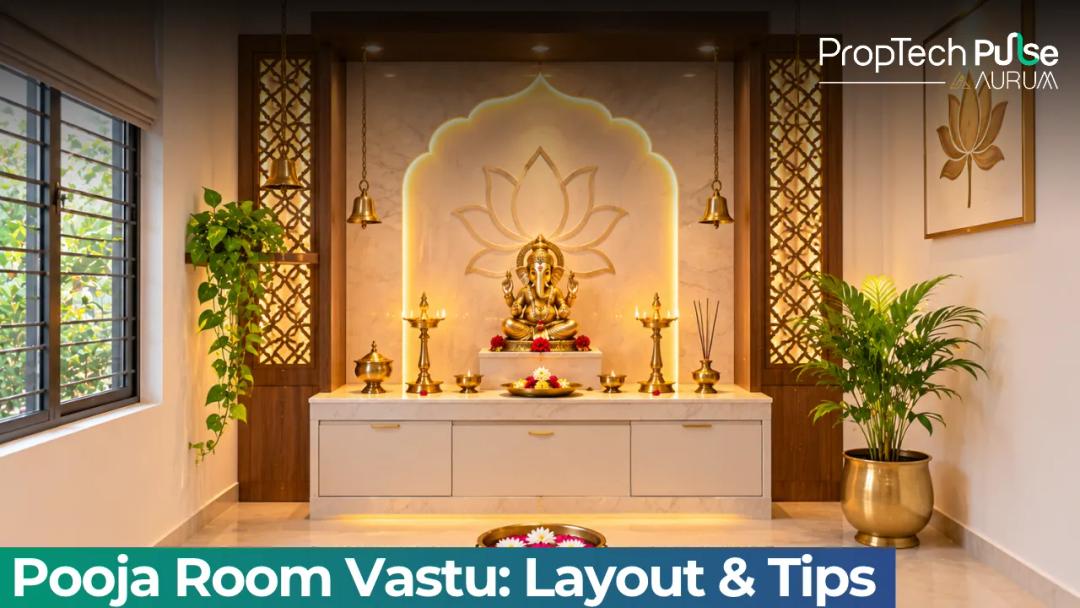
Quiet tabletop fountains add gentle auditory relief. Reserve North and North-East spots exclusively for water. Scrub reservoirs weekly to stop stagnation. Running a dedicated pooja room design nearby adds another layer of calm. Distinct zones keep prayer and leisure separate.
Simple Remedies When the Layout Isn't Perfect
Tower blocks rarely align with cardinal lines. Buyers inherit rigid floorplans daily. Navigating a mismatched layout requires no panic spending. Burnt-out bulbs breed stagnation. Replace them immediately for steady illumination.
Anchor drifting energy with strategic weight. A solid granite stone drops into the South-West corner to ground the space instantly. Thick floor rugs mark invisible boundaries in rental units.
Comfort trumps rigid historical rules. Shifting a heavy sofa could wreck your viewing angle permanently. Park large furniture exactly where it functions best.
A relaxed household generates far stronger energy than an optimally aligned, misery-filled sitting room. Directional anxiety ruining your rest? Book a live Vastu check to map constraints and secure renter-friendly adjustments tailored to your exact build.
Frequently asked questions
Where should the sofa be placed in the living room?
Most traditional guidelines recommend positioning the sofa against the South or West wall. Sit on the sofa with your back resting firmly against the wall, ensuring that when you look forward, you face either the North or East. This arrangement provides psychological stability and keeps the lighter, more dynamic energy of the North and East directions unobstructed.
What is the best direction for placing a television?
Television units generate heat and screen glare, so they align best with the fire element located in the South-East corner. If structural columns block that area, which is common in high-rises, the North or East walls serve as excellent functional alternatives. Always mount the screen so the center aligns exactly with your seated eye level.
Can I keep heavy furniture in the North-East corner?
No. The North-East zone represents the heaviest entry of morning sunlight and fresh air, making it the most sensitive part of the house. Heavy cupboards, wardrobes or bulky sofas restrict airflow and visual openness in this quadrant. Reserve this area for light decor, prayer spaces or thin windows that invite brightness.
How do I fix negative energy if my living room faces West?
You don't need expensive rituals or complete renovations to address a West-facing layout. Simply place a few medium-weight decorative stones or a sturdy, grounded wooden table in the South-West corner of the room to stabilize the space. Keep curtains sheer rather than dark to maximize the abundant daylight the West receives.
What colour palette works best for a living room?
Soft neutrals like cream, ivory and pale grey act as a universal canvas that reflects natural light effectively. For directional accuracy, apply cool tones like pale blue, mint or slate on North and East walls, while terracotta, olive and muted brown suit the heavier West and South walls. Avoid highly glossy paints that cause daytime glare.
Enjoyed this blog article? Visit PropTech Pulse for more interesting blogs.

Ask Pulse Ai anything about real estate

Unlock the Latest in Real Estate
News, Infographics, Blogs & More! Delivered to your inbox.

