New Launch - India Real Estate Report 2026.

Services
Knowledge Hub
Resources
Tools

Ask Pulse Ai
Services
FOR BUYERS & RENTERS
FOR REAL ESTATE DEVELOPERS








Refer other Connectors &
Multiply IncomeRefer other Connectors
& Multiply Income
Refer KuberX & earn
commission on every
loan they get
disbursed.


Scan & Download
©PropTech Pulse 2025, All rights reserved.


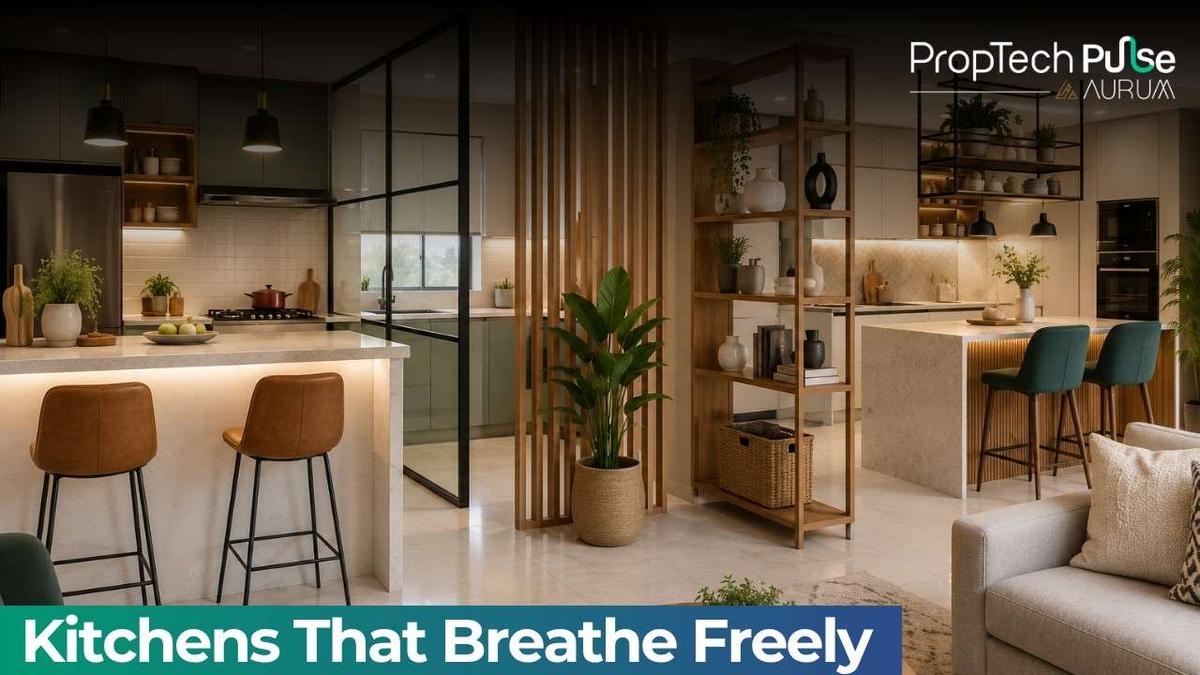
If you've ever stood in your open kitchen at 8 PM, oil sizzling in the kadhai, guests sitting three feet away in the living room, and thought "why did I think this was a good idea", you're not alone. Open kitchens look stunning in interior design reels. Living with one, day to day, is a slightly different story.
That doesn't mean you need to wall off your kitchen and go back to a closed box with a door. The smarter fix, the one most interior designers will actually recommend once you push past the Pinterest board, is a good kitchen partition. Something that keeps the openness you fell in love with, but gives you a bit of control over smell, mess, and noise when you need it.
I've pulled together the partition ideas that genuinely hold up in Indian homes, not just the ones that photograph well, but the ones that survive two years of daily dal-chawal and Diwali cooking marathons.
1. The Half-Wall Breakfast Counter
This is probably the single most popular kitchen partition design in Indian apartments right now, and for good reason. A waist-height or chest-height wall, topped with granite, marble, or a tile finish, does double duty: it visually separates the kitchen from the living or dining area, and it doubles as a breakfast counter or serving counter.
You get to keep sightlines open so you can still chat with the family while you cook, but the mess on your kitchen counter, the used dal katori, the vegetable peels, and the flour dusted over everything stays hidden from anyone sitting in the living room. If you're short on dining space, this partition can genuinely replace a separate breakfast table.
Best for: Small to mid-sized apartments where you want zoning without losing floor space.
2. Glass Partitions with a Metal Frame
Full glass partitions, usually framed in black or bronze metal, have become a favourite in modern open kitchen designs over the last couple of years. They let every bit of natural light through while still marking a clear boundary between the kitchen and living room.
The real advantage here is odour and smoke control, especially if you cook a lot of Indian food with heavy tadka and masalas. A sliding glass partition means you can close it off completely during actual cooking, then slide it open the rest of the time so the kitchen doesn't feel boxed in.
One practical tip nobody tells you: go with a matte or semi-frosted finish rather than crystal-clear glass near the stove. Clear glass shows every oil splatter and fingerprint, and you'll be wiping it down constantly.
3. Wooden Slat Partitions
If glass feels too clinical or modern for your taste, vertical wooden slats are a warmer alternative. They let air and light pass through the gaps while still creating a sense of separation, giving you privacy without ever feeling shut in.
This works particularly well in homes with a more traditional or warm, earthy interior style, where an all-glass partition would look out of place. Just keep slatted wood away from direct heat and steam if it's close to your stove. A fire-retardant finish helps it last.
4. Sliding Panels (The Flexible Option)
Sliding partitions, whether in glass, wood, or a mix of both, are the answer if you genuinely want an "open kitchen most of the time, closed kitchen when needed" setup. They're especially useful in smaller flats where a fixed wall would eat into your usable space.
Think of it as an open kitchen with a living room partition that you control depending on the day. Casual breakfast? Slide it open. Frying puris for a big family lunch? Slide it shut. It's a bit like a room divider that earns its keep.
5. Open Shelving as a Partition
This one surprises people, but a well-designed open shelf unit can do the job of a wall while adding genuinely useful storage. Instead of a solid partition, you place a shelving unit between the kitchen and living area, displaying crockery, plants, cookbooks, or whatever fits your style.
It creates a soft visual break without fully blocking the space, and honestly, it's one of the more budget-friendly kitchen partition ideas if you're not looking to do major construction. The only rule is to keep it curated. An open shelf partition stuffed with random clutter looks worse than no partition at all.
6. Kitchen Island with Overhead Storage
If your kitchen is large enough to support it, an island paired with hanging storage above acts as both a partition and a workstation. It's less about privacy and more about zoning, clearly marking the kitchen from the living space while giving you extra counter space and storage in a layout that would otherwise feel like one giant open room.
This is a bigger investment and needs proper planning around your kitchen layout, plumbing, and electrical points, so it's worth discussing early with your interior designer or contractor rather than as an afterthought.
7. Frosted Glass with LED Lighting
A step up from plain glass, frosted glass partitions with integrated LED strip lighting have started showing up a lot in newer apartment interiors. The frosted finish gives you privacy because you can't see straight through, while the light still filters in. The LED lighting also adds a soft glow that makes the whole partition feel like a design feature rather than just a divider.
This suits homes going for a slightly more premium, contemporary look. It's not the cheapest option, but it photographs beautifully and works well in kitchens that double as an entertaining space when guests are over.
8. Laser-Cut Decorative Screens
For homes that want a partition to be a statement piece rather than something purely functional, laser-cut wooden or metal screens with jaali-style patterns bring in a very Indian design sensibility. They allow airflow and partial visibility while adding real character to the space.
These work beautifully in homes with a more traditional, ethnic, or fusion interior style, and they're a lovely way to bring in a design element that a plain glass or half-wall simply can't replicate.
9. Bamboo and Natural Material Screens
If you're leaning toward a more organic, earthy aesthetic, bamboo or cane partitions add texture and warmth without feeling heavy. They're lightweight, relatively affordable, and give your kitchen a slightly rustic, breathable character.
The one thing to watch for is to keep these away from areas with a lot of direct moisture or grease splatter, since natural materials don't hold up as well to daily kitchen wear as glass or metal.
So, Which One Should You Actually Pick?
Honestly, it comes down to three things: how much space you have, how much cooking-related mess and smell you need to manage, and your interior style.
- Tight on space and want double function? Go with the half-wall breakfast counter.
- Cook a lot of high-smoke, high-masala food? A sliding glass partition will save you more headaches than any exhaust fan.
- Want something budget-friendly and easy to change later? Open shelving is your best bet.
- Going for a design-forward, premium look? Frosted glass with LED lighting or a laser-cut screen will do more visual heavy lifting.
A kitchen partition isn't just about looks. It's about actually living comfortably in an open floor plan without your living room smelling like yesterday's fish curry. Pick based on how you actually cook and live, not just what looks good in a photo, and you'll get a lot more value out of it.
Planning a partition for your own kitchen? It's worth getting a quick sketch from your interior designer before finalising materials. Small details like counter height, tile finish, and hinge placement make a bigger difference than most people expect.


Ask Pulse Ai anything about real estate

Unlock the Latest in Real Estate
News, Infographics, Blogs & More! Delivered to your inbox.