New Launch - India Real Estate Report 2026.

Services
Knowledge Hub
Resources
Tools

Ask Pulse Ai
©PropTech Pulse 2025, All rights reserved.


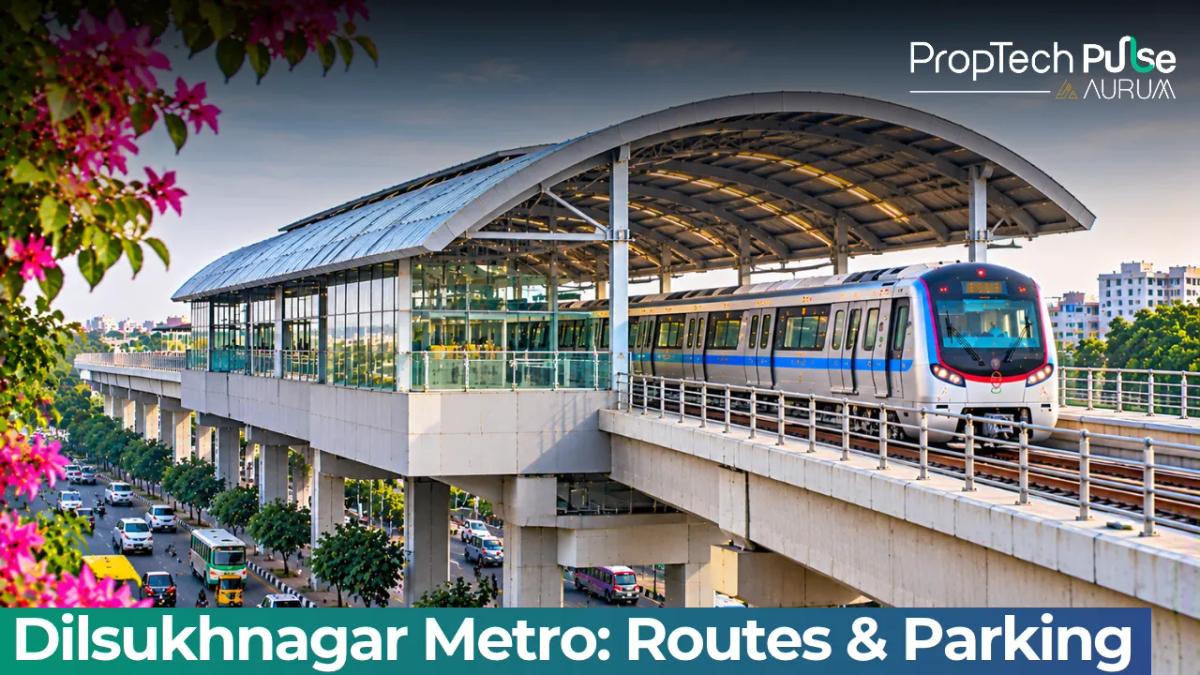
If you are standing outside the bus depot trying to find the right entrance without fighting heavy traffic, start here. Dilsukhnagar metro station handles thousands of daily commuters, so picking the wrong arm wastes ten precious minutes before your train arrives.
Most travel guides stop at saying it sits on the Red Line. This post covers exactly how the platforms work, which exit drops you closest to your destination, and the current fare rules.
This guide covers the daily commute logic you actually need. You will get the exact timing windows, frequency during rush hour, two-wheeler parking locations, and step-by-step routing to the Blue and Green Line interchanges.
We are treating the station as a live transit hub rather than just a backdrop for property listings.
Dilsukhnagar Metro Station Route Map & Lines
Quick answer
Dilsukhnagar metro station sits on the Red Line corridor between Miyapur and LB Nagar. The first train departs terminal stations at 6 AM and the last train leaves at 11 PM daily. Trains run every 4 minutes during peak hours and every 5 to 12 minutes off-peak. Minimum fare is ₹11 for travel under 2 kilometres.
Which Metro Line is Dilsukhnagar On?
The station serves the Red Line (Corridor 1), stretching from Miyapur to LB Nagar. This forms the backbone of Hyderabad Metro's oldest operational network, connecting major western and eastern residential hubs in one continuous stretch.
The station sits comfortably above the ground-level traffic knot near the Telangana State Residential School and the main bus stand.
Passengers enter via the staircase or lift, move through the secured paid zone, and step onto either Platform 1 or Platform 2 depending entirely on their intended direction.
Commuters rely on this corridor daily to bridge the gap between the IT corridors in the west and the expanding suburbs in the east.
If you are tracking connectivity for an upcoming purchase, properties within walking distance show a steady demand spike because daily commuters depend heavily on this node. You can check our detailed vaishali metro station guide lines timings parking to compare how other eastern stations handle passenger load and infrastructure upkeep under similar pressure.
Next Stations and Route Directions
The station splits into two distinct flows once you pass the ticket barriers. Platform 1 carries trains heading towards LB Nagar, terminating at the eastern hub after passing Chaitanyapuri.
Platform 2 runs towards Miyapur, moving westward towards Secunderabad after stopping at Musarambagh.
Travelers bound for Jubilee Hills or Madhapur stay on the Red Line until Ameerpet station, then transfer to the Blue Line.
Heading to Hitech City follows the same route. Switch to the Blue Line after passing Musarambagh. Knowing exactly where to disembark stops you from accidentally riding all the way to Miyapur.
Data shows that proximity to a metro station affects apartment pricing most noticeably when the station connects directly to employment corridors. Dilsukhnagar hits both major IT hubs and key government offices. This keeps rental yields stable even when broader market prices dip slightly.
Dilsukhnagar Metro Station Timings and Frequencies
First and Last Train Times
Trains leave the terminal stations at Miyapur and LB Nagar precisely at 6:00 AM. The final scheduled departures also happen at 11:00 PM from both ends.
Intermediate stations usually see arrivals slightly offset by five to ten minutes depending on the official timetable adjustments made by operations teams.
Weekend services sometimes extend late-night availability on Fridays, particularly before public holidays. The standard operating window remains 6 AM to 11 PM daily. Always double-check the official red line metro hyderabad route stations timings fares listed on the L&T Metro Rail app before traveling home past midnight.
Train Frequency During Peak Hours
During morning and evening rush hours, intervals drop to roughly 4 minutes between trains. That high density absorbs the heavy flow of students heading to nearby educational institutes and office workers commuting to the southern business districts.
Off-peak slots, usually mid-afternoon, stretch to 5 to 12 minutes.
| Time Period | Approximate Frequency | Direction Priority |
|---|---|---|
| Morning Rush (8 AM - 10 AM) | Every 4 minutes | Heavy outbound volume |
| Evening Rush (5 PM - 7 PM) | Every 4 minutes | Heavy inbound volume |
| Mid-Morning (11 AM - 1 PM) | Every 8 minutes | Moderate traffic |
| Late Night (10 PM - 11 PM) | Every 12 minutes | Reduced service |
The table provides a baseline expectation. Actual gaps shift constantly based on signal clearance and carriage maintenance schedules handled by HMRL operations teams. Delays rarely exceed five minutes, but planning ahead prevents awkward waits on the platform.
Dilsukhnagar Metro Station Platforms and Exit Arms
Platform 1 vs Platform 2: Where to Board
Selecting the correct platform eliminates guesswork immediately. Platform 1 directs eastward toward LB Nagar. If your destination is Kondapur, Erragadda, or the industrial belts in eastern Hyderabad, this is the track you need.
Platform 2 heads west to Miyapur, feeding directly into the financial districts and tech parks along the western corridor.
Clear signage hangs above every stairwell marking Platform 1 and Platform 2. Digital LCD boards inside the waiting hall display the next arriving train's exact origin and final terminal point.
Never board a random carriage assuming it will naturally arrive at your stop. Hyderabad Metro uses fixed rake allocations that occasionally terminate cars early during odd hours.
How Arms A through D Drop You on the Ground Floor
The station has four street-level entries called Arms A, B, C, and D. Local regulars know the grid well, but newcomers often mix them up. Each exit points to a specific corner on the main road.
Arm A exits towards the northern side of the overbridge, facing the older market stretches and smaller shops. Arm B leads straight into the pedestrian pathway connected to the TSRTC bus depot, acting as the fastest exit for commuters switching between metro and bus.
Arm C drops down towards the commercial plazas and the main road intersection running parallel to the railway line. Arm D handles foot traffic pouring out from the Saibaba Temple area and nearby residential colonies.
Need a lift? The external elevators feed directly into the center of the concourse level. The internal elevators connect the platform floor straight to the ticket barriers, letting passengers skip the escalators entirely.
Dilsukhnagar Metro Station Parking and Facilities
Two-Wheeler Parking Locations
HMRL maintains paid two-wheeler parking located specifically between Arms A and B. You do not need to cross busy arterial roads to leave your bike.
Staff manage the lot actively, though empty spaces vanish fast before 8 AM. Four-wheeler car parking is not provided at the station.
Drivers usually leave vehicles at private lots near the bus depot, though security cover varies. Use camera-equipped parking instead.
Elevators, Washrooms, and Drinking Water
Facilities at the station cater specifically to daily long-haul travelers carrying bags or managing tight schedules. Daily travelers using dilsukhnagar metro station rely on these amenities during long commutes.
Accessible elevators exist at Arms B and C for passengers with mobility challenges.
Public washrooms are available at Arms B, C, and D, positioned just outside the paid zone so sanitation staff can monitor cleanliness efficiently throughout the day.
Drinking water kiosks sit securely inside the paid area near the platform entry, making them easy to grab without exiting the gates.
Medical aid kits are stationed at Arm D, managed by HMRL paramedics who patrol the corridors during operating hours. Wi-Fi hotspots are not currently active here.
Note for families: The station lacks dedicated nursing rooms. Parents usually utilize the washrooms at Arm B for quick changes, though privacy locks are basic and not fully soundproof.
Reaching Key Destinations from Dilsukhnagar
Interchange Options at Ameerpet and MG Bus Station
Ameerpet acts as the central spine for almost all non-terminal trips across the network. From Dilsukhnagar, you ride the Red Line westbound for approximately 25 to 30 minutes to reach the Ameerpet interchange.
Once you step onto the platform, Blue Line trains arrive frequently toward Necklace Road and Uppal. Green Line services also stop at Ameerpet, offering direct links to Begumpet and Nizampet.
If you require a connection to the Green Line immediately without transferring to another train, head to MG Bus Station. Reaching MG Bus Station requires taking a local bus or taxi from Dilsukhnagar to the central bus terminus first.
Staying entirely on the metro requires shifting lines at Ameerpet or Secunderabad. For a deeper look at how multi-modal transport shapes housing value, read our breakdown on what is a train station led development.
Nearest Bus Depots and Major Landmarks
The Telangana State Road Transport Corporation operates the Dilshukhnagar Bus Depot right beside the metro platform. The bus depot sits right next to the station.
You can switch between state buses and trains without stepping into rush-hour traffic. Other visible landmarks near the station plaza include the CMR Shopping Mall and several prominent coaching centres preparing students for national competitive exams.
| Landmark | Location Relative to Station | Primary Commuter Use |
|---|---|---|
| Dilshukhnagar Bus Depot | Adjacent to Arm B | Regional and intercity bus transfers |
| Saibaba Temple | Near Arm D | Pilgrimage and religious tourism |
| CMR Shopping Mall | Across the road from Arm C | Retail and weekend leisure |
| NIFD Hyderabad | Brief auto-rickshaw ride from Arm A | Skill development workshops and courses |
Before You Commute
Commuters using dilsukhnagar metro station rely on it as a critical junction between eastern suburbs and western employment zones.
Use the arm closest to your final ground destination to save time, verify the LCD screens for platform allocation before boarding, and reserve your two-wheeler spot early during weekdays.
If you plan to switch lines frequently, memorize the Ameerpet transfer sequence to avoid missed connections.
Frequently asked questions
Which metro line is Dilsukhnagar station on?
It sits directly on the Red Line corridor connecting Miyapur in the west to LB Nagar in the east. This is Hyderabad Metro’s oldest operational stretch, serving thousands of commuters heading between the western IT hubs and the eastern residential and government districts.
What time is the first and last train at Dilsukhnagar?
The first trains leave the terminal stations at 6:00 AM daily. The last scheduled departures from both ends leave at 11:00 PM. Intermediate arrivals usually shift by a few minutes, so checking the L&T Metro Rail app confirms exact arrival windows before late-night commutes.
Is there parking available at Dilsukhnagar metro station?
Yes, paid two-wheeler parking exists right between Arms A and B, making it convenient for riders leaving bikes near the entrance. The operator manages the lot actively, though empty spaces vanish fast before 8 AM. Four-wheeler car parking is not provided at the station.
How do I reach Ameerpet from Dilsukhnagar?
Board a train on Platform 2 heading towards Miyapur and remain seated until you reach Ameerpet interchange. Do not get off at intermediate stops like Secunderabad unless your final destination lies beyond Uppal. Transferring at Ameerpet allows easy access to the Blue Line and Green Line networks.
Where should I go if I need to catch a state bus from Dilsukhnagar?
Use the Arm B exit to walk directly into the pedestrian pathway connected to the Telangana State Road Transport Corporation (TSRTC) bus depot. The physical overlap means you avoid stepping onto the main road entirely, keeping your commute dry and safe during heavy rain.
Enjoyed this blog article? Visit PropTech Pulse for more interesting blogs.





Ask Pulse Ai anything about real estate

Unlock the Latest in Real Estate
News, Infographics, Blogs & More! Delivered to your inbox.

