New Launch - India Real Estate Report 2026.

Services
Knowledge Hub
Resources
Tools

Ask Pulse Ai
©PropTech Pulse 2025, All rights reserved.


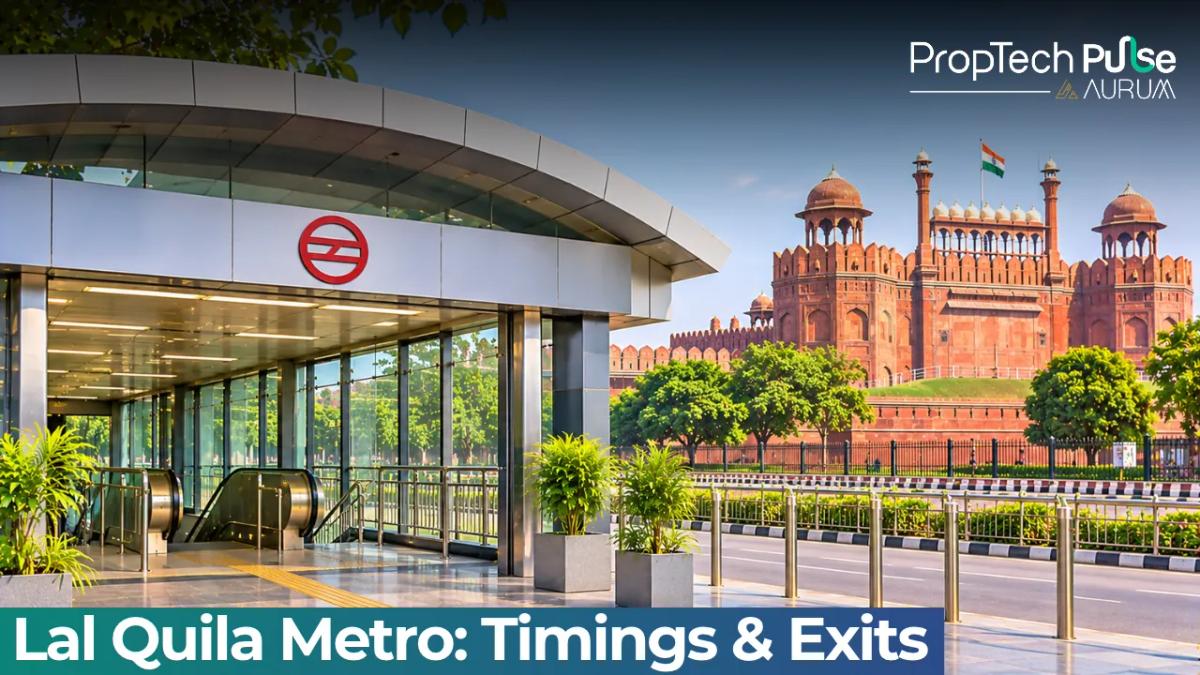
The Lal Quila metro station sits directly beneath the winding lanes of Chandni Chowk. It serves as the main transit gateway for Old Delhi’s heritage belt.
Opened in May 2017, this underground stop on the Violet Line feeds passengers onto upper streets through four dedicated gates. You will save nearly twenty minutes of wandering by catching the right train and picking the correct exit.
Lal Quila Metro Station Overview
Quick answer
Lal Quila metro station operates on the underground Violet Line with four directional exit gates mapping directly to Red Fort, Jama Masjid, and Chandni Chowk markets. Trains run every three minutes during weekday peaks and service begins at 06:03 daily. Parking is restricted to Gate 3.
Navigating Old Delhi requires strict timing and precise routing. The pedestrian footprint above spreads across a chaotic grid of wholesale traders, historic havelis, and constant traffic jams. Stepping underground immediately cuts through that noise.
The station delivers a clean path straight past the congestion. Its design centers on dual island platforms facing opposite tracks, solid ticket gates, and wide escalator lifts.
Security scanners stand at every entry point, requiring bags to pass through x-ray machines before reaching the paid area.
Commuters appreciate the enforced order during peak rush hours when crowds swell rapidly. The name references the Red Fort, which sits just meters above the ramp exits.
Builders excavated deep below the soil deliberately to spare the ancient Mughal walls from vibration damage.
Buyers assessing local real estate should review our guide to the Delhi Lal Qila Chandni Chowk locality to understand why that rail access drives rental premiums higher. That underground transit layer shifts walkability scores significantly for apartments near the line.
| Feature | Specification |
|---|---|
| Metro Network | Delhi Metro |
| Line Color | Violet Line |
| Platform Type | Underground Island Platforms (2) |
| Total Exit Gates | 4 (Gates 1, 2, 3, and 4) |
| Station Code | LQ |
| Zone Classification | Central Zone |
Riders wanting a transfer can catch the next northbound car to Kashmere Gate in just one stop. That junction opens doors to the Yellow, Blue, or Pink Lines. Plan your connecting route ahead using our list of Delhi Metro Violet Line stations and fares before heading out.
We also explain the transfer mechanics at the junction in our Kashmere Gate metro station routes guide. Street buses line up along the eastern drop-off edge, and auto-rickshaw queues follow strict municipal zoning rules for seamless feeder connectivity.
First & Last Metro Timings at Lal Quila
Reality here demands you watch the platform sign. Trains split directions immediately after leaving the station. Southbound cars push toward Faridabad and Gurugram while Northbound trains climb back toward North Delhi.
Platform 1: Towards Ballabhgarh
This southern deck carries all southbound trains past Narela, Anand Vihar, and Saket before finishing at Ballabhgarh. Most riders on this side work in South Delhi or the industrial belts. The first train arrives at 06:03.
Board the final evening service by 23:02 to avoid a forced backtrack through Kashmere Gate. Northbound trains reverse direction straight into the city center. Departures begin at 06:04, giving cross-platform transfers plenty of breathing room.
Platform 2: Towards Isham Dogra / Shaheed Sthal (Rithala)
The final car leaves at 00:14 to accommodate night-shift workers and late-returning guests. Those tracks feed West Delhi housing markets, Dwarka, and highway approaches.
Morning slots pack hard with factory staff and office workers seeking reliable commutes.
| Direction | Destination Terminal | First Departure | Last Departure |
|---|---|---|---|
| Southbound | Ballabhgarh | 06:03 | 23:02 |
| Northbound | Rithala | 06:04 | 00:14 |
Trains pack tight between nine and eleven AM, arriving roughly every three minutes and twenty-four seconds. Managing crowd flow at Lal Quila metro station requires watching the digital board rather than relying on printed timetables.
Weekend spacing loosens to just over five minutes as leisure trips replace corporate commutes.
Exiting the Station: Gate Directions & Landmarks
Design funnels passengers up four separate stairwells, each dropping directly onto a different street corner. Wrong exits waste daylight and force travelers to drag luggage past heavy vendor traffic.
Tourists constantly ask which exit acts as the lal qila nearest metro station shortcut, so pick your gate carefully to avoid uneven paving stones and crowded alleys.
Heritage tourists stream through Gate 1 daily. The path slopes straight onto Chawri Bazar Road where Red Fort walls appear within three hundred meters.
A brisk four-minute walk takes you past active silk and fabric shops near the main entrance.
Cabs and ride-hail fleets queue heavily behind Gate 3, right after the security checkpoint. Gate 4 stays calm and quiet, allowing locals to slip easily into residential alleys behind the market fronts. Compare base fares on the Chandni Chowk metro station fares page before planning your next stop.
| Gate | Street Egress | Closest Major Landmark |
|---|---|---|
| Gate 1 | Chawri Bazar Road incline | Red Fort (Fort Complex & Security Gate) |
| Gate 2 | Jewarmandi Lane | Business Bay Market & Jewelry Wholesale Hub |
| Gate 3 | Central Vehicle Drop-off Plaza | Parking Zone & Auto-Rickshaw Stand |
| Gate 4 | East-side Residential Alleys | Old Delhi Community Centers & Local Shops |
| Destination | Distance | Walk Time |
|---|---|---|
| Red Fort (Main Entrance) | 0.03 km | 4 minutes |
| Grand Jamia Mosque | 0.35 km | 5 minutes |
| Jama Masjid | 1.1 km | 12 minutes |
| Nizamuddin Dargah | 1.5 km | 18 minutes |
Pro Tip: Ticket counters and smart card validation machines shut down exactly fifteen minutes before the final scheduled departure. Do not assume you can linger at the monument and swipe your way back home. Build in a buffer if you are visiting after 10 PM, and always check the platform screens for last-call announcements.
Parking at Lal Quila Metro
lal qila parking faces constraints from the tight street grid overhead. Planners skipped surface lots in the central plaza entirely. All vehicle storage moved to one zone beside Gate 3.
The secure lot holds 170 cars, 150 bikes, and a hundred cycles alongside municipal hourly tariffs that jump during commercial peaks. Weekend spots vanish fast, and school buses unload early.
Arrive before eight-thirty to secure space near the escalator, because parking after noon means circling perimeter streets.
Sample Fares & Smart Card Benefits
Delhi Metro pricing relies on a tiered distance calculator rather than a flat rate. A standard adult ticket starting at Lal Quila covers two kilometers for twenty rupees, adding roughly twelve to eighteen rupees for every subsequent kilometer block.
Prepaid smart cards change daily economics significantly by adding a five rupee discount to every swipe. Prepaid balances also earn a five percent waiver on scheduled fees.
A standard round trip to Rajiv Chowk runs thirty-two rupees on weekdays, while monthly unlimited passes cap at one hundred rupees for frequent buyers.
Planning Your Visit at Lal Quila metro station
Departure times, gate maps, and fare math sit ready for your visit. Pull the live tracker before descending the escalators, especially since monsoon backups sometimes flood platforms and delay services by twenty minutes.
Trust the direction split over general advice when riding the Lal Quila metro station.
Frequently asked questions
What is the first metro train at Lal Quila?
Southbound trains depart at 06:03 on Platform 1. Northbound cars leave Platform 2 at 06:04. Morning slots pack hard with factory staff and office workers. Stand near the doors if you want a seat.
Which gate should I use to reach the Red Fort security gate?
Use Gate 1. The paved ramp leads straight to Chawri Bazar Road. The fort wall sits under three hundred meters away. Skip the western lane unless you plan a detour through the jewelry trade.
Is there dedicated parking available at Lal Quila station?
Vehicle bays sit exclusively behind Gate 3. The monitored lot holds 170 cars, 150 bikes, and 100 cycles. Hourly tolls apply. Spots clear out by nine AM during tourist season.
How long does it take to walk from the station to Jama Masjid?
Expect a twelve-minute walk covering 1.1 kilometers after exiting near Gate 2. Textile markets slow foot progress. Many visitors take the next train north for a cleaner route to the mosque.
Does Lal Quila metro connect directly to other rail networks?
Direct physical links do not exist here. Kashmere Gate sits one stop north. That junction connects regional rail terminals, state buses, and the broader color-coded network. Use the underground passage to avoid street crossings.
Sources
- Delhi Metro Rail Corporation (DMRC): Official Violet Line station schedules, gate configurations, and parking capacity data (accessed November 2026)
Enjoyed this blog article? Visit PropTech Pulse for more interesting blogs.




Ask Pulse Ai anything about real estate

Unlock the Latest in Real Estate
News, Infographics, Blogs & More! Delivered to your inbox.

