New Launch - India Real Estate Report 2026.

Services
Knowledge Hub
Resources
Tools

Ask Pulse Ai
©PropTech Pulse 2025, All rights reserved.


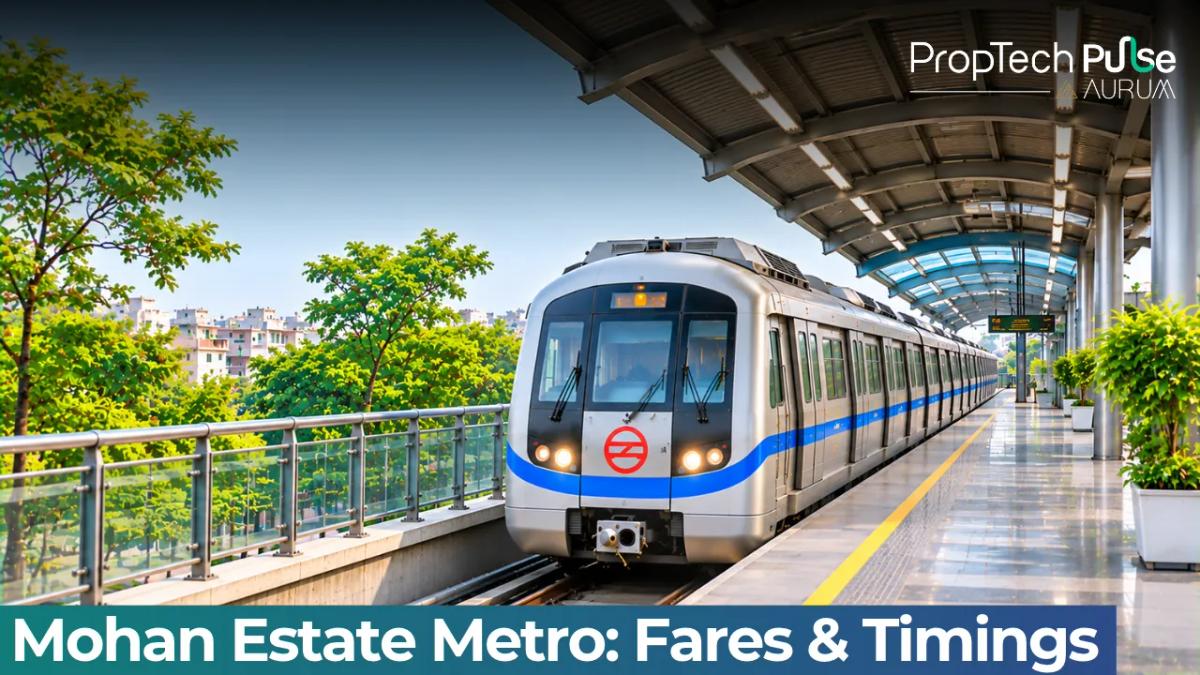
Mohan estate delhi serves thousands of factory workers and residents daily, but getting out of the right gate still confuses people. If your destination is the mohan estate metro station, note that the nearest exit gates sit on opposite sides.
Arriving at the wrong one adds ten minutes to your walk before your shift even starts. This page gives you exact times, current fares, and gate-level directions so you can plan a smooth commute without guessing.
Essential Route & Connectivity Details
mohan estate metro sits on the busy Violet Line, stretching from Kashmere Gate in the north down to Raja Nahar Singh in the south.
DMRC assigned the station code METE when it opened alongside the Sarita Vihar to Badarpur stretch in January 2011.
The station handles heavy foot traffic because it touches both industrial zones and dense residential pockets.
Office commuters rely on it to reach major interchanges quickly. You can switch to the Blue Line at Central Secretariat or Mandi House if your destination needs those routes.
Lajpat Nagar offers easy transfers to the Magenta Line if you head toward Dwarka or Saket.
Because the Violet Line runs straight down the centre-south axis of the city, travel times remain predictable even during rush hour. For full stop schedules on this corridor, refer to our Delhi Metro Violet Line guide.
Quick answer
mohan estate metro station carries the station code METE and operates on the Violet Line. It links the southern suburbs to central Delhi hubs like Rajiv Chowk and Kashmere Gate, with direct interchange facilities at Central Secretariat and Lajpat Nagar.
Train Timings & Peak Frequency
The schedule varies by day, and third-party apps often publish conflicting early morning departure times. Here is the practical window most passengers use based on recent operator notices.
| Direction | First Train | Last Train |
|---|---|---|
| Towards Raja Nahar Singh (Southbound) | 05:47 AM | 11:42 PM |
| Towards Kashmere Gate (Northbound) | 05:40 AM | 11:32 PM |
If you work the early factory shift or catch the last bus back to the industrial area, note that trains leave frequently enough to cover gaps. During peak hours on weekdays, expect a departure roughly every 3 minutes 24 seconds. The gap widens to about 4 minutes 45 seconds off-peak and throughout Saturday and Sunday.
Don't rely solely on app countdowns Delhi Metro crowd control measures sometimes hold trains at the previous station briefly to clear footfall. Build a five-minute buffer if your arrival time is a hard stop.
Sunday frequency drops slightly, but early evening slots still run close to weekday peak intervals. That shift usually ends earlier than on Monday through Friday nights.
Fare Structure & Payment Options
Fares use a slab-based system tied to journey distance. A single journey ticket costs slightly more than a smart card top-up does for the same route. Tap-and-go via UPI QR codes charges the standard base fare, matching the single ticket rate rather than offering the resident discount.
| Destination | Journey Time | Approx Fare |
|---|---|---|
| Rajiv Chowk (Central Delhi) | 22 min | ₹40 |
| Kashmere Gate (North Hub) | 35 min | ₹50 |
| HUDA City Centre (Gurugram) | 65 min | ₹60 |
| Sample 15-day Smart Card Pass (Zonal) | N/A | ₹660 |
Here is where the math works out clearly. A daily round trip to Kashmere Gate costs roughly ₹100 per day. Over a typical month, that totals ₹2,200.
A fifteen-day smart card pass runs around ₹660 upfront instead. Regular travellers save nearly three-quarters on passes.
Note that the discount only applies to registered smart cards linked to a PAN. QR tap-and-go payments match the single-ticket rate, which is why most daily riders switch to passes.
Keep your smart card refreshed before the balance hits zero mid-journey. The barriers won't eject you, but you won't be able to tap back in until reloaded at the counter or automated machine.
Navigating Entry Gates: Gate 1 vs Gate 2
This is the part most new visitors get wrong. Two main gates serve different crowds, and choosing the right staircase saves effort.
| Gate | Exits To | Best For |
|---|---|---|
| Gate 1 | Gautam Puri Awas, Badarpur Colony, Aali Vihar, NIIT Technologies building, Sarita Vihar Depot | Residents heading into housing societies, staff bound for corporate parks |
| Gate 2 | Mohan Cooperative Industrial Area, Madanpur Khadar, DMRC Staff Quarters | Factory shifts, warehouse staff, commercial fleet drivers |
Step off the platform facing the correct direction before crossing the concourse. Gate 1 places you closer to the residential blocks and the northern boundary of the industrial park.
Gate 2 dumps you directly onto the road that cuts through the core of the factory compound.
Rush patterns vary by gate. Weekend family footfall peaks heavily at Gate 1.
Gate 2 sees morning surge shifts where hundreds of workers arrive simultaneously. If you manage deliveries or drive a company van, aim for Gate 2 where loading lanes sit just beyond the turnstiles.
Station Layout & Platform Instructions
The station lives entirely above ground. An elevated double-track setup means you descend immediately after passing through the entry turnstile. Both platforms sit side-by-side rather than stacked vertically.
Escalators and lifts connect the street level to the platform floor.
Elevator access runs near Gate 2 primarily, though smaller ramps exist across the concourse if accessibility equipment is under maintenance.
Check the help desk inside the ticket counter if stairs feel steep.
When doors open, they slide left. Because the tracks run parallel along the east-west axis, trains approaching from the south board on the left platform, while northbound trains approach the opposite side.
Watch the digital platform display to avoid stepping onto the wrong rail.
The next stop heading south lands you at Badarpur Village. Head north and your following station is Jasola Apollo, which sits near the sports complex and upcoming airport expressway terminus.
Nearby Localities & Transit Links
The station anchors a mix of old industrial activity and newer residential development. Mohan Cooperative Industrial Estate spreads across several sectors behind the second gate, hosting light engineering units and garment workshops.
Just beyond the industrial perimeter sits Sarita Vihar, one of the fastest growing rental pockets in south Delhi. Shift workers choose Sarita Vihar deliberately. Rents fall well below Greater Kalkaji and Malviya Nagar, yet the area remains within walking distance of the transit node. Read our deeper dive on the Sarita Vihar locality guide, rental rates, and metro access if you weigh up relocation costs.
Commuters often combine rail and metro rides here. Tughlakabad railway station sits about eight hundred metres from the metro exit. If your factory falls near that junction, hopping on a local train from the National Capital Rail network skips the evening peak delay completely.
The Outer Ring Road cut-through improves auto and bus connectivity during afternoon hours. Traffic merges cleanly onto the NH-2 highway heading east towards Faridabad and Ghaziabad.
Final Checklist Before Your Commute
Before paying your token amount or starting your daily route, verify three things. Confirm the smart card zone covers your destination if you travel beyond Delhi's municipal limits, since fares jump sharply at the state border.
Check the last departure time against your planned return, as weekend slots shift earlier. Finally, walk the exit route at least once so you know whether Gate 1 or Gate 2 puts you closest to your workplace entrance.
Frequently asked questions
What is the first and last train timing at Mohan Estate metro station?
Trains heading south towards Raja Nahar Singh depart as early as 05:47 AM, with the final southbound service leaving around 11:42 PM. Northbound trains bound for Kashmere Gate start running shortly after 05:40 AM and conclude their late schedule at approximately 11:32 PM. These standard windows may shift slightly during long holiday weekends or sudden infrastructure maintenance.
Which Delhi Metro line is Mohan Estate station on?
Mohan Estate metro station operates on the busy Violet Line, connecting Kashmere Gate in north Delhi to Raja Nahar Singh in Ballabhgarh. It links directly to the Blue Line at Central Secretariat and Mandi House. You can also switch to the Magenta Line at Lajpat Nagar for broader coverage across the southern corridor.
How many gates are at Mohan Estate metro station and where do they exit?
The station features two primary pedestrian gates separating different zones. Gate 1 leads towards Gautam Puri Awas, Badarpur Colony, Aali Vihar, and the northern fringe of the industrial park. Gate 2 places passengers directly onto the main road feeding into the heart of the industrial estate and Madanpur Khadar.
What is the metro ticket fare from Mohan Estate to Kashmere Gate?
A standard single journey ticket costs around ₹50. Using a registered smart card reduces the effective cost significantly over a monthly pass, saving nearly seventy-five percent compared to daily ticket purchases. QR tap-and-go payments match the single ticket rate without concession.
Enjoyed this blog article? Visit PropTech Pulse for more interesting blogs.




Ask Pulse Ai anything about real estate

Unlock the Latest in Real Estate
News, Infographics, Blogs & More! Delivered to your inbox.

