New Launch - India Real Estate Report 2026.

Services
Knowledge Hub
Resources
Tools

Ask Pulse Ai
©PropTech Pulse 2025, All rights reserved.


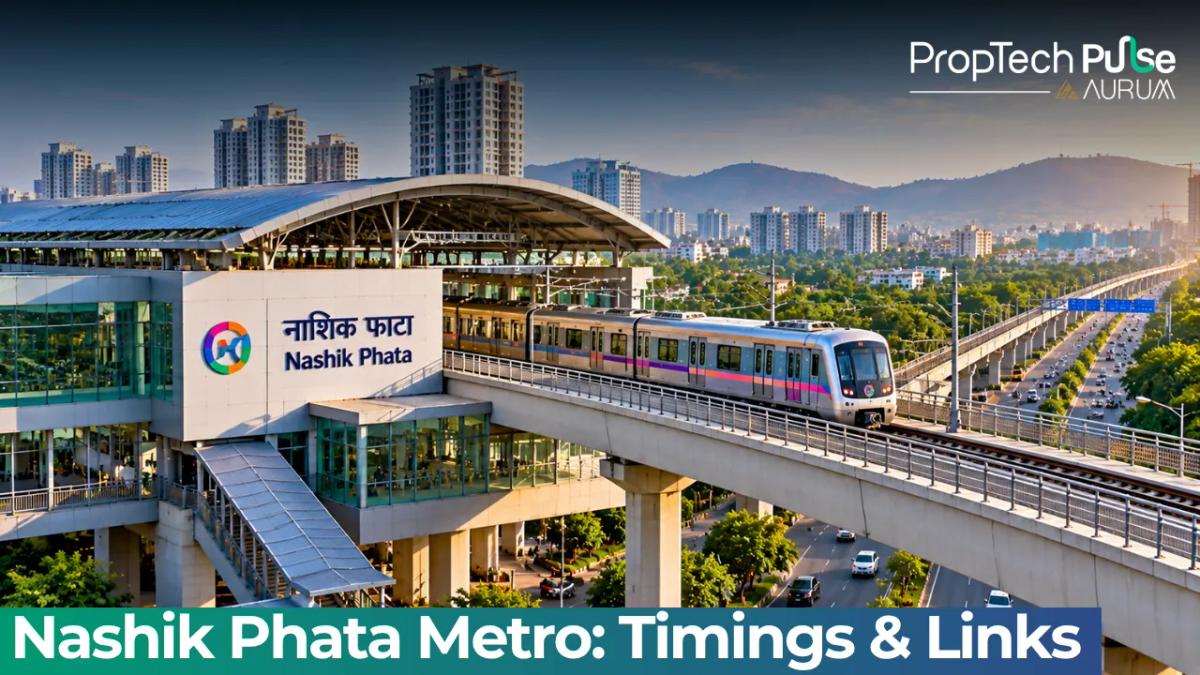
In Pune’s Pimpri-Chinchwad belt, Nashik Phata has evolved well beyond a simple traffic junction.
Since the Purple Line opened fully in September 2024, the area handles thousands of daily commuters travelling between Bhosari, Wakad and Swargate. For homebuyers, the new metro stops combined with the multi-tier flyover act as a direct lever for property value.
Nashik Phata metro station: key details and Purple Line route
Quick answer
Nashik Phata metro station (station code: bhosari) sits on the Pune Metro Purple Line, connecting PCMC Bhavan directly to Swargate. The entire route became fully operational on 29 September 2024 after the Phase I launch, offering daily service from 6.00 am to 10.00 pm. It serves as a critical interchange node for passengers switching between rail, road and bus transport in the eastern PCMC region.
Northbound trains roll past Wakad, Aundh SEZ and Dapodi. Southbound shifts carry passengers directly into commercial hubs at Deccan Gymkhana before terminating at Swargate.
Professionals employed at Hinjewadi Rajiv Gandhi Infotech Park or Walheim-Bhosari factories use this stop to sidestep peak hour congestion on Nashik Phata Road. Commutes become predictable instead of dependent on unpredictable signal delays.
Maha Metro tracks live rake schedules and updates fares on their official portal at https://pune.metro.org.in/station/bhosari/. Builders raised the rail line significantly above street level across this sector. The design features a raised platform accessible via stairs or lifts. You reach your train without crossing busy surface roads.
Daily train timings, frequency and ticketing
Residents rely on a consistent weekly schedule for school drops, office shifts and evening returns. First trains depart at 06.00 am. Last shuttles leave the platform at 10.00 pm.
Larger networks sometimes push later hours for night workers, but 10.00 pm remains the practical cut-off here.
Frequency adjusts with the clock. Morning peaks span 8.00 am to 10.30 am while evening shifts run from 5.30 pm to 8.30 pm.
Maha Metro pushes extra rakes through these windows to maintain a tight seven-minute headway, leaving off-peak slots to settle at ten minutes. That reliable spacing simplifies monthly transport budgeting against rising fuel prices and limited parking.
Automated vending machines occupy the concourse floor ahead of the stairwells. Station staff still process smart cards and printed tickets manually.
Load a rechargeable card before commencing your daily run between Bhosari and Swargate. Physical ticket counters swell with queues during rush hour, so digital swipes bypass the wait completely.
Commuter tip Plan your return journey at least fifteen minutes before the 9.45 pm mark. Evening trains often run at maximum capacity leaving Swargate, and standing room becomes the norm once you hit Deccan Gymkhana.
Gate map, platforms and connecting bus/rail services
Pedestrian flow splits logically to stop pavement bottlenecks. Gate 1 faces the Wakad and Hinjewadi direction. It serves residents returning from western PCMC suburbs. Gate 2 aligns south toward Bhosari MIDC and Kasarwadi. Industrial staff and travellers using the old Pune bypass enter here first.
Central escalators lift passengers to the mezzanine deck, while a short staircase leads to the platforms. Platform 1 hosts southbound trains rolling toward Swargate, whereas Platform 2 carries northbound traffic bound for PCMC Bhavan.
This split layout deliberately segments footfall, ensuring exiting crowds rarely clash with incoming travellers.
| Service type | Distance and walking time | Key destinations connected |
|---|---|---|
| BRTS interchange | Direct covered skywalk | Pimple Saudagar, Chakan, Kharadi |
| Kasarwadi Railway Station | Approximately 5 to 8 minutes’ walk | Central Pune suburbs, Thane |
| State Transport Buses | Adjacent bus bay | Bhosari, Walheim, Ambegaon BK |
A covered skywalk links directly to the Nashik Phata BRTS stops, shielding commuters from wide roads packed with heavy buses. Walk south to reach Kasarwadi Railway Station in minutes.
That rail connection opens Central Railway suburban lines for passengers who prefer traditional trains over the metro for extended trips.
Nashik Phata flyover and new highway projects explained
Rail solves the daily grind. Road upgrades reshape the wider catchment area alongside daily rail operations. Authorities sanctioned a multi-tier flyover project costing roughly ₹103.50 crore.
The structure splits traffic across independent upper and lower decks so vehicles skip signal cycles entirely. Recent construction noise fades behind smoother traffic flowing past station entrances and housing societies.
A major turning point awaits further north. The Union Cabinet approved an eight-lane Nashik-Khed corridor in August 2024.
This ₹7,827 crore scheme converts a thirty-kilometre stretch into a fast grade-separated highway branching from the Nashik Phata junction. Completed works will compress travel times to Khed and Satara farming belts while giving logistics firms quicker access to regional freight hubs.
| Project name | Status | Core benefit |
|---|---|---|
| Nashik Phata multi-tier flyover | Ongoing / nearing completion | Eliminates signal delays for through-traffic and improves station street access |
| Nashik-Khed express corridor | Sent for central nod, expected construction start 2027 | Creates an eight-lane elevated highway boosting regional freight and passenger speed |
Large-scale road spending usually precedes residential absorption. When a location gains faster links to both industrial employment centers and inter-city routes, builder margins tighten and resale inventory appreciates ahead of final handovers.
Impact of Nashik Phata metro on nearby property prices
Transit-led appreciation follows a predictable pattern across Indian cities. Developers adjust asking rates downward as ridership stabilizes and residents reduce private car usage.
Units within five hundred metres of Gates 1 and 2 currently command a sharp premium, driven by demand from IT professionals and middle-management buyers. Proximity metrics show how direct accessibility combines with future convenience expectations.
Understanding how proximity to a metro station affects apartment pricing reveals why timing matters. In Nashik Phata, the completed metro meets active flyover rollouts and a sanctioned express corridor. The market reads that signal as sustained density growth over the next decade. Buyers locking in units now front-run that revaluation cycle.Top residential areas within walking distance
Ready-to-move units cluster around Wakad and outer Pimple Saudagar fringes, sitting alongside projects targeting possession in late 2026 or early 2027.
Established gated societies supply swimming pools and co-working lounges, making these pockets attractive for remote workers who rely on the metro mostly for weekend commutes to Swargate or corporate campuses.
Negotiating directly with established societies works better if you dislike waiting for new launches. Older blocks bordering Nashik Phata road hold well-maintained buildings from the 2015 to 2018 wave.
Resale inventory there features higher carpet-area efficiency and fewer shared walls than brand-new towers.
Rental demand near Bhosari MIDC and Wakad
Rental demand stays robust due to adjacent employment hubs. Thousands of Bhosari MIDC manufacturing staff cut fuel costs by taking open commuting paths, while Hinjewadi tech park absorbs fresh graduates quarterly.
Both demographics anchor themselves in areas guaranteeing metro and BRTS access. Strategic guides note that two-bedroom units near Nashik Phata station typically yield 2.5% to 3.5%, sustained by constant IT and supervisory turnover across the PCMC belt.
Use a dedicated home loan EMI calculator before financing purchases. Run current interest rates through your numbers and model prepayment options. The calculation takes three minutes and prevents overcommitting.
Before you pay the token amount
Metro connectivity secures footfall but provides zero protection against delayed OC issuance or structural shortcuts. Verify every builder submits valid MahaRERA registration for each project phase before paying a token amount. Checking the state regulator database immediately halts payments to firms burdened by legal stay orders or land disputes. Reviewing RERA frameworks clarifies how escrow mandates actually protect your deposit.
Builders with three or more completed towers in the Wakad-to-Nashik Phata belt offer the safest bets. Finished structures prove they can handle soil conditions, utility connections and finishing quality in an area still battling civil engineering activity around flyover zones. Pair that track record with transparent sale deed processes and you minimize downside risk regardless of market cycles.
Frequently asked questions
How long does it take to reach Swargate from Nashik Phata metro?
Boarding at PCMC Bhavan yields a steady forty to forty-five minute ride to Swargate. Trains pause briefly at Aundh, Dapodi and Deccan Gymkhana. Weekday service runs smooth outside rush hour, though peak crowding slows stops near Dapodi.
What is the last train time at Nashik Phata metro station?
The final scheduled departure from the platform sits at 10.00 pm. Trains from Swargate wrap up shortly before midnight. Plan a late return from central Pune offices or events by boarding a shuttle ninety minutes early to guarantee PCMC arrival before shutdown.
Is there a BRTS interchange at Nashik Phata metro station?
Yes. A fully covered skywalk connects the elevated metro concourse directly to the Nashik Phata BRTS stops. You do not need to navigate busy roadside crossings carrying heavy MSRTC buses. The design allows smooth transfers for commuters using the bus rapid transit system to reach distant suburbs like Pimpri, Chakan industrial gateway or Kharadi tech zone before continuing onto deeper parts of the metro grid.
Which phase of Pune Metro serves Nashik Phata?
The station falls entirely within the Purple Line network, managed under Phase I of the Pune Metro expansion program. Full route operation extending from PCMC Bhavan all the way to Swargate officially commenced on 29 September 2024, marking the completion of foundational construction milestones. Future phases focusing on North-South alignments have been announced separately, though those plans primarily target western Pune corridors rather than this eastern junction.
Enjoyed this blog article? Visit PropTech Pulse for more interesting blogs.

Ask Pulse Ai anything about real estate

Unlock the Latest in Real Estate
News, Infographics, Blogs & More! Delivered to your inbox.

