New Launch - India Real Estate Report 2026.

Services
Knowledge Hub
Resources
Tools

Ask Pulse Ai
©PropTech Pulse 2025, All rights reserved.


Getting the next train right takes priority. Commuters also need a realistic commute estimate. Finally, they should check if local property prices justify the rent premium.
This guide covers exact departure windows, station amenities, and how the Jewar Airport rail link changes your holding costs.
Pari Chowk Metro Station: Location & Current Status
Quick answer
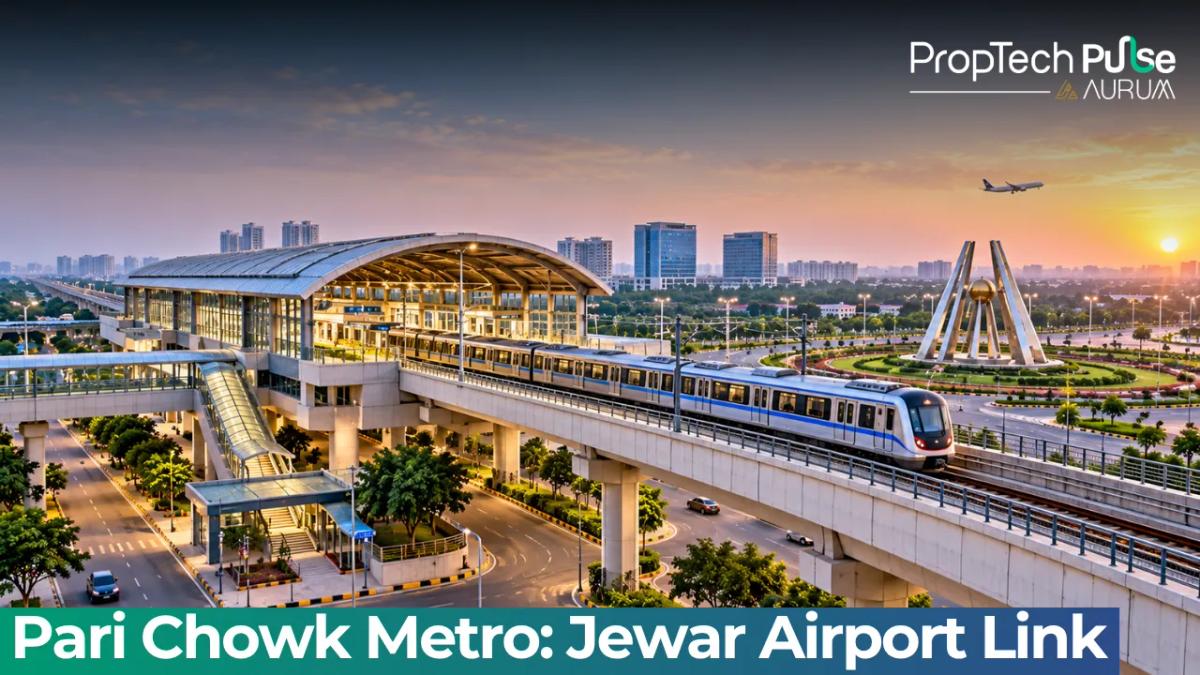
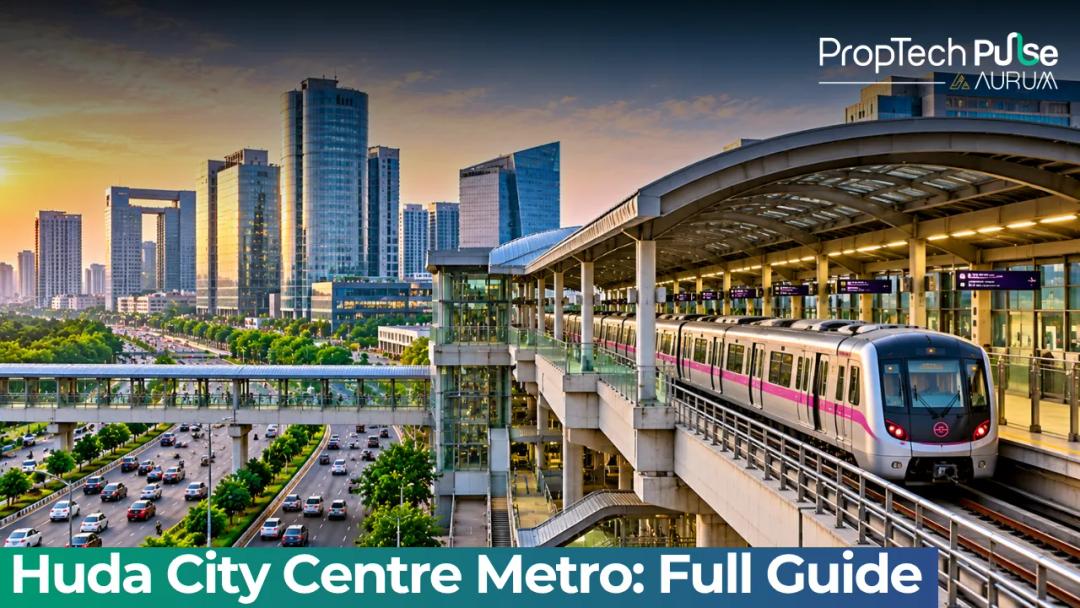
Officially branded Jaypee Greens Pari Chowk, this stop sits on the Noida Metro Aqua Line between Knowledge Park II and Depo Greater Noida. The upper-level facility uses separate side platforms to manage crowd flow. It acts as the main transfer point connecting Greater Noida residential pockets to the Delhi Metro Blue Line at Sector 51.
The station sits on the Yamuna Expressway arterial belt, routing passengers toward Ghaziabad and central Delhi. Earlier directories listed it purely as Pari Chowk. Regulatory updates shifted the official branding to Jaypee Greens Pari Chowk in 2019. NMRC runs the entire Upper NCR network from this base.
Commuters should note that despite sharing its name with a major bus stand junction, the metro entrance stands apart from road traffic. Footfall gains direct access without crossing busy Surajpur intersections.
Journey Planning: Pari Chowk Aqua Line Timings, Frequency & Sunday Operations
The first carriage bound for Sector 51 departs daily at 06:10 AM. Evening services split at different cutoffs: 10:37 PM toward Depot Greater Noida, 10:08 PM back toward Sector 51.
Weekends shift the start time to 08:10 AM. Many locals default to their weekday habit. Stepping onto the platform at 07:00 AM means watching empty tracks until the delayed morning batch rolls in.
Sunday Warning Do not assume weekday start times apply on weekends. Arriving after 08:10 AM guarantees missing early-shift jobs. Adjust departure buffers accordingly.
Headways tighten to seven-minute intervals during heavy rush periods. Off-peak slots drift to twelve minutes. Smart cards bypass manual counters. Carry physical coins as backup for sudden card failures.
Pari Chowk to Noida & Delhi: Commute Times by Employment Hub
Getting to the capital requires one mandatory swap.
This stop belongs to the Aqua Line network. Crossing into Delhi proper happens exclusively at the Sector 51 interchange, where you step directly onto the platform serving the Delhi Metro Blue Line. From there, the journey continues straight west.
| Destination | Estimated Minutes | Transfer Points |
|---|---|---|
| Akshardham Metro | 50–55 | Sector 51 (Blue Line) |
| Connaught Place | 70–75 | Sector 51 (Blue Line) |
| IGI Airport Terminal 3 | 90–95 | Sector 51 (Blue Line) |
| Dwarka Sector 21 | 100–105 | Sector 51 (Blue Line) |
Fare structure jumps once you cross the Noida border. Expect to pay roughly ₹45 to ₹55 just to reach Sector 51. Add another ₹30 to ₹45 for the Delhi Metro portion depending on your final stop. Daily professionals commuting past Nehru Place will easily spend over ₹300 round trip before hitting the office desk.
If your workplace shifts frequently across Gurugram, map alternative bus-to-metro routes via NH-48. Staying strictly on metro tracks guarantees predictability but sacrifices distance when your target lands outside Zone 1. For context on broader transit trends shaping the area, review the recent Aqua Line expansion to understand how network growth influences nearby commercial zones.
Sector 51 Interchange: Connecting to the Delhi Metro Blue Line
Platform design at Sector 51 prioritizes flow. Vertical circulation moves passengers between the upper Aqua Line deck and the lower Blue Line concourse directly.
During morning peaks between 08:30 AM and 09:30 AM, security queues can exceed twenty minutes. Leaving thirty minutes early completely alters your stress levels before reaching the corporate campus.
Station Facilities & Passenger Safety
Basic logistics set the daily rhythm here. Designated vehicle lots hold more than three hundred cars. Motorcycle bays hit capacity by 09:00 AM. Late riders park along the curb and dodge slow traffic.
Retail spaces line the ground-floor vestibule. Small food kiosks and chai counters appear throughout the day, though selection stays limited compared to high-volume Delhi hubs. Sulabh public toilets operate inside the complex boundary.
Female commuters get dedicated waiting zones and strong stairwell lighting. Pad vending machines sit near turnstiles. These practical fixes matter more than corporate policies. Track how proximity to a metro station affects apartment pricing to see how these transit perks drive rental premiums in nearby towers.
Feeder bus networks bridge the final-mile gap effectively. Routes connecting Surajpur, Kasna Road, and the industrial belts run at intervals synced closely with inbound Aqua Line arrivals. Bus operators use the metro timetable to minimize dead air, meaning your connection waits if the train arrives slightly late.
Real Estate Impact: Rental Yields Near Pari Chowk Greater Noida
Walkability drives valuations here. Units sitting within ten minutes of the entrance sell at a premium. Builders launching ready-to-move units close to the hub price accordingly. Buyers factor in private transport savings.
Rental yields hover solidly between five and six percent annually for well-managed properties. A standard two-bedroom unit rents anywhere from ₹15,000 to ₹22,000 monthly depending on construction quality and society amenities.
Higher-end gated communities fetch closer to the upper bracket while independent builders' homes lag behind. Investors calculating exit strategies should track completion timelines carefully.
Overlapping multiple large projects causes temporary oversupply. That pressure suppresses immediate appreciation. Understanding whether leasing makes financial sense versus purchasing outright often boils down to local supply cycles. Refer to whether to rent or buy near transit hubs to model cash flows accurately before signing agreements.
The Ansal Plaza commercial hub nearby acts as a secondary employment center. Office workers prefer residing within cycling distance to cut down on fuel costs, creating steady baseline demand even during broader economic slowdowns.
Builders launching new towers in the immediate catchment compete fiercely on finish quality rather than raw square footage, shifting investor focus toward long-term durability.
Upcoming Infrastructure: The Pari Chowk to Jewar Airport Rail Link
Pipeline projects dictate long-term value. The Greater Noida Authority mapped dedicated corridors radiating from this stop. A new metro spine will run parallel to the current Aqua route, anchoring directly to the future airport terminal.
Construction dates remain fluid pending final environmental clearances and funding approvals. Once active, this single link compresses the current ninety-minute dash down to roughly thirty minutes. Land banks adjacent to these projected routes will see immediate revaluation spikes.
Holding out for finalized master plans usually misses the initial momentum phase entirely. Tracking official municipal notifications gives early visibility into zoning adjustments before developers publicly announce rate hikes.
Before You Commit
Count head traffic before paying tokens. Marketing brochures inflate walkable distances. Pace the actual path from the site gate to the station entrance during rush hour. You need ground truth.
Verify water table stability for planned basements given Greater Noida's soil composition. Confirm RERA registration numbers on the UP government portal before handing over any token amount. Transit upgrades move fast in this corridor, but paperwork delays still drag deals across months.
Frequently asked questions
Is Pari Chowk metro station connected to the Delhi Metro?
Yes, it connects directly. You transfer at Sector 51. Stand on the correct platform level and walk straight onto the Blue Line deck. The process takes four minutes if queues move normally. Carry a smart card to bypass ticket counters. Your journey into central Delhi begins precisely once your Aqua Line carriage halts at that interchange point.
What is the current operating time for Pari Chowk Aqua Line trains on Sundays?
Weekend service starts at 08:10 AM. Morning headcount stays lighter until noon, pushing frequencies out to ten minutes. Evening closings match weekdays perfectly, ending at 10:37 PM. Plan departures carefully since weekend travelers rarely adjust to delayed starting times, causing unnecessary gaps.
How far is Pari Chowk metro station from IGI Airport Terminal 3?
The route spans roughly eighty-two kilometres covering two city boundaries. Expect fifty-five minutes to hit Akshardham. Push another forty-five minutes crossing western Delhi sectors to reach T3. Total travel consumes around ninety-five minutes door-to-door excluding stair climbs at sector gates.
Are there paid parking facilities available near Jaypee Greens Pari Chowk station?
Official lots handle three hundred plus vehicles comfortably. Fill rates spike dangerously past eight-thirty am. Bring loose change for automated barriers or register your number plate digitally. Motorcycles face stricter limits due to restricted space allocation near main entrances.
When will the direct metro link between Pari Chowk and Jewar Airport open?
Dates shift constantly awaiting environmental sign-offs. Preliminary maps show construction kicking off soon, targeting mid-decade completion. Keep monitoring official announcements from the Jewar International Airport Planning Ltd website rather than trusting local gossip channels. Delays happen routinely on mega aviation infrastructure projects nationwide.
Sources
- Ministry of Housing and Urban Affairs: Regulatory standards for urban transit development (accessed October 2026)
Enjoyed this blog article? Visit PropTech Pulse for more interesting blogs.

Ask Pulse Ai anything about real estate

Unlock the Latest in Real Estate
News, Infographics, Blogs & More! Delivered to your inbox.

