New Launch - India Real Estate Report 2026.

Services
Knowledge Hub
Resources
Tools

Ask Pulse Ai
©PropTech Pulse 2025, All rights reserved.


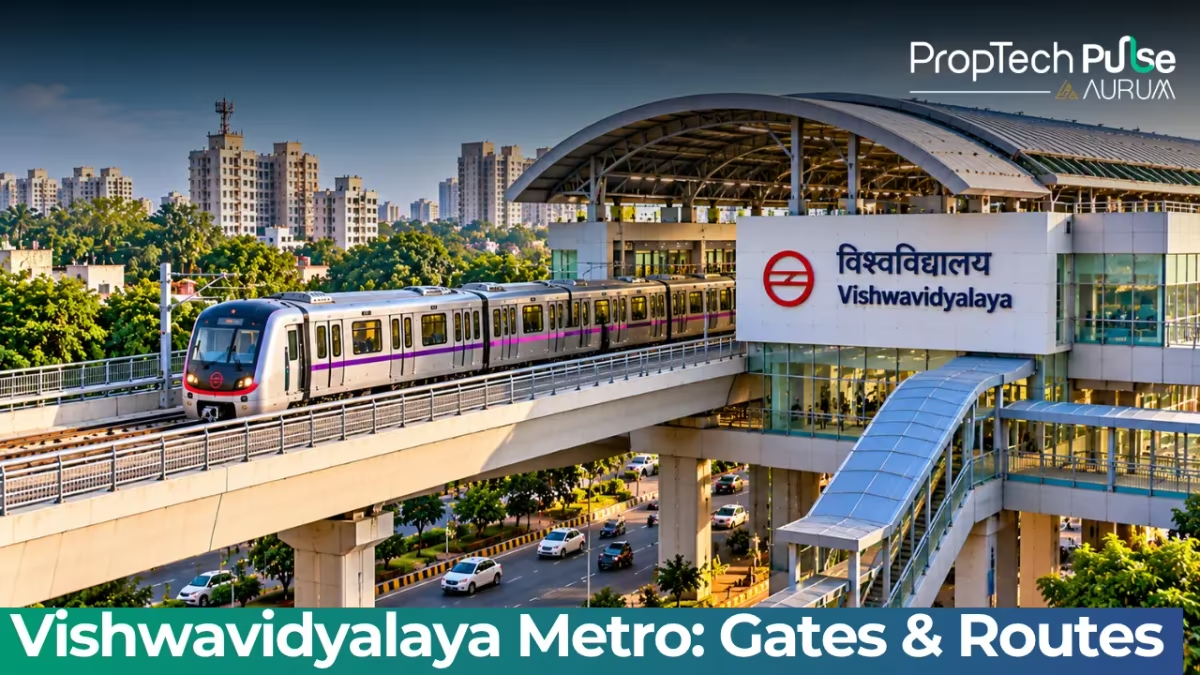
Locating a flat near Delhi University North Campus usually means starting at Vishwavidyalaya metro station. For tenants, students, or locals moving along Mall Road and Cavalry Lane, picking the right exit saves time.
We map each exit to nearby landmarks and outline interchanges at Kashmere Gate, Rajiv Chowk, and the Airport Express line.
Quick Overview: Vishwavidyalaya Metro Station Facts
Quick answer
Vishwavidyalaya metro station (code VW) sits on the Yellow Line between Guru Tegh Bahadur Nagar and Vidhan Sabha. Opened in December 2004, the underground facility features four separate gates that distribute foot traffic toward North Campus, Mall Road, Cavalry Lane, and Khalsa College. Interchanges to the Red, Violet, Blue Lines and the Airport Express are available at nearby hubs.
The vishwavidyalaya metro station carries code VW on the Delhi Metro map. It sits on the vishwavidyalaya yellow line between Guru Tegh Bahadur Nagar and Vidhan Sabha stations.
The station opened on December 20, 2004, making it one of the earliest underground stops on the network. Because it runs beneath the university campus grounds, the station uses side platforms and requires staircases or elevators to reach street level.
| Feature | Details |
|---|---|
| Station Code | VW |
| Metro Line | Yellow Line |
| Platform Type | Underground side platforms |
| Opening Date | December 20, 2004 |
| Nearest Hubs | DU North Campus, Khalsa College, Mall Road, Cavalry Lane |
Gate-to-Exit Map: Where Each Exit Takes You
Finding your way out of Vishwavidyalaya metro station depends entirely on your destination. Unlike surface-level stations, the layout forces a walk along specific streets once you emerge.
Knowing the vishwavidyalaya metro gate no before you descend prevents wandering into traffic on busy thoroughfares.
Gate 1: Riviera Apartments & DU Main Gate
Exits through Gate 1 place you directly adjacent to the main entrance of Delhi University. This path leads straight toward the Du Main Gate and the Riviera Apartments complex.
For residents in the northern block of North Campus, this is the shortest walk. Students heading to the central classrooms or the library typically favor this route.
The area benefits from the physical separation provided by the university perimeter wall, which dampens the heavy engine noise that drifts in from the wider arterial roads.
Gate 2: Mall Road Access
Gate 2 opens directly onto Mall Road, one of the most commercially active and crowded streets in North Campus. Landmarks include various academic bookshops, student hostels, and small cafeterias.
If you live along the eastern edge of the campus or require daily access to retail services, this gate cuts down walking distance significantly. Expect constant foot traffic throughout the academic year, which makes this exit highly efficient for quick errands.
Gate 3: Cavalry Lane & Khyber Pass
Taking Gate 3 directs you toward Cavalry Lane, which branches off towards Khyber Pass and the historic residential clusters beyond the university limits. Flats lining Cavalry Lane benefit heavily from this exit.
The route offers a direct pedestrian pathway without cutting across the heavy foot traffic of Mall Road, making it preferable for those who want quieter morning walks.
Gate 4: Chhatra Marg & Khalsa College
Gate 4 aligns with Chhatra Marg and provides quick access to Khalsa College and the southern edges of North Campus. Several PG accommodations and older independent houses sit in this vicinity.
Commuters living near the Science Faculty blocks often find this gate more convenient than crossing the campus core.
Route Directions & Interchange Connectivity
The vishwavidyalaya yellow line connects the northern fringes of Delhi to the commercial hub of Gurugram. Trains run northbound toward Samaypur Badli, passing Rohini Sector 42 and Majlis Park.
Southbound services head straight for Millennium City Centre Gurugram. Depending on track allocation, trains may terminate at either end. To reach central business districts, passengers use nearby interchange hubs.
A transfer at Kashmere Gate connects to the Red and Violet lines, delivering you to Old Delhi railway station and Central Secretariat in six minutes. Blue Line riders switch trains at Rajiv Chowk, roughly five minutes away.
Travelers aiming for the airport should proceed to New Delhi Railway Station and board the Airport Express line. Checking the official timetable beforehand avoids missed connections during weekend maintenance.
If you are evaluating whether a location near the university meets your daily travel requirements, understanding proximity to a metro station affecting apartment pricing gives you clearer expectations on value retention.
Operational Timings & Facilities
Understanding operational hours helps landlords and tenants coordinate move-in logistics or late-shift commutes. First trains generally depart around 06:00 AM, while last services end between 11:55 PM and midnight.
These figures shift slightly on holidays or during special events, so confirming with the Delhi Metro Rail Corporation app before planning an evening return trip avoids stranded waits.
The station supports basic accessibility needs. Elevators at multiple exits help commuters carrying luggage or managing mobility constraints.
Parking remains limited in this dense zone. Two-wheeler storage sheds or designated drop-off points serve as practical alternatives.
ATMs, ticket machines, and assistance desks run through standard hours. Rideshare pickup stands sit outside each gate, though they fill up quickly during college rush.
Before You Move or Commute From Vishwavidyalaya
Moving around Vishwavidyalaya metro station works smoothly once you match your residence or workplace to the correct exit. If your priorities involve quiet surroundings and direct campus access, prioritize buildings off Cavalry Lane near Gate 3 or Mall Road close to Gate 2. Check renting for the first time to ensure you account for security deposits and brokerage when signing leases in these high-demand neighborhoods.
For long-term stays, verify rental market dynamics specific to North Campus, since student turnover drives shorter tenancy agreements. Keep understanding landlord rights and tenant rights under the 2026 rental laws handy to protect both parties during disputes. The connectivity offered by the vishwavidyalaya yellow line outweighs minor congestion issues, provided you plan your floor-travel route using the gate map above.
Frequently asked questions
Which metro line serves the Vishwavidyalaya station?
The station operates exclusively on the Delhi Metro Yellow Line, linking the eastern suburbs and Ghaziabad through central Delhi down to Gurugram. Trains running between these terminals stop at every intermediate station along the corridor. You can locate updated frequency and service schedules directly on the Delhi Metro Rail Corporation website to plan your daily ride.
How many gates are there at Vishwavidyalaya metro station?
There are four primary exits available at Vishwavidyalaya station, each directing commuters toward different parts of North Campus and the surrounding residential belt. Gate 1 handles footfall near the university main entrance, while Gate 2 feeds directly into Mall Road. Gate 3 leads to Cavalry Lane and Khyber Pass, and Gate 4 covers Chhatra Marg.
What is the nearest metro station to Delhi University North Campus?
Vishwavidyalaya station itself functions as the closest entry point to the heart of North Campus. The underground design places the platform right beneath the university boundaries, making it the most direct option for faculty, students, and residents. Other nearby stations like Patiala House or Vidhan Sabha sit further away along the Yellow Line route.
How long does it take to travel from Vishwavidyalaya to Kashmere Gate?
A journey between Vishwavidyalaya and Kashmere Gate typically takes around six minutes under normal traffic conditions. Since both stations occupy consecutive or near-consecutive positions on the rapid transit network, travel time remains consistent across peak and off-peak periods. Riders looking to switch to the Red or Violet lines should factor in an additional minute or two for platform transfers.
Can I park my car at Vishwavidyalaya metro station?
Dedicated parking slots are scarce because the infrastructure sits deep underneath densely populated academic zones. Most daily commuters rely on two-wheeler parking sheds scattered near individual gates rather than full-size automobile lots. If driving is necessary, you will need to use nearby paid street parking or designated drop-off zones just outside the station periphery.
Are elevators available for disabled passengers at this station?
Yes, the operator has installed lifts at multiple exits to assist travelers with mobility challenges or heavy luggage. These elevators connect the underground concourse levels directly to the surface street, bypassing steep staircases. Signage near the ticket counters clearly indicates lift locations, and station staff remain available to provide hands-on guidance whenever required.
Sources
- Delhi Metro Rail Corporation: Official station code, line alignment, platform structure, and opening date data (accessed October 2026)
Enjoyed this blog article? Visit PropTech Pulse for more interesting blogs.





Ask Pulse Ai anything about real estate

Unlock the Latest in Real Estate
News, Infographics, Blogs & More! Delivered to your inbox.

