New Launch - India Real Estate Report 2026.

Services
Knowledge Hub
Resources
Tools

Ask Pulse Ai
©PropTech Pulse 2025, All rights reserved.


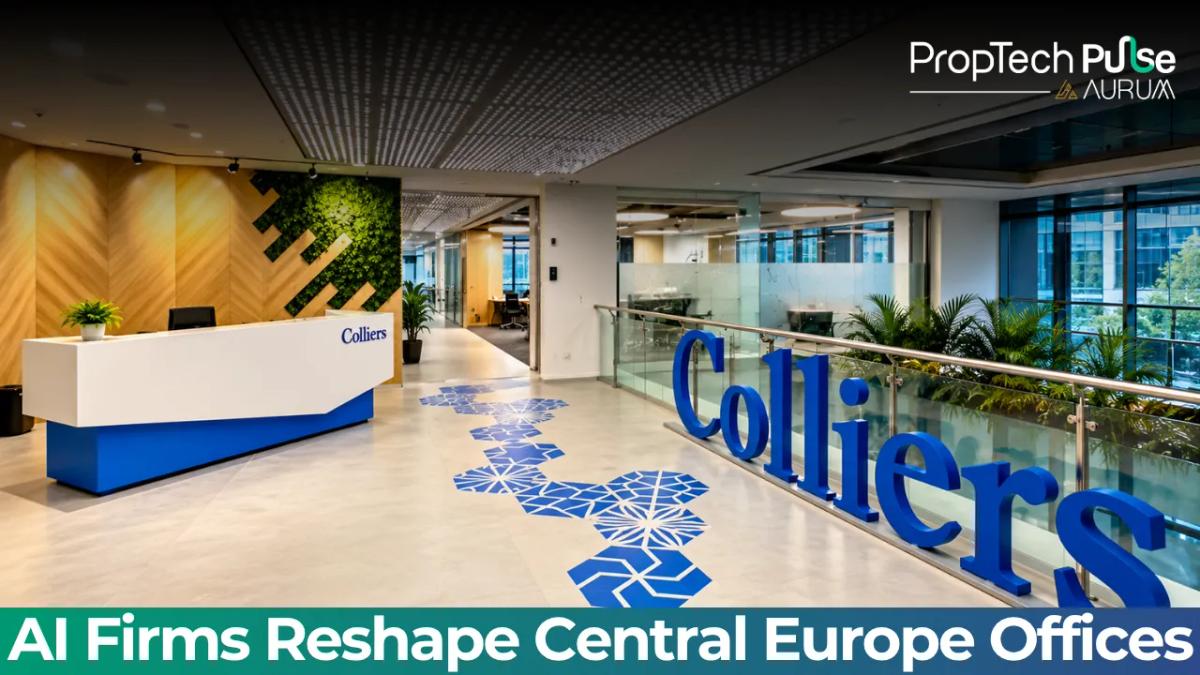
Artificial intelligence (AI) companies are becoming a distinct office-tenant category in Europe, according to a new analysis by Colliers. Warsaw and Prague are emerging secondary ecosystems, while London, Paris and Berlin remain the main concentrations of AI firms.
AI Companies Prioritise Talent and Technical Infrastructure
Colliers says AI firms often expand faster than traditional occupiers and outgrow offices quickly. They prioritise access to universities, research institutions and skilled workers over rent levels.
Requirements can include high power capacity, advanced cooling, fast connectivity and secure server facilities. Early-stage companies often start in innovation districts before moving to central locations.
Josef Stanko, director of market research at Colliers, said landlords need to offer a compelling reason for specialists to work from their offices.
He highlighted the combination of prime locations, digital and energy infrastructure, and space that can accommodate rapid tenant growth.
Central European Cities Build Different AI Roles
No Central European city has yet reached the top tier of European AI hubs, according to the analysis.
Warsaw is grouped with Dublin, Amsterdam, Zürich, Stockholm, Barcelona and Helsinki as a location with a favourable environment for AI development.
Prague, Bucharest and Tallinn are developing more specialised ecosystems, although Colliers considers their progress insufficient to place them in the first or second tier.
Within the Czech Republic, the cities have distinct functions. Prague attracts highly skilled work in financial management, compliance and strategic consulting.
Brno draws development and technology teams, supported by its technical universities and established IT ecosystem.
Ostrava is gaining attention for data analytics, automation, cybersecurity and shared services.
Also Read: Prague Plans 5,500-Home Rental District Worth CZK 50B
Office Strategies Shift Beyond One Main Headquarters
Colliers also points to a broader corporate shift away from relying on one dominant headquarters.
Companies are distributing functions across multiple cities based on the availability of talent, supporting demand for smaller offices focused on particular functions.
Stanko said tenants increasingly value flexibility, shorter commitments and workplaces tailored to operational needs rather than headcount alone.
Czech cities are competing for development, data and technology teams, not AI-company headquarters.
For landlords, the analysis highlights the importance of having offices ready for high power loads, cooling needs and fast expansion.
Stanko said owners with these capabilities would be better positioned if demand intensifies.
Also Read: Česká Spořitelna Plans €450M Senior Housing Investment
Key Takeaways
- AI firms prioritise access to skilled talent and research institutions, alongside suitable building infrastructure.
- Warsaw is identified as a location with a favourable environment for AI development; Prague, Bucharest and Tallinn are building specialised ecosystems.
- Prague, Brno and Ostrava serve different technology-related functions within the Czech Republic.
- Office tenants are placing more emphasis on flexible commitments and space designed around specific operational needs.
Enjoyed this update? Visit PropTech Pulse for more real estate news, investment insights and property market trends.


