New Launch - India Real Estate Report 2026.

Services
Knowledge Hub
Resources
Tools

Ask Pulse Ai
Services
FOR BUYERS & RENTERS
FOR REAL ESTATE DEVELOPERS








Refer other Connectors &
Multiply IncomeRefer other Connectors
& Multiply Income
Refer KuberX & earn
commission on every
loan they get
disbursed.


Scan & Download
©PropTech Pulse 2025, All rights reserved.


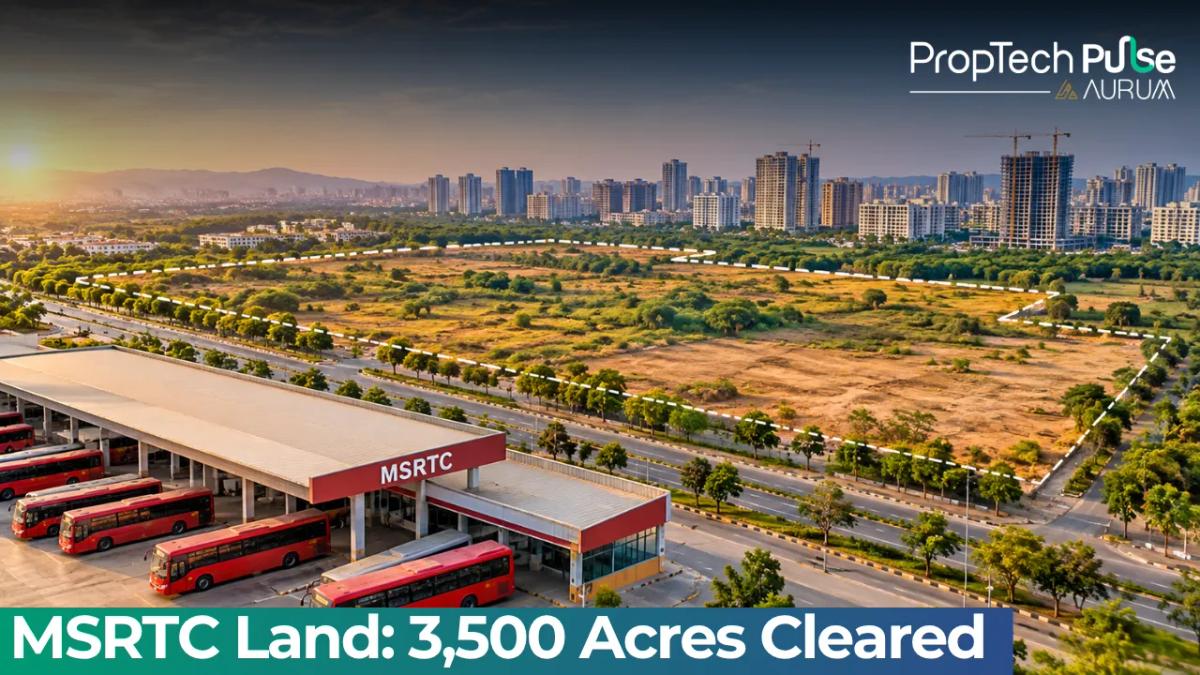
The Maharashtra government has approved commercial development of over 3,500 acres of land owned by the state road transport corporation.
The development will follow the public-private partnership (PPP) model. Leases can extend up to 98 years. A minister announced this on October 9.
The move aims to ensure the long-term financial empowerment of the Maharashtra State Road Transport Corporation (MSRTC) and maximise its revenue.
Scale of the Land Bank
Transport Minister Pratap Sarnaik said MSRTC has more than 3,500 acres of land. It is spread across around 850 locations in the state, much of it in prime areas.
Development for commercial, residential, industrial, and other purposes is expected to generate substantial revenue for the cash-strapped corporation.
Lease Terms
The government has approved a lease period of 49 years, extendable by another 49 years.
This applies to developing surplus land under the PPP model. It paves the way for a long-term revenue stream for the corporation.
The government also considered a recommendation by the Subodh Kumar committee. The committee said an upfront premium-based lease model could benefit MSRTC more than a conventional long-term lease.
The revised 98-year lease framework is expected to help MSRTC secure upfront premium payments.
It will also give the corporation a share in commercial complexes built on its land, generating recurring annual income.
Also Read: MADC Invites Bids for 5-Star Hotel Plot Near Shirdi Airport
Oversight and Transparency
A high-level committee has been formed to oversee the process. Sarnaik, who is also MSRTC chairman, chairs it.
- Separate tenders are mandatory for each property
- The committee must approve tenders, concession agreements, and financial structures
- Final tenders for each project need chief minister-level approval
- Advanced-stage projects may get concessions under the Maharashtra PPP Policy, 2026
Under the government resolution, projects can be taken up on various categories of MSRTC land.
These include properties it owns, land acquired through land acquisition, and land transferred from the erstwhile Road Transport Department.
They also include land held under lease agreements and land received through gift deeds.
Also Read: Aadhaar Now Mandatory for Property Deals in Maharashtra
What the Minister Said
Sarnaik called MSRTC's land a valuable asset. He said the properties will be used for long-term financial empowerment, not just temporary income.
He said the aim is to maximise revenue through transparent tendering, appropriate commercial planning, and the PPP model.
He added that financial self-reliance is essential to strengthen passenger services. Revenue from the surplus land will be used to improve the corporation's services and facilities.
Enjoyed this update? Visit PropTech Pulse for more real estate news, investment insights and property market trends.


