New Launch - India Real Estate Report 2026.

Services
Knowledge Hub
Resources
Tools

Ask Pulse Ai
©PropTech Pulse 2025, All rights reserved.


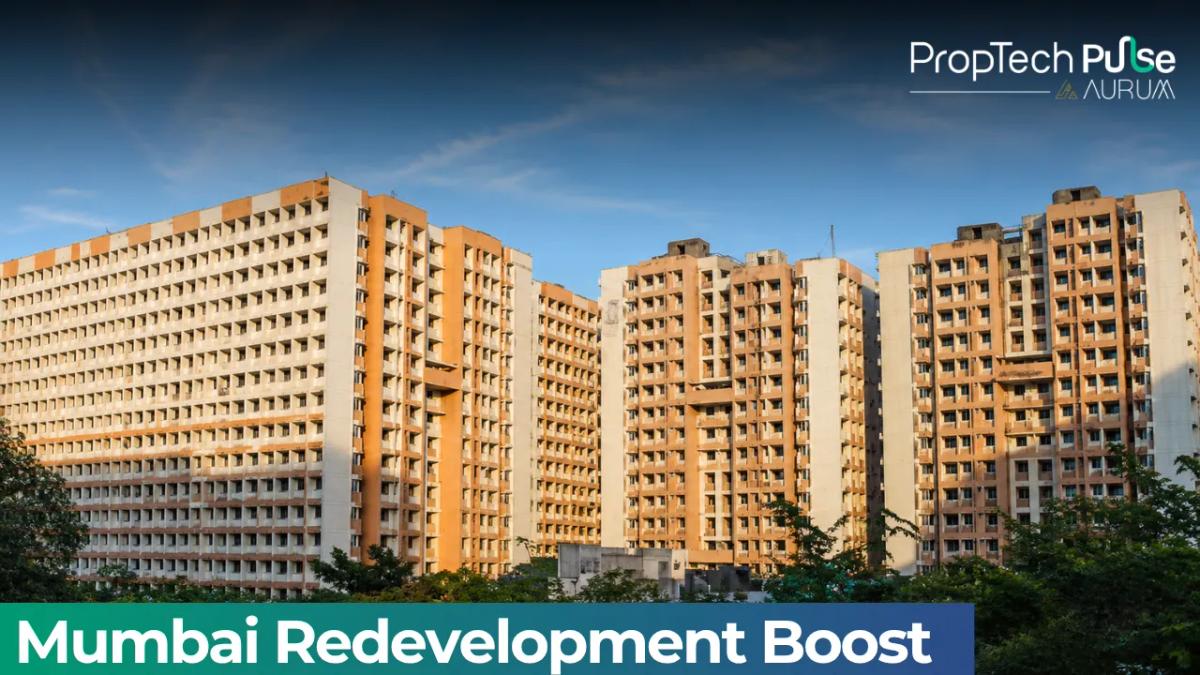
The Maharashtra Legislature has passed an amendment to the Maharashtra Housing and Area Development (MHADA) Act aimed at removing legal hurdles that had stalled redevelopment action under Section 79A. The move is expected to accelerate redevelopment of the city's ageing and dilapidated cessed buildings, a large number of which have stood since before 1940 and continue to house lakhs of residents across Mumbai.
Why the Amendment Was Needed
The amendment addresses a legal ambiguity that had led the Bombay High Court to stay the implementation of Section 79A, along with nearly 935 notices already issued by MHADA. The court had observed that the powers exercised may not have had proper statutory authorisation, effectively freezing redevelopment action across a large number of buildings. Under the revised law, the term "Competent Authority" has been replaced with a provision that explicitly authorises officers designated by MHADA to exercise powers under Section 79A, giving the redevelopment process a clearer and more defensible legal foundation going forward.
The Scale of the Problem
Mumbai currently has more than 13,000 cessed buildings, most of them constructed before 1940, housing lakhs of residents across the city. Redevelopment of these structures has long been viewed as a critical urban renewal and public safety issue, with each monsoon season raising fresh concerns about structural safety.
- Sections 79A and 79B were added to the MHADA Act in 2020 following a series of fatal building collapses
- The Husaini Building collapse in 2017 claimed 33 lives
- The Dongri building collapse in 2019 killed 14 people
- The Fort building collapse in 2020 resulted in 10 deaths
Also Read: MHADA Redevelopment May Attract ₹4 Lakh Cr Investment
Data Behind the Urgency
Right to Information (RTI) data cited in reports shows Mumbai has recorded 345 incidents of full or partial building collapses. MHADA's own records further reveal that building collapses claimed 815 lives between 1970 and 2018, underlining the long-standing human cost of delays in redeveloping the city's ageing housing stock. These figures have repeatedly been cited by officials and housing activists as justification for stronger, faster-acting legal provisions.
What the Provisions Allow
The relevant sections empower MHADA to step in where landlords fail to redevelop buildings that have been declared dangerous. They also allow tenants to undertake redevelopment themselves, provided they secure the consent of at least 51 per cent of occupants in the building. This gives residents a direct path to redevelopment even when landlords are unwilling or unable to act.
With the legal ambiguity now resolved, MHADA is expected to resume action on the redevelopment notices that were previously put on hold by the court's stay order. For the thousands of families living in structurally compromised buildings, the amendment marks a significant step toward faster, legally sound redevelopment across the city.
Enjoyed this update? Visit PropTech Pulse for more real estate news, investment insights, and property market trends.


