New Launch - India Real Estate Report 2026.

Services
Knowledge Hub
Resources
Tools

Ask Pulse Ai
©PropTech Pulse 2025, All rights reserved.


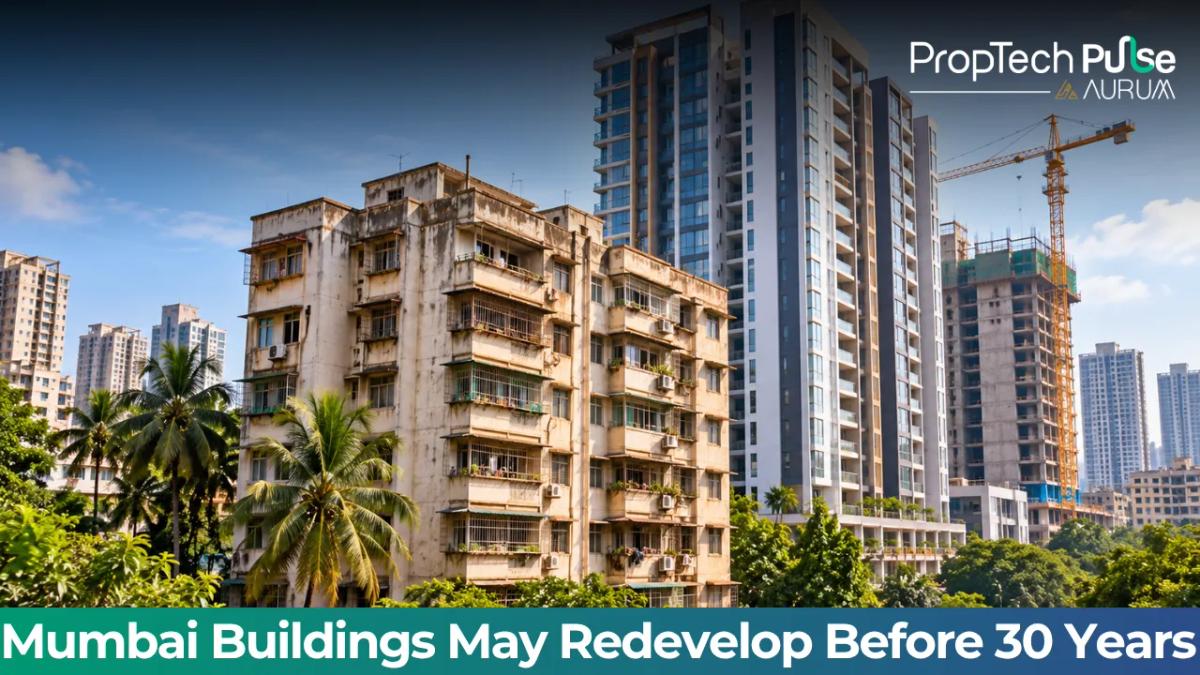
Buildings in Mumbai do not have to be 30 years old to qualify for redevelopment, according to developers and real estate experts.
While the Brihanmumbai Municipal Corporation (BMC) mandates structural audits for buildings older than 30 years, this threshold is not a minimum age requirement for redevelopment.
Eligibility depends on the building's structural condition, applicable development regulations and project-specific approvals.
Is There a Minimum Age for Mumbai Building Redevelopment?
According to developers, residential buildings that are 20 or 25 years old may also be considered for redevelopment under certain circumstances.
Anuj Mehta, director of Mumbai-based Dhuleva Group, said the decision depends on structural stability, the applicable regulations and the project's eligibility.
A relatively new building may also be included in a cluster redevelopment project if the wider cluster meets the prescribed criteria.
Similarly, a building with inadequate structural stability may be considered for redevelopment before reaching 30 years, subject to technical assessments and the necessary approvals.
The key distinction is that the age threshold for a structural audit does not automatically determine whether a building can be redeveloped.
Housing societies and developers must assess the relevant rules and technical requirements for each project.
Why the 30-Year Threshold Matters
The 30-year mark is important because residential buildings older than this threshold may qualify for additional Floor Space Index (FSI) incentives and concessions on certain premiums during redevelopment, according to experts cited in the report.
Architect Vilas Nagalkar, a member of the Practising Engineers, Architects and Town Planners Association (PEATA), said eligible buildings may receive an FSI incentive of 10 square metres, or approximately 100 square feet, without cost, along with a 25% concession on certain premiums.
These incentives can influence the financial feasibility of a redevelopment project. However, eligibility and the applicable benefits depend on the governing regulations and the project's specific circumstances.
How Redevelopment Works in Mumbai
Redevelopment typically involves demolishing an existing building and constructing a new one using the development potential permitted under applicable FSI and planning regulations.
In a housing society project, the developer generally provides existing residents with replacement homes, often with additional area, while the remaining permissible development potential may be used for apartments sold in the open market.
Depending on the negotiated agreement, residents may also receive corpus payments, temporary accommodation or rent during construction and other benefits. The terms vary by project and should be assessed carefully by society members before approving a proposal.
Why Experts Caution Against Redeveloping Newer Buildings
Although younger buildings may qualify in certain circumstances, experts caution against pursuing redevelopment solely to obtain incentives or improve amenities.
Nagalkar said residential buildings are generally designed for a lifespan of around 60 years, although exposure to rain, sunlight and other factors can cause deterioration over time.
He argued that redeveloping buildings aged 20 to 25 years merely to access incentives should be discouraged to avoid wasting natural resources. Structural safety, habitability and the long-term condition of the building should remain central considerations.
For housing societies, this means assessing whether redevelopment is justified by the building's condition and whether the proposed project offers a viable, compliant solution for residents.
Mumbai Redevelopment Becomes a Major Source of Housing Supply
Redevelopment has become an important part of Mumbai's residential property market, where limited developable land has increased the need to renew existing buildings and use land more efficiently.
A September 2026 report by JLL India and NAREDCO recorded more than 1,000 redevelopment projects launched in Mumbai since 2020.
These projects accounted for approximately 13% of the city's overall residential supply and 15% of housing sales.
Borivali, Malad, Andheri, Vikhroli and Goregaon accounted for around 36% of the projects launched since 2020, with the western suburbs emerging as a significant redevelopment hub.
A separate Knight Frank India report recorded 1,094 redevelopment development agreements signed between January 2020 and March 15, 2026. These agreements covered 432 acres and were expected to generate approximately 59,000 housing units.
Also Read: Mumbai Sea-Facing Homes Command a Luxury Price Premium
What Housing Societies Should Check Before Redevelopment
Before proceeding, housing societies should review the building's structural assessment, applicable development regulations, project eligibility and the developer's proposal.
They should also understand the proposed FSI, premium concessions, replacement apartment area, temporary accommodation arrangements and other contractual benefits.
Because eligibility depends on the applicable rules and individual project circumstances, societies should seek advice from qualified legal and technical professionals and obtain the necessary approvals from the relevant authorities before committing to redevelopment.
Also Read: Mumbai Luxury Homes Record ₹32,623 Crore Sales in H1 FY27
Key Takeaways
- Mumbai buildings do not need to reach 30 years of age to be considered for redevelopment.
- The BMC's 30-year structural audit threshold is different from a minimum redevelopment age.
- Older eligible buildings may receive additional FSI incentives and concessions on certain premiums.
- Experts caution against redeveloping relatively new buildings solely to obtain incentives.
- More than 1,000 redevelopment projects have been launched in Mumbai since 2020, according to a September 2026 report.
Enjoyed this update? Visit PropTech Pulse for more real estate news, investment insights and property market trends.


