New Launch - India Real Estate Report 2026.

Services
Knowledge Hub
Resources
Tools

Ask Pulse Ai
©PropTech Pulse 2025, All rights reserved.


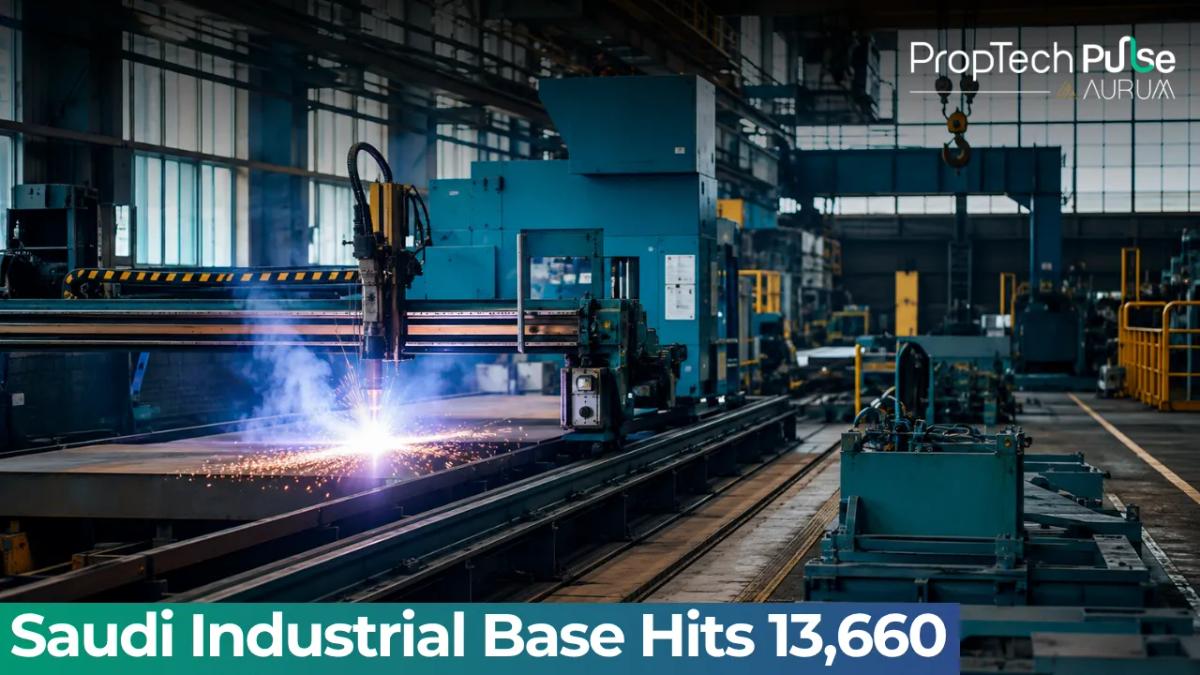
Saudi Arabia's industrial occupancy exceeded 90 per cent across key markets in the second quarter. The number of industrial establishments rose to 13,660 in April, JLL said.
Occupancy in Riyadh, Jeddah and the Dammam Metropolitan Area remained above 90 per cent.
This was supported by lease renewals and continued absorption of industrial and logistics space, despite regional disruptions, according to JLL's KSA Industrial Market Dynamics Q2 2026 report.
The Kingdom's industrial base expanded from 12,289 establishments a year earlier to 13,660 in April.
During this period, 322 new industrial licenses were issued, and 188 factories began production.
JLL said this expansion is generating additional demand for industrial and logistics space.
The growth reflects Saudi Arabia's broader push to increase manufacturing capacity and attract investment into higher-value industries.
Under the National Industrial Strategy, the Kingdom aims to increase the number of industrial plants to about 36,000 by 2035, up from 7,206 in 2016.
Also Read: Rosewood AMAALA Opens on Saudi Arabia's Red Sea Coast
Rental rates rise across Riyadh, Jeddah and Dammam
Saud Al Sulaimani, CEO and head of capital markets for Saudi Arabia at JLL, said the resilience of the Kingdom's logistics sector has strengthened its position as a global trade hub.
He pointed to national directives and strategic port infrastructure investments in line with Vision 2030 goals.
He added that this structural demand, including enhanced capacity at the Kingdom's Red Sea ports, is fuelling interest in premium, well-located logistics spaces, even amid broader macroeconomic uncertainty.
Rental rates increased across all three markets during the quarter:
- Dammam area: up 6.9 per cent, the largest rise
- Jeddah: up 4.8 per cent
- Riyadh: up 3.9 per cent, with Industrial Gate City recording the capital's highest rate at SR300 per sq metre annually
Cargo shifts to western ports amid Hormuz disruptions
JLL said disruptions related to the Strait of Hormuz redirected cargo toward Saudi Arabia's western ports during the second quarter.
This included Jeddah Islamic Port and King Abdullah Port in Rabigh.
The shift prompted companies to reconsider their dependence on individual trade corridors, increasing demand for logistics facilities connected to the Kingdom's multi-port network.
In May, Mediterranean Shipping Co. launched a new Europe–Red Sea–Middle East Express service. It connects European ports directly with King Abdullah Port, Jeddah and Aqaba, with onward multimodal links to the UAE and other Gulf markets.
JLL expects freight costs to remain elevated in the near term. It said western Saudi ports are likely to retain a portion of the diverted trade flows even after regional conditions normalise.
Also Read: Diriyah Company Secures $533m for Branded Residences
Tight supply expected to persist
Occupancy across the Kingdom's principal industrial markets is expected to remain high over the near to medium term.
Planned developments could ease pressure in selected submarkets. However, JLL does not anticipate a significant shift away from conditions currently favouring landlords in the short term.
Enjoyed this update? Visit PropTech Pulse for more real estate news, investment insights and property market trends.


