New Launch - India Real Estate Report 2026.

Services
Knowledge Hub
Resources
Tools

Ask Pulse Ai
©PropTech Pulse 2025, All rights reserved.


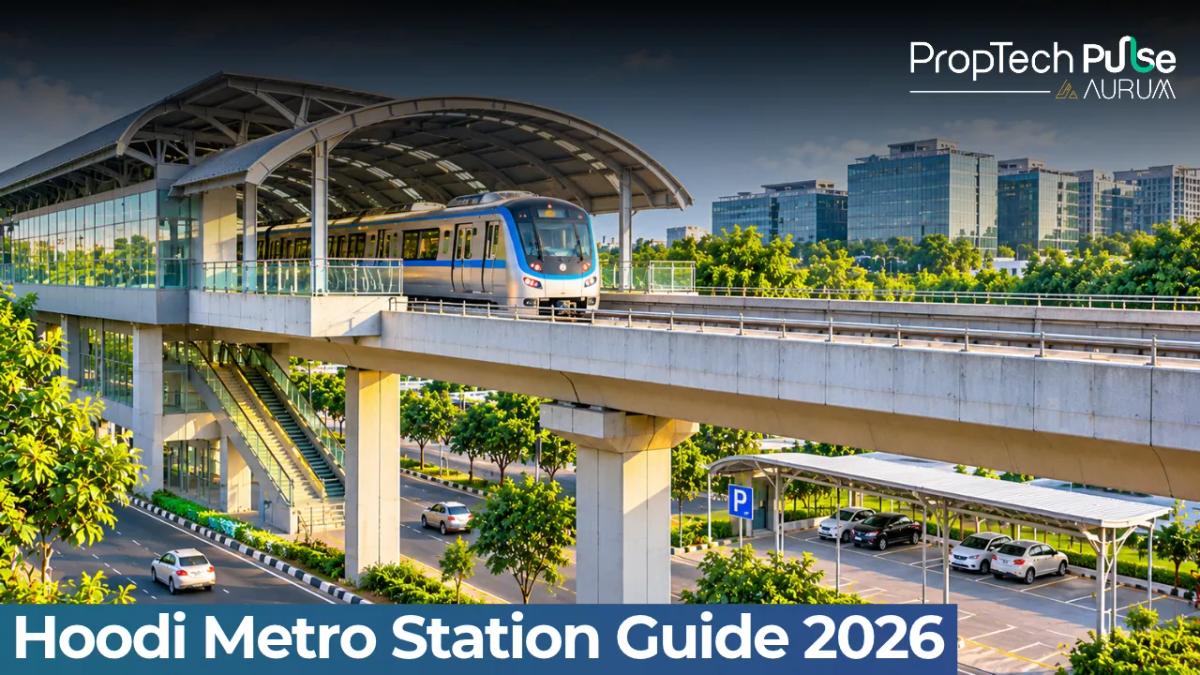
Commuting out of Hoodi used to mean getting stuck between Seetharampalya and Marathahalli bottlenecks before sunrise. Traffic gridlocked the arterial road daily. Now, the BMRCL track above the pavement gives commuters a reliable fallback.
Renters and homebuyers mapping the ITPL-Sarjapur belt know generic distance numbers don't predict daily frustration.
They need hard data. This guide covers what works at this station: matching ramps to your IT park, strict timing schedules, exact fare calculations, and last-mile rides that survive peak hours.
Where is Hoodi Metro Station located?
Quick answer
Located at Doddabettahalakunte and Seetharampalya, Hoodi Metro Station sits on the Purple Line. Platform 1 (Gate A) heads to Whitefield, while Platform 2 (Gate B) runs toward Kengeri. Fares start at ₹30 for Whitefield trips. Operating hours span 5:00 AM to 11:00 PM with five-minute peak frequency.
Situated at the crossroads of Doddabettahalakunte and Seetharampalya, the station anchors East Bangalore’s densest employment corridor. It sits right next to the what is hoodi in bengaluru. Thousands of residents walk from nearby apartments, gated communities, and independent houses built along this main road.
Proximity to Hoodi Circle and commercial clusters
The concrete structure stretches roughly two hundred metres north to south. Directly below, the original commercial hub near Hoodi Circle still handles heavy footfall. Further north, newer township projects cater to IT workers heading to Devarabisanahalli.
Because the raised track slices through old streets, finding the correct ramp takes focus. You must watch which side of the main road your workplace sits on. The wrong ramp puts you on the opposite bank, forcing a difficult street crossing.
Understanding the Hoodi Metro Station Route
Misreading the direction wastes fifteen minutes. Boarding the wrong train on a crowded weekday morning means standing while hundreds pass you. The Purple Line runs east to west, linking industrial belts to downtown Bangalore via Kempegowda Interchange.
Platform 1 & Gate A: Heading to Whitefield (Kadugodi)
Gate A dumps riders straight onto Platform 1. The tracks point eastward toward Garudacharpalya, Hebbel Kana Agrahara, and Baiyappanankolanahalli. Trains either terminate at Whitefield or run shuttles to Kadugodi depending on the daily schedule.
Workers based at International Technology Park hop off at Whitefield and switch to a shuttle auto.
Expect trains to arrive every five minutes during the 8:30 AM crush. Crowding happens fast. Hold the railing and wait for passengers to exit before boarding.
Platform 2 & Gate B: Heading to Kengeri / Challaghatta
Gate B routes commuters west toward the Kengeri Bus Terminal. This direction serves offices near Central Silk Board, Bommasandra industries, and downtown hubs reachable through Shivajinagara or Majestic interchanges.
The local bus stop network lines up perfectly with Gate B. Residents living west of the flyover prefer this exit. Connecting to city-side buses takes less than three minutes.
First and Last Metro Timings at Hoodi
BMRCL adjusts operational windows seasonally. Monsoon maintenance phases often shorten late-night services. Always check the printed timetable at the station entrance, but use these standard boundaries to plan your calendar.
Weekday Roster and Peak-Hour Frequency
| Service Direction | First Train | Last Train | Peak Interval |
|---|---|---|---|
| Platform 1 (Whitefield/Kadugodi) | 5:00 AM | 11:00 PM | 5–7 minutes |
| Platform 2 (Kengeri) | 5:16 AM | 11:16 PM | 5–7 minutes |
| Non-Peak Service | 10–15 minute intervals (evenings & weekends) | ||
Warning: The last train does not run continuously past midnight. If you miss the scheduled cutoff, autos from the stand will charge premium rates. Verify evening shifts locally.
Namma Metro Fare Breakdown and Travel Cost Example
Tariffs follow a distance-weighted slab system. Base fares climb as you cross zone borders. GST and state transit cess stack on top at the vending machine. Prices reset completely if you exit and re-enter.
Hoodi to Whitefield Single-Journey Calculation
A standard employee covering seven kilometres along the purple corridor pays a fixed slab rate. The meter registers stops at Hebbel Kana Agrahara and Baiyappanahalli before the final terminus.
| Fare Component | Amount |
|---|---|
| Base travel fare (7 km zone) | ₹30 |
| Railway/Metro cess (illustrative) | ₹2 |
| GST (5%) | ₹1.50 |
| Total estimated round-trip cost per day | ₹63 to ₹65 |
That totals roughly ₹1,400 monthly for a twenty-two-day cycle. Tenant groups usually compare this figure against petrol prices and cab surge rates. Senior citizens and differently-abled passengers qualify for half-price tickets at the counter.
Parking Reality and Last-Mile Connectors
Two-wheeler spaces under the viaduct handle bikes without trouble. Car parking remains the bottleneck. Narrow municipal access roads prevent the railway corporation from laying down large lots.
Bike/Car Parking and the Hoodi Bus Stop Integration
Station security guards secure bicycles and scooters near both gates for a small token fee. Larger vehicles must use the municipal bays on Doddabettahalakunte Road. Those bays fill by 8:45 AM. Driving to the Hoodi bus stop instead saves thirty minutes of circling.
App Cabs, Autos, and Sidewalk Walkability
Auto queues form outside Gate B throughout the morning window. Drivers sometimes skip short drops toward ITPL when the return leg looks empty. Ola and Uber pins drop precisely at the designated pickup curb.
Paved sidewalks stretch comfortably from the northern ramp. Pedestrians walking to coaching centres and evening shops get a proper walkway without dodging delivery vans.
Station Amenities and Accessibility Standards
Beyond token counters and UPI kiosks, BMRCL mandates wheelchair lifts at every ramp. Facility staff patrol the escalator landings hourly. Sulabh toilets sit on the mezzanine level and undergo deep cleaning twice a day.
Small commerce spots occupy the ground floor. ATM corners, mobile recharge stalls, and quick-service food joints keep foot traffic moving. You won't find clutter blocking the stairwells.
How Hoodi Metro Impacts Rental Yields and Homebuyer Choice
Transit-oriented pricing holds firm here. Buildings within four hundred metres of the station rent faster. IT employees trade square-footage size for guaranteed commute windows.
Market trackers note that properties close to Purple Line nodes command a ten to fifteen percent premium.
Identical two-bedroom flats inland list cheaper but sit vacant longer. Ready-to-move inventory near the station shows consistent turnover even during market slumps.
What to Do Before Signing Your Lease or Purchase
Walk the exact ramp leading to your future door. Time it during an actual 9 AM rush. Count how many people stand behind you before the train clears. Test whether the elevator works instead of relying on the brochure.
Check the builder's RERA registration code online. Verify the title deed and encumbrance certificate yourself. Ensure developers haven't illegally increased floor area ratios. Commute reliability beats glossy marketing every time.
Frequently asked questions
Is there parking at Hoodi metro station?
Yes, dedicated two-wheeler parking racks are available near both Gate A and Gate B, managed by station security for a small token fee. Car parking exists further along Doddabettahalakunte Road but fills quickly during weekdays. Motorcycles and scooters can generally be locked securely, though space remains tight compared to ground-level suburban terminals.
What is the fare from Hoodi to Whitefield metro station?
A single adult journey between Hoodi and Whitefield covers approximately seven kilometres along the Purple Line. Current tariff structures set the base fare around ₹30, plus minimal state transit cess and a five per cent GST layer. Daily commuting costs stay near sixty-five rupees round-trip, offering substantial savings over daily auto-hailing or fuel expenses for IT workers.
How far is the Hoodi bus stop from Hoodi metro station?
The primary BMTC bus halt operates roughly one hundred and sixty metres southwest of the main entrance plaza. Pedestrians reach it by descending the southern ramp and crossing Doddabettahalakunte Road diagonally. Transferring takes about two minutes walking speed, integrating smoothly with late-evening commuter flows heading west toward Silk Board or downtown hubs.
Which direction does the Hoodi metro go?
Trains split into two directional flows depending on your chosen ramp. Gate A deposits riders onto Platform One, sending the carriage eastward toward Whitefield, Kadugodi, and eventual industrial parks. Gate B channels passengers to Platform Two, routing westbound services toward Challaghatta, Bommasandra, Kengeri Bus Terminal, and central Bengaluru hubs.
What time does the last train leave Hoodi for Kengeri?
Evening cutoffs vary slightly by seasonal roster adjustments, but standard timetables schedule final departures from Hoodi toward Kengeri at 11:16 PM. During monsoon maintenance phases or long holidays, trains sometimes pull back earlier to depot storage. Checking the morning bulletin board or the operator app the day before guarantees you do not miss the overnight transfer window.
Sources
- BMRCL Official Website: Fare charts and daily roster timings referenced for Purple Line operations (accessed October 2026)
Enjoyed this blog article? Visit PropTech Pulse for more interesting blogs.




Ask Pulse Ai anything about real estate

Unlock the Latest in Real Estate
News, Infographics, Blogs & More! Delivered to your inbox.

