New Launch - India Real Estate Report 2026.

Services
Knowledge Hub
Resources
Tools

Ask Pulse Ai
©PropTech Pulse 2025, All rights reserved.


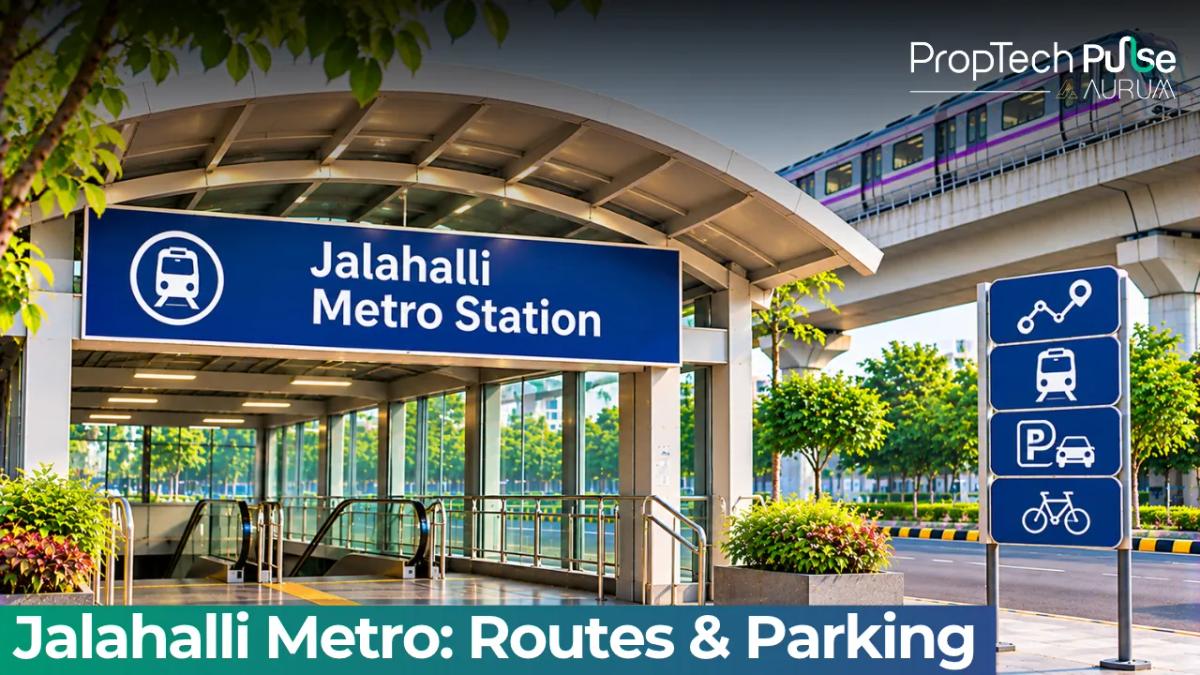
Planning your route through the Jalahalli metro station requires knowing exactly how the morning rush flows. Commuters and investors share the same pavement space near Jalahalli Cross. Reliable transport links define the area value.
The Green Line routes connect heavy industrial zones to northern suburbs. Clear fare rules and steady timing keep the green line bangalore network moving for residents who depend on it.
The area works differently than premium central districts. Shift workers from Peenya, commercial tenants from Jalahalli Cross, and homebuyers chasing rental yields share the same pavement space.
Knowing exactly how the station operates prevents missed shifts and protects your property investment timeline.
Jalahalli Metro Station Quick Info
Quick answer
Opened in 2015, Jalahalli (JLHL) sits on the Green Line above ground level. It connects the industrial belt toward Madavara with residential zones near Silk Institute. Dedicated parking supports monthly passes, serves the commercial hub, and backs key rental corridors.
| Feature | Detail |
|---|---|
| Station Code | JLHL |
| Line | Green Line (North-South Corridor) |
| Structure | Above ground, double-track |
| Entry Gates | Gate A (Jalahalli Cross side), Gate B (Peenya BSNL block) |
| Platform One Direction | Towards Madavara |
| Platform Two Direction | Towards Silk Institute |
| Interchange Points | Nadaprabhu Kempegowda (Purple Line), YVR Bangalore Airport (Yellow Line) |
| First Train Window | Roughly 05:30 AM depending on platform |
| Last Train Window | Roughly 11:30 PM to midnight depending on direction |
Commuters often conflate Gate A and Gate B because both feed the same concourse, but they serve distinctly different micro-markets. Gate A opens straight onto the main Jalahalli Cross thoroughfare, capturing retail traffic and office goers.
Gate B faces the older Peenya BSNL side, primarily used by shift workers heading into the manufacturing zone. If you manage vehicle entry at dawn or dusk, timing your exit choice saves fifteen minutes.
Route Map and Connectivity
Green Line Position and Interchanges
The station anchors the northern stretch of the Green Line, acting as a bridge between sprawling suburbs and the city core. Platform One sends trains deep into far north Bengaluru toward Madavara.
They pass through key junctions before switching to south-bound tracks. Platform Two heads toward Silk Institute. These lines touch the Yellow Network at the airport. Passengers can catch transfers to the Purple Line later.
Daily ridership spikes heavily during the 8 AM to 10 AM window and reverses sharply between 6 PM and 8 PM.
During peak hours, the station handles crowded platform conditions. Standing near the ends of the designated queue zones keeps you away from the heaviest bottleneck at the turnstile cluster.
Timings and Fares
First and Last Train Hours by Direction
Schedules adjust seasonally and periodically based on maintenance closures, but the operational frame remains consistent. The initial service starts shortly past five in the morning on both platforms.
The final departure generally leaves the station by twelve midnight, though late-night travelers relying on night shifts should confirm the exact cut-off time locally, as weekend extensions occasionally drop midweek.
If you work irregular shifts, the timetable becomes critical. Missing a midnight train leaves limited public transport alternatives along this stretch, so tracking the official bulletin matters more than guessing.
Latest Metro Fares After Recent Revision
Fare matrices in Bengaluru reset periodically to account for operational costs and network expansion. While exact slab values update without long public notice, the pricing structure follows distance-based brackets.
Trips covering three kilometres start at the lowest bracket. Journeys hitting five to eight kilometres jump to the next tier. Cross-city runs cost more, usually capping around sixty rupees. Fares track distance strictly. You pay exactly for what you ride.
| Travel Bracket | Approximate Distance | Fare Range |
|---|---|---|
| Short Hop | Up to 3 km | Base Rate |
| Medium Route | 3 km to 5 km | Mid Tier |
| Long Run | Above 5 km (city-wide) | Standard Max |
Commuters travelling between Jalahalli and central business districts typically pay within the mid-to-upper slab, making the Namma Metro card worthwhile. Tap-in and tap-out efficiency drops dramatically if you buy single-use paper tokens during rush hour, especially when carrying heavy bags or pushing a stroller. The smart card skips the counter friction entirely.
Parking at Jalahalli Metro Station
Capacity, Types and Monthly Pass Details
Two-wheeler owners dominate the vehicle queue outside Gate B, where the lot aligns closest with the factory exits.
Four-wheeler slots fill rapidly once office commuters park for the full day, creating a turnover game that favors early arrival. The designated area covers 120 spaces for bikes and 52 for cars.
The station offers monthly passes designed for regular users. These passes reduce daily overhead compared to token entry, and they secure a guaranteed spot without circling the perimeter.
Security runs continuous CCTV monitoring across both vehicle zones, which lowers insurance claims and theft risk for daily parkers. To grab a monthly pass, show up early with your RC copy and insurance papers before the slot pool closes for the month.
Parking tip: Arrive before 9:15 AM if you need a four-wheeler slot. The lot fills quickly, and overflow spills onto the boundary wall perimeter where visibility drops and rain creates slippery patches.
Getting Around the Jalahalli cross direction Area
The streets radiating outward from Gate A carry heavy commercial weight. E-rickshaws wait at designated stands, and auto queues build fast near Gate B.
Ride-hail pickups struggle near the bus junction because of narrow turning radiuses. Walking north toward the textile markets stays smooth on wider concrete strips.
Heading west toward older residential lanes means stepping over uneven drainage covers. Use the flyover for highway crossings. Ground-level spots face high-speed trucks that overwhelm pedestrian signals.
Real Estate Around Jalahalli Cross Road
Buying Prices and Rental Demand
Apartment rates near the Jalahalli metro station reflect a mature mixed-use market. Prices hover between ₹5,700 and ₹10,760 per square foot.
Costs swing based on builder reputation and building age. Societies with lifts and live security charge more. Newer constructions hold OC approvals and ask for top prices. Older freehold stock leans to the lower band.
Rental yields stay steady because tenant pools never dry up. A one-bedroom flat rents starting around eight thousand rupees, while larger two-bedrooms move higher as families substitute for single corporate tenants. The proximity to the property valuation near transit infrastructure consistently pushes baseline rent above comparable north-west pockets lacking rapid transit access.
Industrial Influence on Property Yields
Living next to a manufacturing zone changes the leasing profile entirely. Shift patterns mean demand peaks in the evening when premium suburb tenants head home.
Landlords targeting factory supervisors, junior engineers, and HR staff find faster vacancy turnover here. However, noise pollution from daytime material movement limits appeal for quiet remote-working professionals who prioritize sound insulation over convenience.
Run the numbers through a rental yield calculator before booking. Compare those returns against stamp duty costs in the district. Factor in maintenance too. Industrial-area societies often charge more for upkeep because heavy footfall wears down common spaces quickly.
| Metric | Ideal For |
|---|---|
| High Rental Turnover | Investors targeting shift workers |
| Stable Capital Growth | End-users seeking proven connectivity |
| Parking Competition | Two-wheeler dominant households |
What to Check Before You Buy or Commute
Focus on three realities before committing capital or reshaping your schedule. Verify the occupancy certificate exists; properties missing OC rarely qualify for standard bank financing. Test the actual commute during your target shift time, not mid-afternoon when trucks clear and platforms empty.
Finally, review the property due diligence checklist specifically for flood history in nearby drainage channels, because monsoon clogging slows recovery on the Jalahalli cross direction roads longer than central districts.
Frequently asked questions
Is there parking at Jalahalli metro station?
Yes. The station provides 120 designated slots for two-wheelers and 52 spots for four-wheelers located on the premises. Both vehicle types fall under continuous CCTV surveillance. Daily parkers can purchase monthly passes to lock in preferred timing and skip token queues, which helps avoid early morning scramble when factory shifts change over.
What is the last metro time from Jalahalli to Silk Institute?
Services heading toward Silk Institute normally depart the station before midnight. The exact cutoff fluctuates weekly based on track maintenance windows, so standing passengers should check the display boards inside the concourse rather than relying on printed timetables. Missed trains leave riders waiting over forty minutes for the next scheduled departure.
How much is the metro ticket from Jalahalli to MG Road?
Fares calculate strictly on distance traveled. Traveling toward the city center usually lands passengers in the mid-range bracket, topping out below sixty rupees depending on the exact exit gate chosen at the destination. Using a rechargeable Namma Metro card cuts transaction time significantly during peak commuter windows compared to paper tokens.
Which line is Jalahalli metro station on?
It sits on the Green Line. Platforms route trains either toward Madavara in the far north or downward toward Silk Institute, linking directly to airport connections and eventual transfers onto the Purple and Yellow networks at central hubs. Riders shifting lines at Nadaprabhu Kempegowda or the airport terminal should allow extra transfer time.
Sources
- BMRCL Official Portal: Station code, entry gates, parking capacity, line details, and platform directions (accessed November 2026)
- Government of Karnataka: General municipal regulations and land use classifications relevant to the Jalahalli industrial-residential zone (accessed November 2026)
Enjoyed this blog article? Visit PropTech Pulse for more interesting blogs.





Ask Pulse Ai anything about real estate

Unlock the Latest in Real Estate
News, Infographics, Blogs & More! Delivered to your inbox.

