New Launch - India Real Estate Report 2026.

Services
Knowledge Hub
Resources
Tools

Ask Pulse Ai
Services
FOR BUYERS & RENTERS
FOR REAL ESTATE DEVELOPERS








Refer other Connectors &
Multiply IncomeRefer other Connectors
& Multiply Income
Refer KuberX & earn
commission on every
loan they get
disbursed.


Scan & Download
©PropTech Pulse 2025, All rights reserved.


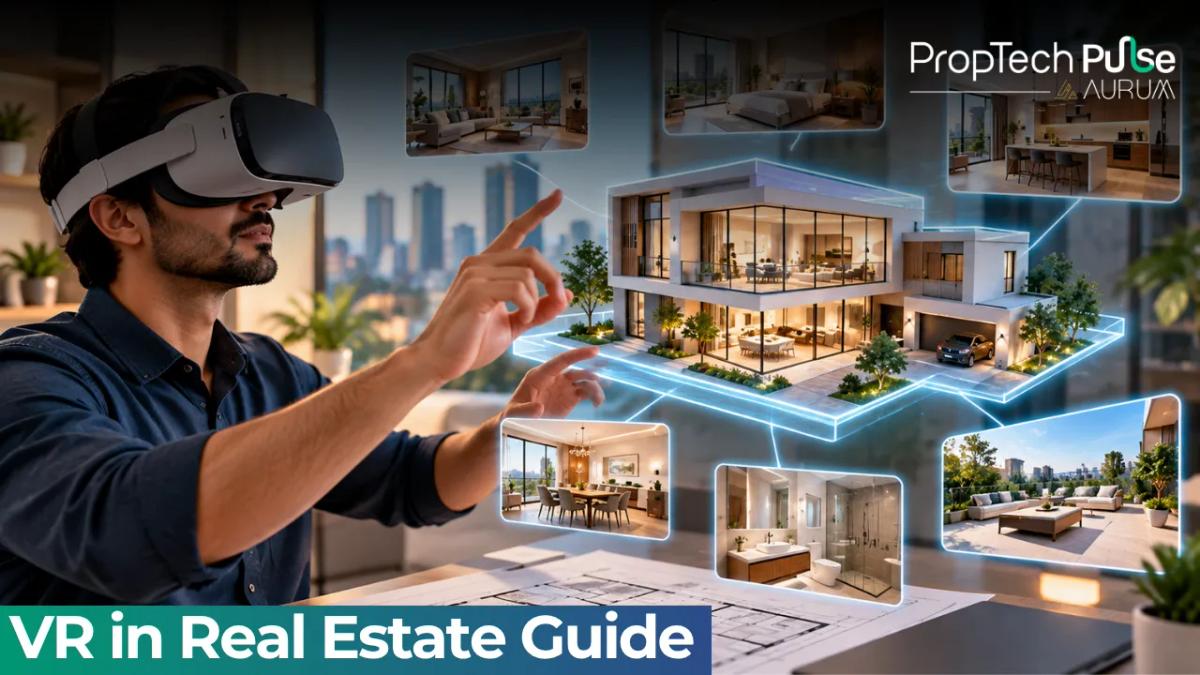
You can now walk through a flat in Pune from a sofa in Dubai. VR in real estate makes that possible, and it changes how buyers shortlist, how developers sell and how NRIs decide. It also makes it easier to be impressed by something that is not the flat you will receive.
This guide explains how VR works in property, who uses it, what it costs a developer, and what a buyer should check before trusting a virtual tour.
What VR in real estate means
Quick answer
VR in real estate lets buyers explore a property through a 3D or 360-degree digital model, on a headset, phone or browser, without visiting. It is most useful for under-construction projects and remote buyers. It is a sales aid, so verify what you see against the sanctioned plan and agreement.
The tour feels like standing inside the flat. You turn, step into the bedroom and look out of the balcony, all on a screen or through a headset.
Pulse has covered the wider shift in its guides on how virtual reality is changing property sales and augmented reality in real estate marketing. This page focuses on how to use and judge VR in practice.
Types of virtual property tours
| Type | What it shows | Best for | Watch out for |
|---|---|---|---|
| 360-degree photo tour | Real photos of a finished home stitched into a view you can rotate | Ready flats, resale and rentals | Can be taken with wide lenses that stretch rooms |
| 3D walkthrough | A computer-built model you move through | Under-construction projects | Shows the plan, not the built flat |
| Headset VR experience | Fully immersive view with depth | Sales galleries and site offices | Needs hardware, and some people feel dizzy |
| Mixed or augmented view | Digital model overlaid on a real site or room | Seeing furniture or a tower on the plot | Depends on a good camera and light |
Source: author's summary of common formats.
If you only want a quick look at layout, a technology-led tour on a phone is enough. The Pulse AR/VR page shows how these tools can be used on a project.
What a good VR tour includes
Not every tour is worth your time. A good one gives you control and facts instead of a pretty path.
- Free movement, so you can go where you like instead of following a fixed route.
- Room labels with dimensions, so you can check sizes.
- A choice of floor, facing and unit type, and not only the showpiece flat.
- Day and night lighting, since a west-facing living room feels different at 5 p.m.
- A clear note saying whether the model shows the built flat or the plan.
If a tour hides dimensions or forces one route, treat it as a marketing film rather than a tool.
Who uses VR, and why
- Developers. They sell units before towers rise and show finishes a sample flat cannot cover.
- Brokers and channel partners. They shortlist faster by sending a link instead of arranging five site visits.
- NRI buyers. They can compare projects from abroad. Read the NRI property buying guide for the paperwork that follows.
- Interior designers and owners. They test layouts and finishes before spending.
- Buyers. They narrow a long list without losing weekends to traffic.
The thread is the same in each case: fewer wasted visits. For the buyer's side of the journey, see how PropTech improves the buying experience.
What it costs a developer, and when it pays back
Take a hypothetical project. A developer spends ₹3 lakh on a 3D walkthrough and a headset demo for the sales gallery.
Assume each flat sells for ₹1 crore and the developer's margin is 15%, so ₹15 lakh a unit. The spend breaks even at 0.2 extra sales, which is ₹3 lakh ÷ ₹15 lakh. In plain terms, one extra sale across five launches like this covers it.
These numbers are illustrative, and real results depend on traffic, pricing and sales skill. They show why developers experiment with VR even when proof is thin: the break-even bar is low. The risk lies elsewhere, in a polished tour that sets expectations the building cannot meet.
What a buyer should check
Treat a VR tour as a brochure that moves. Check it the way you would check any brochure.
- Match the layout. Compare the VR model with the 2D plan and the sanctioned plan filed with the authority.
- Check the area. Ask which area the tour shows. Super built-up and carpet area differ by a lot, as the loading factor guide explains.
- Look at what's outside. Views in a model are drawn. Check the real surroundings on a site visit.
- Ask about finishes. Request the specification list for flooring, fittings and brands.
- Confirm registration. Look up the project on the state RERA portal and read the legal verification guide.
- Get it in writing. Anything promised in the tour should appear in the agreement for sale.
Under RERA, advertised details should match what is registered. If they differ, ask the developer to explain in writing.
VR for owners, landlords and brokers
You don't need a developer's budget. A 360-degree tour of a ready flat can be shot with a phone or a basic 360 camera, then hosted on a listing page.
Light the rooms well, open curtains, clear clutter and shoot at chest height so that room sizes look honest. A tour that exaggerates a room brings visitors who leave disappointed, which wastes your time as well as theirs.
Pair the tour with a clear floor plan and the carpet area. For ideas on how to present and style a home before listing, the Pulse interior design guide is a useful start.
Where VR falls short
VR cannot tell you how a corridor sounds at night or how the building smells after rain. It cannot show noise from a nearby road, water pressure on the ninth floor or the quality of the lift.
Headsets also have limits. Some people feel dizzy, and good hardware costs money, which is why many tours run on a phone. Tours are often built for the best unit, so ask which floor and facing the model represents.
For ready homes, a physical visit still matters. For anything under construction, VR is a good first filter and a poor final one.
How to use VR well
Decision rule: use VR to shortlist, then visit the site or a finished tower by the same developer, then decide on the paperwork. If the tour and the sanctioned plan disagree, trust the plan and ask the developer to explain.
If you sell or rent a home, a simple 360-degree tour shot in good light costs little and gets more serious enquiries. If you're a buyer, ask the developer for the tour link early, and compare two or three projects on the same checklist. The property buying guide lists what else to confirm. For the technology behind these tours, the note on digital twins in real estate goes deeper.
Frequently asked questions
What is VR in real estate?
It is the use of virtual reality to let people experience a property without being there. A headset or a phone shows a 3D or 360-degree model of a flat, house or whole project, so you can look around, move through rooms and see finishes.
Is a VR tour the same as a 360-degree photo tour?
No. A 360-degree tour uses real photos of a finished space. A VR walkthrough is usually a computer-built model, which can show a home that does not exist yet. The first shows what is there. The second shows what is planned.
Do I need a headset to take a VR property tour?
Not always. Most Indian projects offer tours in a browser or phone app, and a headset only adds depth. Use the headset if the developer or broker has one, but a phone or laptop tour is enough to check layout and flow.
Can I rely on a VR tour when buying an under-construction flat?
Use it to understand layout, not to confirm what you'll get. The legal reference is the sanctioned plan and the carpet area in your RERA-registered agreement, so match the VR model against those before paying.
How much does VR for a real estate project cost?
Costs vary widely with detail. A basic 360-degree tour of one sample flat costs far less than a full-project VR walkthrough with interiors and lighting . Ask what is included, such as revisions and hosting.
Enjoyed this blog article? Visit PropTech Pulse for more interesting blogs.


Ask Pulse Ai anything about real estate

Unlock the Latest in Real Estate
News, Infographics, Blogs & More! Delivered to your inbox.