New Launch - India Real Estate Report 2026.

Services
Knowledge Hub
Resources
Tools

Ask Pulse Ai
©PropTech Pulse 2025, All rights reserved.


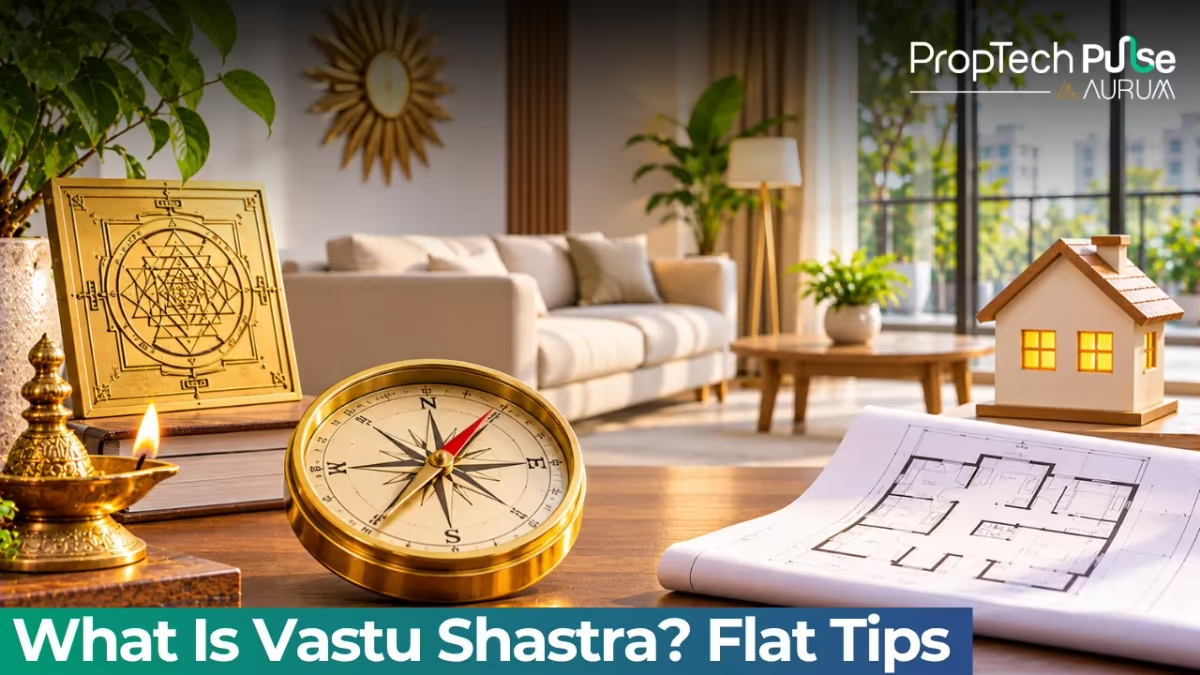
When people ask, "what is vastu shastra?", they are usually looking for a straightforward way to harmonize their living spaces with natural elements.
This ancient framework predates modern interior design by millennia.
It focuses on spatial geometry, directional orientation, and elemental balance to enhance comfort and psychological wellbeing. Many homeowners treat these vastu principles as a practical guide rather than religious dogma.
The practice isn't about rigid superstitions or fear-based house rules. Instead, it provides a practical checklist for optimizing light, air, and movement within your home.
By separating timeless architectural wisdom from modern marketing hype, you can make informed adjustments whether you hold a key to a new apartment or own a standalone bungalow. Let us explore the foundational ideas behind this tradition and how you can apply them today.
What is Vastu Shastra? Meaning & Origins
Quick answer
Vastu Shastra is a traditional Indian system of architecture dating back over five thousand years. Its name literally means "science of the dwelling place," and it focuses on arranging spaces so they feel balanced, well-lit, and comfortable rather than rigidly following superstitions.
To understand the vastu shastra meaning, we break the term into two Sanskrit words. "Vastu" refers to the building site, land, or dwelling itself.
"Shastra" translates to a treatise, code, or systematic rules. Combined, the phrase describes an ancient framework for designing homes and temples.
This framework works with natural light, wind patterns, and the earth's magnetic field.
The earliest texts date back to the Vedas, roughly five thousand years ago. Classical works like the Vastu Purusha Mandala map a cosmic being onto a square plot, dividing it into nine distinct zones.
Over centuries, practitioners adapted these guidelines for everything from grand palaces to modest farmhouses.
Today, it remains a cultural reference point for millions of Indian homeowners seeking a sense of alignment in their living spaces. Many view the practice as a blueprint for intuitive home design rather than dogma.
The Five Elements and Principles of Vastu Shastra
At the core of principles of vastu shastra lie the five fundamental elements, known as Panchabhoota. Every direction in a home is associated with one of these elements. Balancing them across your layout creates a foundation for stability and ease.
| Direction | Element | Key Principle |
|---|---|---|
| North-East (Ishanya) | Water | Keep open, light, and clutter-free. Favors water storage or prayer areas. |
| South-East (Agneya) | Fire | Ideal for heat-generating spaces like the kitchen. |
| South-West (Nairutya) | Earth | Represents stability. Best for master bedrooms and heavy walls. |
| North-West (Vayavya) | Air | Governs movement. Suitable for guest rooms, bathrooms, and ventilation. |
| Center (Brahmasthan) | Space | The neutral zone. Should remain unobstructed and airy. |
The guiding principle is equilibrium. If one element dominates a space, the house can feel stagnant or restless. Take the kitchen. Placing it in the north-east disrupts the calm energy associated with water.
Conversely, locating the master bedroom in the south-west grounds the inhabitants in earth energy. This placement traditionally supports deeper rest. You simply match room activity to the corresponding direction.
They aren't arbitrary taboos. Think of them as spatial zoning strategies refined over generations. Put heavy furniture in stable zones. Reserve light activities for airy corners.
Practical Tip Before moving heavy furniture, simply sit in different corners of your empty flat. Note where the cross-breeze hits and where sunlight pools until mid-afternoon. Traditional recommendations almost always coincide with these physical observations.
Vastu Shastra Basics: Room-by-Room Guide
Once you grasp the elemental mapping, applying vastu shastra basics becomes a straightforward exercise in room placement.
You do not need to demolish walls to make progress. The focus is on assigning activities to the correct directional zones. Applying vastu principles to modern spaces requires separating tradition from superstition.
Kitchen: Place it in the south-east corner.
The cook should ideally face east while preparing food to capture morning light. Avoid locating the stove in the centre of the home.
This keeps the fire element contained. Heat stops here from spreading to the entire living area.
Master Bedroom: Assign this to the south-west quadrant.
The headboard should ideally point south or east. This zone's heaviness promotes uninterrupted sleep and financial stability. Keep electronic devices away from the bedside table to preserve the grounding atmosphere.
Pooja or Meditation Room: Reserve the north-east area for prayer. Facing east while praying aligns with sunrise traditions. This keeps a sacred, quiet zone away from heavy foot traffic.
Maintain a clean shelf and store idols securely to honor the water element in that sector.
Living Room: The north or north-west sector works well.
These directions govern social interaction and airflow. They naturally encourage conversation and visibility. Keeping the center of the living room light allows energy to circulate freely.
Study or Home Office: Position your desk facing east or north. This orientation supports concentration and mental clarity.
Place heavier files or cabinets along the south wall to anchor your workspace.
A clear path to the door helps maintain focus during long work sessions.
Bathrooms & Guest Rooms: North-west is acceptable here.
As air represents movement, transient uses fit comfortably without disrupting the home's grounding energy. Ensure doors stay closed when not in use to prevent stale odors from affecting adjacent living areas.
Notice how these rules operate independently of your front door. Room zoning follows a fixed grid.
Door placement deals with how energy enters that grid. Confusing the two is why many buyers panic unnecessarily.
Treat each room according to its function first.
Vastu Shastra for Home: Flats vs. Plots
The biggest friction point for modern buyers happens when vastu shastra for home guidelines clash with high-rise realities.
Ancient texts were drawn for standalone plots with free-flowing wind on all sides. Apartments introduce shared walls, concrete cores, and fixed plumbing stacks.
You must distinguish between what you cannot change and what you fully control. Structural limitations usually stem from the builder's approved floor plan. Trying to shift a bathroom three metres left because of a classical chart is neither feasible nor safe.
| Item | Can You Control It? | Notes |
|---|---|---|
| Main Door Pada (Segment) | No | Fixed by the developer's sanctioned blueprint and stairwell design. |
| Sleeping Head Direction | Yes | Rely on freestanding bed frames rather than built-in cabinetry. |
| Cooking Direction | Yes | Simply reorient your modular kitchen or gas hob position. |
| Plumbing Stack Position | No | Governed by the building's wet zone vertical shaft. |
| North-East Clutter | Yes | Remove storage boxes and dead plants from the NE corner. |
| Total Adjustable Items | Four out of six major considerations respond to interior design choices. | |
This breakdown alone removes most anxiety. If you can orient your bed, adjust your cooking station, and keep the north-east tidy, you are already satisfying the functional intent of the system.
The remaining structural quirks require zero intervention.
You also need to understand load-bearing columns versus partition walls. Only the former restrict your layout.
Modern apartments allow flexible flooring plans once you know where the structural skeleton stands. Consult your builder's drawings before starting any renovation work.
Integrating these spatial habits with contemporary requirements is exactly what shapes the intersection of property and ancient design.
Common Myths vs. Reality
The internet is flooded with fear-based headlines. One persistent myth claims that a west-facing home guarantees losses or bad health.
Traditional texts never support this blanket statement. In fact, the west is governed by Varuna, the deity of water and abundance.
What actually changes with a west-facing entrance is the specific Pada or segment your door occupies.
You must manage sun glare and afternoon heat during construction. Install proper shading and keep curtains breathable.
That is basic building physics. Not a curse.
Similarly, arguing over lucky or unlucky house numbers ignores a simpler truth.
A chaotic, poorly ventilated home with a lucky number performs worse than a bright, well-maintained flat with an odd one. Maintenance and cleanliness matter far more than digit strings.
Another widespread claim suggests you need expensive remedies, brass coins, or specialized crystals to fix an unbalanced home.
Authentic practices rely on simplicity instead.
Clean floors, sharp mirrors, functional locks, and decluttered pathways serve as the original solutions.
If a consultant pushes complex products before explaining the basics, treat it as a sales pitch.
Real adjustments involve rearranging furniture, changing paint tones for warmth or coolness, and improving cross-ventilation.
These steps cost little time. They improve livability immediately.
Reality Check Vastu is a comfort metric, not a legal code or a guarantee of stock market returns. Buy the home that fits your budget, meets your commute needs, and passes structural inspections first. Adjust the interior later for peace of mind.
Getting Started with Your Home Design
If you are buying, use these principles as a screening tool alongside your standard due diligence checklist.
Ask the developer which quadrant the living room falls into. Check that the north-east corner won't be buried under a lift shaft or external AC unit.
Once you move in, prioritize three immediate adjustments.
Park your bed with the head against the south or west wall. Face east while cooking whenever possible.
Clear out the northeast zone completely to welcome morning air and daylight.
Start with flow and decluttering. Treat the system as a flexible map rather than a rigid test.
Walk through each room and notice where you feel cramped or chilled. Move seating away from drafts.
Add heavier rugs in the southwest to anchor the space physically.
Remember that consistency beats perfection. Small tweaks compound over months to create a calmer environment.
Apply the rules gradually as your inventory grows. For those who prefer a professional walkthrough of their layout against these principles, Pulse Vastu offers a Live Vastu Check service to guide you through the specifics.
Frequently asked questions
What does Vastu Shastra mean?
The term comes from two Sanskrit words. Vastu means dwelling, land, or site. Shastra means a systematic treatise or rules. Together, they translate to the science or traditional framework of dwelling places. It guides how to arrange buildings so they align with natural forces, aiming for better comfort and balance in everyday life.
Is Vastu effective for apartments or flats?
Absolutely, though you apply it differently than a standalone plot. High-rise buildings restrict structural changes, so you focus on adjustable elements like sleeping direction, kitchen orientation, and clearing clutter from specific zones. Keeping the north-east open and positioning heavy furniture towards the south-west works regardless of whether you own a bungalow or a third-floor unit.
Which direction is best for a main door?
Traditionally, north, east, and north-east entrances are considered highly auspicious because they welcome morning light and positive breezes. However, a west or south-facing door is not forbidden. When the entrance points elsewhere, Vastu simply directs you to choose a specificPada or segment within that wall and adjust your interior layout accordingly to maintain energy flow.
How does Vastu differ from Feng Shui?
Both systems share the goal of harmonizing human habitats with nature. Feng Shui originates from China and relies heavily on the Bagua map, compass directions, and specific life aspects like career or relationships. Vastu originates in India, centers on the Panchabhoota elements, uses a rigid nine-zone Mandala grid, and ties directions to ancient Indian mythology and planetary influences.
Enjoyed this blog article? Visit PropTech Pulse for more interesting blogs.




Ask Pulse Ai anything about real estate

Unlock the Latest in Real Estate
News, Infographics, Blogs & More! Delivered to your inbox.

