

©PropTech Pulse 2025, All rights reserved.

What does Equity mean?
Equity
Equity signifies an owner’s net stake in an asset after accounting for any debts or financial claims. Essentially, it’s the difference between what the item is worth and what is owed. Over time, equity can rise through installment payments reducing principal, or appreciation if market factors push values higher. This growth boosts the owner’s net wealth, often used as collateral or sold for profit.
Key Points
CalculationAsset’s current valuation minus outstanding obligations = Equity.
Wealth BuildingRegular payments or strategic enhancements gradually expand equity.
Financial FlexibilityCan leverage equity for further acquisitions or short-term financing.
Market InfluenceNegative market swings might erode equity if valuations drop.
Equity highlights ownership progress in an investment, showing how much of the asset belongs outright to the individual or entity, instead of lenders or partners.
Insight Pulse
Uncategorized
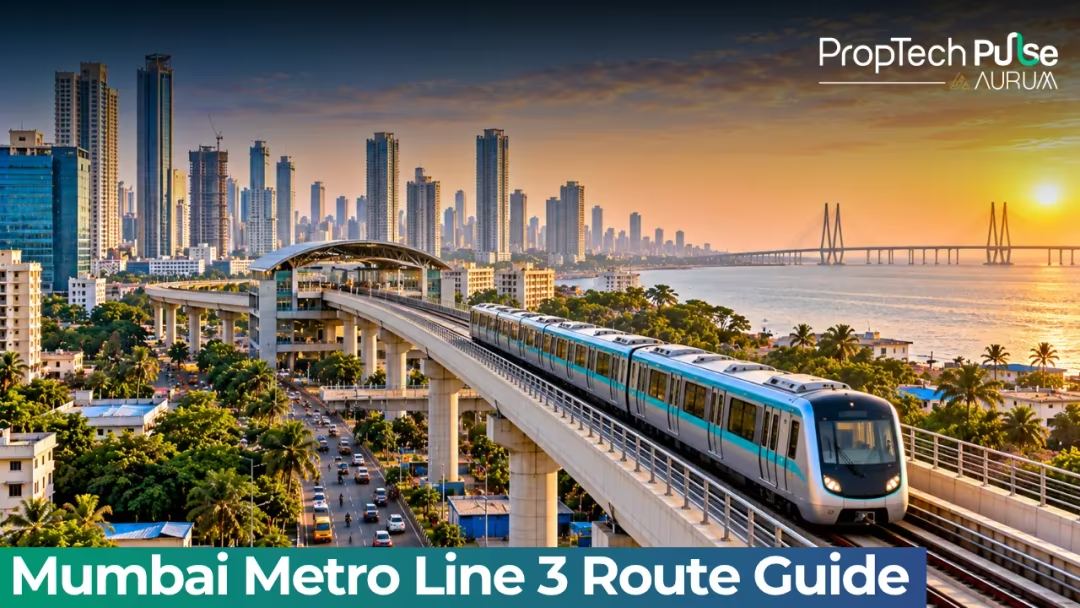
Mumbai Metro Line 3 Status, Route & Stations Guide
Commuting across Mumbai used to mean three hours of squeezing onto local trains or watching traffic bleed away on arterial roads. Now the underground metro system has changed the math entirely. Mumbai Metro Line 3 is fully open and moving passengers between the airport, Bandra-Kurla Complex, Cuffe Parade and central hubs like Chhatrapati Shivaji Maharaj Terminus every single day. If you are buying a flat near the corridor or tracking rental yields in areas previously starved of rapid transit, the valuation logic has shifted. This guide maps every station and lays out the operational timeline. We break down peak-hour travel times against the suburban rail. You will also find how the new municipal restriction blocks construction work near the tunnel alignment. In this guide Mumbai Metro Line 3 Status & Quick Facts The Complete Aqua Line Mumbai Route Map & Station List Connectivity: Airport, Suburban Rail & Other Metro Lines Commuter Essentials: Fares, Timings & Payment Methods Property Impact & The New 50-Metre Development Zone What Buyers Should Do Next Frequently asked questions Mumbai Metro Line 3 Status & Quick Facts Quick answer Mumbai Metro Line 3, commonly called the Aqua Line, is fully operational as of October 2025. The thirty-three kilometre underground network covers twenty-seven stations across two main corridors, linking the international airport to the financial districts and connecting with six other suburban and metro lines. Maintenance crews work on the line round the clock. Commercial services run from six in the morning until eleven at night. Ridership hit one lakh fifty thousand daily in the first quarter of 2026. That volume proves commuters trust a service that ignores surface traffic and monsoon floods. The total project cost stands at thirty seven thousand crore rupees following budget adjustments. Funding comes jointly from the state government and the Japan International Cooperation Agency. Interest rates on the foreign loan sit close to zero per cent, keeping per-kilometre civil costs lower than comparable projects in Delhi or Bangalore. The Complete Aqua Line Mumbai Route Map & Station List Phase-wise Opening Timeline The project split into two parallel works tracks early on. L3A runs east-west from Madhova Nagar to Cuffe Parade and the airport spur, while L3B extends north-south from Bandra Kurla Complex down to CSMT. Phase 1 opened the central stretch in stages throughout 2023 and 2024, allowing partial trials. The remaining sections, including the difficult marine clay tunnelling south of Opera House and the steep gradients entering Sion, finished ahead of schedule. Full opening happened on eight October 2025 with all platforms commissioned simultaneously. All 27 Stations Explained The entire alignment sits underground except for the maintenance depot at Madhwa Rao Park. Every station features platform screen doors, which improve climate control and prevent accidents on the deep platforms. Here is the breakdown of the key stops across both corridors. All 27 stations on Mumbai Metro Line 3 (L3A & L3B phases) Sr. Station Name Marathi Name Interchange / Key Link 1 Versova वर्सोवा Harbour Line (local) 2 Carter Road कार्टर रोड – 3 Bandra West बांद्रा पश्चिम Western Line 4 Mahim माहीम Harbour Line 5 Cuffe Parade कफ परेड South Mumbai residential hub 6 Nariman Point नरीमान पॉइंट Financial District 7 Opera House ऑपरा हाउस Kalbadevi market access 8 Kalbadevi कालबादेवी Old Textile Mills zone 9 Dhobi Talao धोबी तलाव Local Market / Street vendors 10 Grant Road ग्रँट रोड Harbour Line 11 Charni Road चर्णी रोड Harbour Line 12 Girgaon गिरगांव Panjrapole / Zoo proximity 13 Mazgaon माजागाव Shipsyard / Dock area 14 Wadi Bunder वाडी बंदर – 15 Prabhadevi प्रभानदेवी Metro Line 2 (Pink) 16 Dadar दादर Central & Harbour Lines 17 Parel परळ Pharmaceutical hub 18 Khetwadi खेडवाडी – 19 Lower Parel लोअर परेल Metro Line 4 (Yellow) 20 Dr. Baba Saheb Ambedkar Karve Marg डॉ. बाबासाहेब आंबेडकर कार्के मार्ग Industrial belt 21 Sion सीवन L3 Extension Spur 22 Madhwa Rao Park माधवरॉ पार्क Maintenance Depot 23 Bandra East बांद्रा पूर्व Western Line 24 Kurla Marol कुर्ला मरोळ IIT-Bombay gate proximity 25 Bandra Kurla Complex बांद्रा कुर्ला समुच्चय Corporate hub / Metro Line 2A 26 Deonar दीवण Trans-Harbour extension link 27 Chhatrapati Shivaji Maharaj International Airport छत्रपती शिवाजी महाराज आंतरराष्ट्रीय विमानतळ Airport terminal connector Total length covered 33.5 km (fully underground) Station names reflect the local Marathi spelling alongside the English version. Exit points at Nariman Point and Opera House feed directly into office towers, while the southern exits near Cuffe Parade require a short walk through older residential lanes. Every platform provides step-free lift access and dedicated seating for elderly passengers. Commuter tip Carry a physical token or load your smart card before the turnstile. While tap-and-go works widely now, peak queues at the few remaining manual machines drop by half if you bypass the queue entirely. Connectivity: Airport, Suburban Rail & Other Metro Lines The strongest advantage of the underground metro mumbai setup is depth. By digging forty metres below sea level in places, engineers avoided flooding issues that trapped surface networks during heavy rains. The alignment cuts straight under the congested middle ring road and skips the bottleneck at Mahim Bay crossing altogether. Travel time from Versova to CST drops to twenty-eight minutes, compared to forty-five minutes on the Western Line local during evening rush hour. You still catch the local at CST, but you arrive fresh instead of exhausted. Interchanges happen at Prabhadevi for the Pink Line heading towards Sion and Kurla, and at Lower Parel for the Yellow Line pushing east toward Mulund. The new connection also touches the Trans-Harbour route at Deonar. Commuters from Thane or Panvel can now transfer once instead of juggling three crowded trains. Airport passengers walking from Terminal 2 cover barely five hundred metres to reach the metro concourse. This removes the need for expensive app-based cabs for domestic arrivals. If you work in IT parks off Eastern Freeway, the link at Lower Parel saves roughly twenty minutes over the usual road route. Property values along these feeder corridors shift when people realise they can park closer to their workplace and ride the last mile underground. Commuter Essentials: Fares, Timings & Payment Methods Fare calculation follows a distance-based slabs model. Entry stands at ten rupees. Every additional five kilometres adds roughly fifteen rupees to the base ticket. A round trip from Bandra West to CSMT costs seventy-two rupees total for daily workers. Monthly passes apply a twelve per cent discount over the equivalent daily tickets, making them cheaper for anyone commuting more than fourteen days a month. Payment methods cover UPI scans at automated gates, contactless credit and debit cards issued by all major banks, and the Mumbai One smart card. Cash counters remain open, but the machine read-time slows the queue considerably after nine in the morning. Children above three feet tall require half-fare tokens. Peak frequency runs every three minutes on weekdays between seven and ten AM, and five PM to eight PM. Off-peak intervals stretch to eight minutes. Last trains leave terminal stations at ten forty-five PM, with special services added on weekends leading up to midnight during festival weeks. Cost warning Never buy a monthly pass from third-party street sellers. Passports linked to biometric verification trigger immediate blacklisting. Use the official MMRC kiosks inside stations only. Property Impact & The New 50-Metre Development Zone Flat prices near the route rose by eight to twelve per cent in the second half of 2025 as traders front-ran the opening. But the headline appreciation hides a structural constraint that affects developers and existing owners alike. The Maharashtra Metropolitan Region Development Authority and the Railway Safety Commission enforced a strict fifty-metre protection zone around the new underground tunnel axis. Any plot sitting inside that band faces heavy restrictions on rebuilding. Developers cannot raise basements for additional parking, dig new foundations for podium structures, or demolish load-bearing walls of heritage homes without a separate geotechnical clearance. Stability studies take four to six months to process. This pushes typical redevelopment timelines forward by eighteen to twenty-four months. If you own a building in that shadow zone, factor the delay into your cash flow projections. For buyers of older flats, ask the seller whether the society has already submitted the stability drawings. Stalled clearances freeze resale prices indefinitely. Rental demand surges near intermediate stops like Wadi Bunder, Prabhadevi and Khetwadi. Young professionals here prefer smaller units over large family apartments. Vacancy rates dropped to three point four per cent along the eastern corridor last quarter. Luxury inventory in South Mumbai trades slower. High-net-worth buyers still weigh the noise of ventilation shafts and emergency exit staircases against prestige pricing. Before committing capital, review the current stamp duty rates in Mumbai to offset transaction costs. Also understand the difference between carpet area versus built-up area so you do not overpay for useless common space inflated by developers. Track actual asking prices against transactions using the live rates and trends tool. Filter outcomes by micro-market using the Cuffe Parade locality guide. Compare gross rental returns with the rental yield calculator before choosing between holding for income or flipping within three years. What Buyers Should Do Next Target ready-to-move units or projects in the fourth phase of construction near stations two through ten. Skip off-plan launches within the fifty-metre safety strip until the builder produces signed stability clearance paperwork. Pay attention to ceiling heights at older conversions, as drilling through reinforced concrete for ductwork sometimes reduces net height by fifteen centimetres. Verify the exact exit location relative to your building entrance. The tunnel curves sharply under Marine Drive, so some exits spill into side alleys rather than facing the main promenade. Frequently asked questions Is Mumbai Metro Line 3 fully open? Yes. The complete thirty-three kilometre alignment operating under the peninsula reached full commissioning on eight October 2025. Both L3A and L3B corridors run continuously from Versova through Bandra, Cuffe Parade, Dadar and Lower Parel to CSMT and the airport junction. Trains operate between six in the morning and eleven at night across all twenty-seven stations, with platform screen doors active at every stop. How many stations are on the Aqua Line? There are twenty-seven stations in total. Most sit nearly forty metres below ground, with only the maintenance depot at Madhwa Rao Park appearing at surface level. The count includes critical transfers at Dadar, Prabhadevi and Lower Parel, plus the direct terminal link inside the international airport complex. Counting both western and eastern branches, the route spans roughly thirty-three kilometres of underground track. What is the maximum fare for the Mumbai underground metro? Tickets start at ten rupees for entry. The distance meter adds approximately fifteen rupees for every five kilometres travelled. A standard round trip between Bandra West and CSMT currently costs seventy-two rupees per day. Monthly travel passes cut the equivalent daily ticket price by twelve per cent, making them cheaper for commuters who board the train more than fourteen days each calendar month. Does the metro connect directly to Chhatrapati Shivaji Maharaj International Airport? It does. The eastern terminus terminates inside the airport precinct, placing the metro concourse five hundred metres from Terminal 2 departures. Domestic travellers leaving from the terminal can walk straight to the ticketing level without crossing busy highway intersections or queuing for app-based taxis. Freight and cargo handling remains entirely outside the rail network. Will prices rise further for flats near Cuffe Parade? Upside potential remains capped because of the fifty-metre tunnel protection rule. Developers cannot rapidly clear sites or dig deeper basements without separate stability approvals, which stretches rebuild timelines by nearly two years. Investors chasing quick flips may face longer hold periods, while end-users benefit from steady rental demand and reliable weekday frequency. Prices will stay stable until surrounding older buildings secure redevelopment permissions. Sources Government of Maharashtra Gazette Notifications: Tunnel protection zone advisory and redevelopment restrictions (accessed October 2026) Enjoyed this blog article? Visit PropTech Pulse for more interesting blogs.

PropTech Pulse Editorial
2nd November 2026
Uncategorized
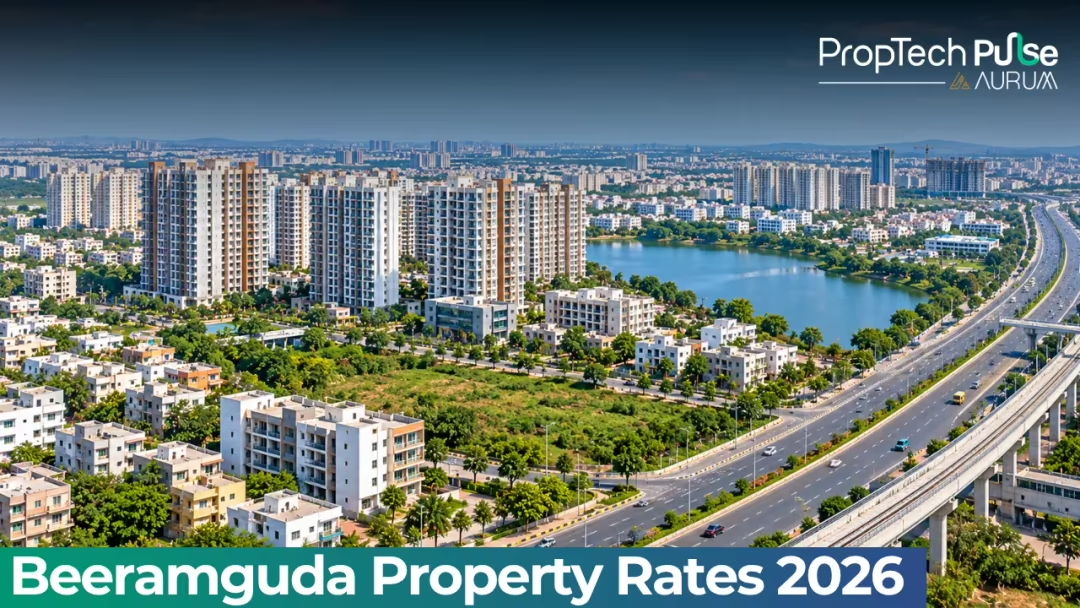
Beeramguda Property Rates & Locality Guide 2026 | Pulse
Choosing a West Hyderabad home means picking between cramped apartments and distant suburbs. Beeramguda hits that middle ground perfectly. Close to the Outer Ring Road for a quick HITEC City run, it stays quiet enough to dodge Miyapur’s traffic. Buyers wanting low-rise homes without Gachibowli prices find one of the few pockets where independent structures still dominate. In this guide Beeramguda, Hyderabad: Location, Boundaries & Beeramguda pin code Current Beeramguda property rates: Per Sq Ft & Transaction Bands Flats in Beeramguda vs Villas & Independent Houses Micro-Market Price Comparison Commute & Employment Hub Accessibility Local Amenities, Schools & Healthcare Pros and Cons: Who Should Buy Here? Frequently asked questions Beeramguda, Hyderabad: Location, Boundaries & Beeramguda pin code Quick answer Beeramguda is a western residential corridor in Hyderabad offering independent villas and plots at ₹4,000–₹5,050 per square foot. Located just two kilometres from the Outer Ring Road, it provides roughly 15-minute drive access to HITEC City while maintaining a quiet, low-density environment distinct from the congested IT belts. This locality marks the historical boundary between Greater Hyderabad and the surrounding districts. It functions primarily as a western gateway into the city proper, linking older infrastructure near Lingampally with newer developments past Chanda Nagar. The area falls under the administrative ward jurisdiction of the Greater Hyderabad Municipal Corporation. Adjacent stretches still carry legacy zoning from the previous decade. Residents looking for postal accuracy will find the standard postcode listed as 502032. You can verify this officially through the national postal database or cross-reference it when validating property documents to ensure the addresses match municipal records exactly. Beeramguda pin code lookup helps confirm the exact ward mapping before you finalize any lease or sale agreement. Beyond logistics, the physical geography matters just as much. The terrain slopes gently toward the Osman Sagar catchment, which keeps rainfall drainage manageable compared to the flood-prone corridors further west. Most roads here are wide enough for two vehicles to pass comfortably. That layout is a rarity in many rapidly densifying Hyderabad neighbourhoods. Current Beeramguda property rates: Per Sq Ft & Transaction Bands When evaluating investment potential, the most immediate factor is the entry cost. Across this belt, circle rate calculator tools show a consistent divergence between government-recorded values and actual transaction prices. Prices typically sit between ₹4,000 and ₹5,050 per square foot. Costs shift based on whether you buy a plot, a finished villa, or a new apartment. Plots command the highest premium per unit because supply is shrinking. An undeveloped 200-square-yard site easily crosses ₹1.6 crore in prime stretches. Constructed independent houses fall into the ₹80 lakh to ₹1.4 crore range, largely dictated by facing direction, road width, and interior finish quality. A different dynamic applies when you look at multi-storey developments. Builders here are shifting toward mid-sized layouts to attract end-users rather than pure investors. A standard 1,500 square feet three-bedroom configuration usually transacts closer to ₹65 lakh to ₹85 lakh. Prices sit below the Hyderabad average because of inventory density. Areas like Kondapur or Nanakramguda hit saturation, pushing prices past ₹8,000 per square foot. Beeramguda retains significant vacant parcels instead. That surplus prevents runaway speculation. Transaction bands stay stable even when broader interest rises. Homeowners get predictable appreciation without betting on a hype cycle. Flats in Beeramguda vs Villas & Independent Houses The character of this locality sets it apart from almost every other corridor within fifty kilometres. If you search for flats in Beeramguda, you will quickly notice that standalone homes form the backbone of the housing stock. Multi-storey societies account for roughly a third of the total inventory, while the remainder consists of rows of individual plots and completed independent villas. This structural split dictates the rental ecosystem. Developers build larger four-bedroom units for long-term buyers, creating a mismatch for tenants. Ninety-three percent of renters seek monthly outflows between ₹15,000 and ₹30,000. A starter flat rents near ₹22,000, while larger units push past ₹35,000. Landlords wait for corporate families moving to Manjeera Smart City or T-Hub. They hold units vacant rather than undercutting the premium tier. Investors need to weigh that timeline carefully. Holding periods of eighteen to twenty-four months without tenant coverage are common for high-value villas. You are effectively financing the asset yourself until a suitable occupant arrives. Rent validation step Always verify asking rent against the latest listings on aggregation platforms before presenting an offer. Listings inflate averages quickly. For permanent residents, the layout works well. Wide streets accommodate growing families, and the lack of dense commercial strip frontages means less traffic noise late at night. You trade vertical convenience for horizontal space. Micro-Market Price Comparison Comparing Beeramguda to its immediate neighbours highlights exactly where the value sits. Property economics rarely exist in isolation. A direct comparison reveals why certain buyers choose one boundary over another. Average property rates across West Hyderabad micro-markets, October 2026 Locality Plot Price Range (₹) Apartment Price/Sq Ft (₹) Typical Commute to HITEC City Beeramguda ₹80 lakh – ₹1.8 crore ₹4,000 – ₹5,050 15 – 25 mins Lingampally ₹1.1 crore – ₹2.5 crore ₹5,200 – ₹6,800 10 – 15 mins Chanda Nagar ₹1.5 crore – ₹3.2 crore ₹6,500 – ₹8,500 12 – 18 mins Ramayaguda ₹90 lakh – ₹2.2 crore ₹4,800 – ₹6,200 18 – 25 mins Lingampally attracts commuters prioritising speed above square footage. The metro station presence locks in higher baseline valuations. Chanda Nagar operates more like a premium satellite hub, absorbing excess capital flowing down from Gachibowli. Ramayaguda offers comparable density but edges slightly higher on price due to tighter clusters. Beeramguda sits uniquely as the most accessible budget-friendly option. It still guarantees a direct link to the Old Mumbai Highway. Commute & Employment Hub Accessibility Location utility defines the long-term viability of any suburban purchase. Beeramguda rests merely two kilometres from the Outer Ring Road, making vehicle access straightforward regardless of which tech park employs you. Driving west along the arterial roads leads directly to HITEC City in roughly fifteen kilometres. Morning rush hour typically extends that drive to forty-five minutes. Evening returns take around the same duration. Public transport connectivity remains weak. The nearest active metro station sits roughly eleven kilometres away in Miyapur. Expansion proposals surface frequently, but the Red Line hasn't reached this eastern stretch yet. Rail users face similar gaps. Lingampally station sits about six kilometres from the main residential nodes. Bike taxis and shared autos fill gaps for employees working nearby, but service density never matches the core corridors. You essentially rely on private transport here. Owning a car significantly increases livability. Without one, the daily grind involves early starts and fixed departure windows. Local Amenities, Schools & Healthcare Life outside commuting hours runs reasonably smooth once you settle in. The proximity to established industrial zones brings support services naturally. Companies like Bharat Heavy Electricals operate just outside the primary residential grid. They create demand-side anchors for local shops and eateries nearby. The distance to major BHEL facilities sits at roughly three-and-a-half kilometres. Retail behaviour reflects the suburb status. Residents travel to nearby townships for large grocery hauls, relying on corner stores at major intersections. Reputable schools cluster along the periphery, serving relocated families. Routine healthcare happens via clinics on the main roads. Critical hospitalisation requires crossing into Secunderabad. Religious sites form natural gathering points in the community. Major temples host regular events that draw crowds from neighbouring villages, reinforcing social cohesion in what is otherwise a quiet residential pocket. Pros and Cons: Who Should Buy Here? This locality delivers solid fundamentals but demands realistic expectations regarding lifestyle and timing. You will gain substantial carpet area for your rupee compared to the gated communities flooding the southern wing of the city. Property transactions remain transparent because independent developers prefer steady turnover over speculative flipping. Municipal governance aligns with standard GHMC compliance, reducing bureaucratic friction during renovation or extension approvals. Conversely, you pay for that affordability through commute distances and limited urban amenities right at your doorstep. Nightlife and high-end dining do not exist here by design. Traffic management on intersecting routes improves slowly, so peak-hour planning is mandatory. Before committing funds, calculate the full acquisition cost including registration, stamp duty, and GST on construction if applicable. A rough estimate on a standard seventy-lakh villa transaction lands near sixty-six lakhs after deducting women-buyer concessions. Use an official property tax calculator to forecast recurring annual liabilities accurately. Stick to registered projects. Verify encumbrance certificates thoroughly. Frequently asked questions What is the pin code of Beeramguda? The standard postcode for Beeramguda is 502032. This assignment comes from the national postal network and maps directly to the Greater Hyderabad Municipal Corporation jurisdiction. You can use this exact code when verifying address formats in sale deeds, lease agreements, and utility registrations to prevent clerical mismatches during property transfers. Are there flats in Beeramguda or is it mostly villas? Multi-storey apartment blocks comprise roughly thirty percent of the total housing inventory in this corridor. The remaining seventy percent consists of standalone independent homes and unconstructed plots. Buyers searching specifically for high-rise towers will find limited options, while those seeking garden-facing independent villas will encounter abundant supply. How far is Beeramguda from HITEC City? The driving distance measures approximately fifteen kilometres via the Old Mumbai Highway and the Outer Ring Road interchange. During off-peak hours, the trip takes roughly twenty minutes. Morning rush hour routinely extends the journey to forty-five minutes or longer, requiring commuters to adjust start times accordingly. What is the current property rate in Beeramguda? Average transaction values currently range between ₹4,000 and ₹5,050 per square foot for developed homes and ready-to-move units. Undeveloped residential plots command a wider band, typically starting around ₹80 lakh for a 200-square-yard site. These figures reflect genuine market completions rather than builder listing aspirations. Is Beeramguda good for family living? If your household values wide residential roads, minimal commercial footfall, and proximity to international schools, the area performs exceptionally well. The environment suits professionals employed at T-Hub or Manjeera Smart City who require reliable private transport. Families dependent entirely on public transit may face daily scheduling constraints. Enjoyed this blog article? Visit PropTech Pulse for more interesting blogs.
PropTech Pulse Editorial
2nd November 2026

Uncategorized
Banglarbhumi Guide: West Bengal Land Records & Khajna Tips
If you are buying land or a farm plot in West Bengal, or trying to fix ownership details in your family name, you start at banglarbhumi.gov.in. The portal is the central hub where the state maintains every record from village boundaries to individual plot numbers. Knowing how to read what is shown there saves you from visiting the BL&LRO office repeatedly, and it stops you from missing red flags in a seller's title. This platform covers over 4.3 crore Khatians across 42,000 Mouzas. It handles everything from simple status checks to formal requests for certified copies. But the interface uses terms like RS Khatian, LR Khatian, Dag, and Warish that trip up most first-time users. Get the terminology wrong and you might order the wrong certificate or assume a plot is free of encumbrances when it is not. In this guide What is Banglarbhumi and Why Does It Matter? Understanding West Bengal Land Records Terminology How to Access and Search Land Records on Banglarbhumi Gov In Applying Online: Mutation, Warish, and Land Conversion Getting Official Documents: Downloading Maps and RoR Certificates Navigating Recent Changes: Simplified Khajna Payments and Portal Updates When Banglarbhumi Isn't Enough: Deeds, Stamp Duty, and IGRWB Final Precautions Before Buying Land in West Bengal Frequently asked questions What is Banglarbhumi and Why Does It Matter? Quick answer Banglarbhumi is the official digitised land records portal for West Bengal. Launched in 2010 by the Local Self Government, Land and Land Reforms Department, it holds 4.3 crore Khatians. You can use it to check property details, apply for mutation (Dakhil-Kharij), track inheritance transfers (Warish), and request certified copies of Record of Rights (RoR) and Mouza maps. For pure land revenue payments and document tracking, visit banglarbhumi gov in. Before Banglarbhumi, verifying a piece of land meant standing in queues at the Block Land and Land Reforms Office (BL&LRO) with folders of paper documents. The portal moved almost all transactional and verification work online. Buyers, sellers, and legal teams now rely on it to establish who owns what before money changes hands. The database operates independently. It feeds into the e-Porcha application, which generates the official sale deed once the transaction is approved at the Sub-Registrar's office. Both systems talk to each other, but they remain separate stages of the process. Checking your data on Banglarbhumi first ensures that when you head to IGRWB for registration, the names on your deed actually match the government's master record. Understanding West Bengal Land Records Terminology Indian land records vary wildly by state, and West Bengal brings its own vocabulary. The portal sorts data using four core identifiers. If you do not know what they mean, you cannot verify a title properly. Decoding the Banglarbhumi Khatian (RS vs LR and Bargadar Rights) The Khatian is the single most important document you will pull up. It works like a title summary for a specific parcel of land. There are two types, and they sit side by side in the system: RS Khatian (Record of Rights): This is your ownership certificate. It lists the current owner, their ancestors back four generations, the share held by each person, and any sharecroppers registered on the plot. Every registered buyer must have an updated RS Khatian. LR Khatian (Land Revenue): This tracks who is responsible for paying the land tax, known as khajna. In most residential cases, the owner and the taxpayer are the same person. On agricultural land, however, a tenant might hold the LR Khatian while the landlord holds the RS Khatian. Look closely at the 'Bargadar' column in the RS Khatian. A Bargadar is a recognised sharecropper. Active names in this column create usage rights that complicate sales. You cannot sell a plot with active Bargadar entries without clearing those rights through proper channels first. Never assume empty columns mean the property is clean. Cross-reference it with local inquiries. This is why keeping your mutation entry up to date matters so much. If a death occurs and the Khatian is not updated, the chain of ownership breaks on paper. Why is mutation entry in land records important for homeowners explains exactly where the break happens and how it stalls future sales or loans. Mouza, JL Number, and Dag Explained Village boundaries in West Bengal are mapped using three layers: Mouza (or Moujasar): A group of villages that share water sources or market areas. Think of it as a historic catchment zone rather than a strict administrative block. JL Number (Jama List Number): Every Mouza has one or more JL Numbers. Each JL Number covers a cluster of plots within that Mouza. It groups the land for billing purposes. Dag Number: The Dag is the actual plot. One JL Number contains multiple Dag Numbers. When searching Banglarbhumi mouza records, you drill down from Mouza to JL, then to the specific Dag. If you are looking at a survey map for a plot in North 24 Parganas or Bankura, the coordinates on the ground must match the Dag number on the screen. Mismatches happen frequently in rural transactions where old boundaries shift with river erosion or new fencing. Always verify the Dag number against the physical site survey. How to Access and Search Land Records on Banglarbhumi Gov In You do not need an account to look up basic details. The public search function is open to everyone. However, applying for certificates, checking payment statuses, or filing grievance complaints requires you to register first. Registration takes two minutes and asks for a mobile number for OTP verification. Using the 'Know Your Property' Tool (Step-by-Step) The primary navigation button for buyers is labelled 'Know Your Property'. Here is how you use it without getting lost in the menus: Select State: It usually defaults to West Bengal. Click 'Next' immediately. Select District: Choose from the list. The dropdown includes metropolitan districts like Kolkata and South 24 Parganas alongside rural ones like Darjeeling and Jalpaiguri. Select Block and Village: Narrow down until you hit the exact BL&LRO circle relevant to the land. Select Type of Document: Choose either 'Document' or 'Map' depending on what you need. Selecting 'Document' pulls up the Khatian details. Select Plot Number: Enter the Dag number here. If you only know the JL number, the system may prompt you to select a broader range, though direct Dag searches are faster. Once you click 'Get Details', the screen populates with the RS Khatian summary, the current owner's name, and the land area. The data shows clearly whether the plot falls under non-agricultural (NA) status or remains agricultural. Note what is displayed on-screen carefully. This preview gives you the headline figures fast, but it is not a legally binding document. Banks will still require the official printed copy. Pro tip The 'Know Your Property' tool updates daily, but legacy corrections in older years sometimes lag by a few weeks. If a name looks slightly off, do not panic immediately. Request the full year-wise record to see the correction trail. Applying Online: Mutation, Warish, and Land Conversion Ownership changes trigger three distinct applications on the portal. You can track their progress without calling your local clerk. Mutation (Dakhil-Kharij): This moves the record from the old owner to the new one after a sale. Once the sale deed is registered, the seller applies for Kharij (removal of name) and the buyer applies for Dakhil (addition of name). These are processed by the BL&LRO. You upload the verified sale deed, the previous Khatian, and identity proof. The officer marks the application as accepted or returned within a set timeframe. Warish (Inheritance Transfer): When an owner passes away without a sale, the legal heirs use Warish to transfer the record. You must attach the succession certificate or probate order issued by the civil court. Without that court order, the portal will reject a Warish application automatically. Land Conversion (Agri to Non-Agri): If you are buying farmland to build a house, the land must switch from agricultural to non-agricultural status first. You submit the conversion application directly through the portal. The approval comes from the Deputy Commissioner's office based on town planning regulations. Once converted, the classification on the Khatian updates permanently. Getting Official Documents: Downloading Maps and RoR Certificates The portal allows you to request official hardcopies delivered by post, plus digital PDF versions that carry a government electronic signature. The digital version holds the same weight as the stamped paper for most banking and legal purposes. Certified copy fees for West Bengal land records as of October 2026 Service Requested Approximate Fee Request RoR Certificate / Khatian Copy ~ ₹20 Request Mouza Map Extract ~ ₹150 per sheet Mutation Application Service Fee ₹50 – ₹200 Typical total for a single plot investigation Under ₹200 After paying the fee online, you receive a token number. The physical office prepares the document, stamps it, and posts it to your registered address. Processing usually takes between five and fourteen working days depending on the district volume. Always cross-check the downloaded RoR with the encumbrance status. While Banglarbhumi tracks ownership, a separate check clears any outstanding bank mortgages or court stays on the property. What is EC in land records details exactly where the Encumbrance Certificate fits into this verification pipeline. Navigating Recent Changes: Simplified Khajna Payments and Portal Updates One of the biggest friction points for landowners has been paying the annual land revenue tax, known locally as khajna. Previously, the payment flow forced users through mandatory email OTP verifications that often failed due to server delays or slow mail delivery. The recent update stripped out that rigid email gate. Payments now process directly via net banking, UPI, or debit cards with standard SMS OTPs, cutting down failed transactions significantly. The portal also introduced a live grievance tracking grid at the bottom of the dashboard. Instead of waiting months for a manual response from the collectorate, applicants can now watch their complaint status move from 'Received' to 'Action Taken' in real time. This transparency has reduced duplicate calls to the BL&LRO offices. When Banglarbhumi Isn't Enough: Deeds, Stamp Duty, and IGRWB A common mistake buyers make is expecting to register a sale deed or pay stamp duty on Banglarbhumi. It does not handle execution of contracts. Banglarbhumi manages the revenue ledger and the mutation record. The actual sale deed, along with the payment of stamp duty and registration charges, belongs to the Directorate of Registration and Stamp Revenue (IGRWB). The two portals connect at the backend. Once IGRWB registers your deed, the data syncs back to Banglarbhumi automatically to trigger the mutation queue. Until that sync happens, your name will not appear on the official record even if you hold signed papers. Refer to our detailed guide on West Bengal stamp duty and registration charges 2025 for current rates at the sub-registrar office. Metro cess and women buyer concessions shift the final bill significantly. Final Precautions Before Buying Land in West Bengal While the digital tools put immense power in the buyer's hands, they cannot replace physical due diligence. Digital records can show you who the government thinks owns the land. They cannot always show you who is physically occupying it, especially in contested boundary cases. Follow this sequence before handing over any token amount: verify the Dag number matches the site survey, check the Bargadar column for hidden claims, pull the full Year 4 history from the Khatian, confirm the NA status if building, and pay stamp duty only at IGRWB. Do not treat a printed Khatian as the end of your search. It is the starting line. Decision Rule: Should You Rely Solely on the Portal? If you are a homebuyer or a farmer settling an inheritance, the portal covers 90% of your needs. Pull the RS Khatian, pay your khajna, and apply for mutation. You only need a lawyer or a physical site visit when the Bargadar column is populated, the Dag boundaries look disputed on the map, or the seller demands upfront cash before the official mutation reaches the system. Frequently asked questions Frequently asked questions How to check West Bengal land record on Banglarbhumi? Visit banglarbhumi.gov.in and click 'Know Your Property'. Select your district, then your block and village. Enter the specific plot number (Dag Number) and choose 'Document' from the dropdown menu. Click 'Get Details' to view the current owner's name, land area, and Khatian type instantly. Difference between RS Khatian and LR Khatian? The RS Khatian is the official Record of Rights listing the legal owner, ancestral history, and any recognised sharecroppers (Bargadars). The LR Khatian tracks liability for land revenue (khajna). Usually, the owner and taxpayer are identical, but on large farms, a tenant might hold the LR Khatian while the landlord keeps the RS Khatian. Can I download my Khatian certificate online? Yes. After creating an account, navigate to the 'Request RoR Certificate' section. Pay the nominal fee of approximately twenty rupees electronically. The government prints the certified copy, affixes the official seal, and mails it to your registered postal address within roughly ten working days. How to pay land revenue (Khajna) online in West Bengal? Log into your dashboard, find the Khajna payment module, and enter your Jamabandi or JL number. The portal shows your outstanding balance. Complete the transaction via net banking or UPI. New system changes cleared the path by dropping the clunky email OTP requirement in favour of instant SMS checks. What are JL and Dag numbers? They act as GPS coordinates for government records. A Mouza is a historical village cluster. Inside a Mouza, land is grouped by JL (Jama List) Numbers. Each JL number is subdivided into specific plot IDs called Dag Numbers. Sellers must provide the exact Dag number to prevent you from viewing the wrong parcel on the map. Sources Banglarbhumi Official Portal: Website architecture, 'Know Your Property' tool steps, service listings (accessed October 2026) Enjoyed this blog article? Visit PropTech Pulse for more interesting blogs.
PropTech Pulse Editorial
2nd November 2026
Uncategorized
Mumbai Metro Line 3 Status, Route & Stations Guide
Commuting across Mumbai used to mean three hours of squeezing onto local trains or watching traffic bleed away on arterial roads. Now the underground metro system has changed the math entirely. Mumbai Metro Line 3 is fully open and moving passengers between the airport, Bandra-Kurla Complex, Cuffe Parade and central hubs like Chhatrapati Shivaji Maharaj Terminus every single day. If you are buying a flat near the corridor or tracking rental yields in areas previously starved of rapid transit, the valuation logic has shifted. This guide maps every station and lays out the operational timeline. We break down peak-hour travel times against the suburban rail. You will also find how the new municipal restriction blocks construction work near the tunnel alignment. In this guide Mumbai Metro Line 3 Status & Quick Facts The Complete Aqua Line Mumbai Route Map & Station List Connectivity: Airport, Suburban Rail & Other Metro Lines Commuter Essentials: Fares, Timings & Payment Methods Property Impact & The New 50-Metre Development Zone What Buyers Should Do Next Frequently asked questions Mumbai Metro Line 3 Status & Quick Facts Quick answer Mumbai Metro Line 3, commonly called the Aqua Line, is fully operational as of October 2025. The thirty-three kilometre underground network covers twenty-seven stations across two main corridors, linking the international airport to the financial districts and connecting with six other suburban and metro lines. Maintenance crews work on the line round the clock. Commercial services run from six in the morning until eleven at night. Ridership hit one lakh fifty thousand daily in the first quarter of 2026. That volume proves commuters trust a service that ignores surface traffic and monsoon floods. The total project cost stands at thirty seven thousand crore rupees following budget adjustments. Funding comes jointly from the state government and the Japan International Cooperation Agency. Interest rates on the foreign loan sit close to zero per cent, keeping per-kilometre civil costs lower than comparable projects in Delhi or Bangalore. The Complete Aqua Line Mumbai Route Map & Station List Phase-wise Opening Timeline The project split into two parallel works tracks early on. L3A runs east-west from Madhova Nagar to Cuffe Parade and the airport spur, while L3B extends north-south from Bandra Kurla Complex down to CSMT. Phase 1 opened the central stretch in stages throughout 2023 and 2024, allowing partial trials. The remaining sections, including the difficult marine clay tunnelling south of Opera House and the steep gradients entering Sion, finished ahead of schedule. Full opening happened on eight October 2025 with all platforms commissioned simultaneously. All 27 Stations Explained The entire alignment sits underground except for the maintenance depot at Madhwa Rao Park. Every station features platform screen doors, which improve climate control and prevent accidents on the deep platforms. Here is the breakdown of the key stops across both corridors. All 27 stations on Mumbai Metro Line 3 (L3A & L3B phases) Sr. Station Name Marathi Name Interchange / Key Link 1 Versova वर्सोवा Harbour Line (local) 2 Carter Road कार्टर रोड – 3 Bandra West बांद्रा पश्चिम Western Line 4 Mahim माहीम Harbour Line 5 Cuffe Parade कफ परेड South Mumbai residential hub 6 Nariman Point नरीमान पॉइंट Financial District 7 Opera House ऑपरा हाउस Kalbadevi market access 8 Kalbadevi कालबादेवी Old Textile Mills zone 9 Dhobi Talao धोबी तलाव Local Market / Street vendors 10 Grant Road ग्रँट रोड Harbour Line 11 Charni Road चर्णी रोड Harbour Line 12 Girgaon गिरगांव Panjrapole / Zoo proximity 13 Mazgaon माजागाव Shipsyard / Dock area 14 Wadi Bunder वाडी बंदर – 15 Prabhadevi प्रभानदेवी Metro Line 2 (Pink) 16 Dadar दादर Central & Harbour Lines 17 Parel परळ Pharmaceutical hub 18 Khetwadi खेडवाडी – 19 Lower Parel लोअर परेल Metro Line 4 (Yellow) 20 Dr. Baba Saheb Ambedkar Karve Marg डॉ. बाबासाहेब आंबेडकर कार्के मार्ग Industrial belt 21 Sion सीवन L3 Extension Spur 22 Madhwa Rao Park माधवरॉ पार्क Maintenance Depot 23 Bandra East बांद्रा पूर्व Western Line 24 Kurla Marol कुर्ला मरोळ IIT-Bombay gate proximity 25 Bandra Kurla Complex बांद्रा कुर्ला समुच्चय Corporate hub / Metro Line 2A 26 Deonar दीवण Trans-Harbour extension link 27 Chhatrapati Shivaji Maharaj International Airport छत्रपती शिवाजी महाराज आंतरराष्ट्रीय विमानतळ Airport terminal connector Total length covered 33.5 km (fully underground) Station names reflect the local Marathi spelling alongside the English version. Exit points at Nariman Point and Opera House feed directly into office towers, while the southern exits near Cuffe Parade require a short walk through older residential lanes. Every platform provides step-free lift access and dedicated seating for elderly passengers. Commuter tip Carry a physical token or load your smart card before the turnstile. While tap-and-go works widely now, peak queues at the few remaining manual machines drop by half if you bypass the queue entirely. Connectivity: Airport, Suburban Rail & Other Metro Lines The strongest advantage of the underground metro mumbai setup is depth. By digging forty metres below sea level in places, engineers avoided flooding issues that trapped surface networks during heavy rains. The alignment cuts straight under the congested middle ring road and skips the bottleneck at Mahim Bay crossing altogether. Travel time from Versova to CST drops to twenty-eight minutes, compared to forty-five minutes on the Western Line local during evening rush hour. You still catch the local at CST, but you arrive fresh instead of exhausted. Interchanges happen at Prabhadevi for the Pink Line heading towards Sion and Kurla, and at Lower Parel for the Yellow Line pushing east toward Mulund. The new connection also touches the Trans-Harbour route at Deonar. Commuters from Thane or Panvel can now transfer once instead of juggling three crowded trains. Airport passengers walking from Terminal 2 cover barely five hundred metres to reach the metro concourse. This removes the need for expensive app-based cabs for domestic arrivals. If you work in IT parks off Eastern Freeway, the link at Lower Parel saves roughly twenty minutes over the usual road route. Property values along these feeder corridors shift when people realise they can park closer to their workplace and ride the last mile underground. Commuter Essentials: Fares, Timings & Payment Methods Fare calculation follows a distance-based slabs model. Entry stands at ten rupees. Every additional five kilometres adds roughly fifteen rupees to the base ticket. A round trip from Bandra West to CSMT costs seventy-two rupees total for daily workers. Monthly passes apply a twelve per cent discount over the equivalent daily tickets, making them cheaper for anyone commuting more than fourteen days a month. Payment methods cover UPI scans at automated gates, contactless credit and debit cards issued by all major banks, and the Mumbai One smart card. Cash counters remain open, but the machine read-time slows the queue considerably after nine in the morning. Children above three feet tall require half-fare tokens. Peak frequency runs every three minutes on weekdays between seven and ten AM, and five PM to eight PM. Off-peak intervals stretch to eight minutes. Last trains leave terminal stations at ten forty-five PM, with special services added on weekends leading up to midnight during festival weeks. Cost warning Never buy a monthly pass from third-party street sellers. Passports linked to biometric verification trigger immediate blacklisting. Use the official MMRC kiosks inside stations only. Property Impact & The New 50-Metre Development Zone Flat prices near the route rose by eight to twelve per cent in the second half of 2025 as traders front-ran the opening. But the headline appreciation hides a structural constraint that affects developers and existing owners alike. The Maharashtra Metropolitan Region Development Authority and the Railway Safety Commission enforced a strict fifty-metre protection zone around the new underground tunnel axis. Any plot sitting inside that band faces heavy restrictions on rebuilding. Developers cannot raise basements for additional parking, dig new foundations for podium structures, or demolish load-bearing walls of heritage homes without a separate geotechnical clearance. Stability studies take four to six months to process. This pushes typical redevelopment timelines forward by eighteen to twenty-four months. If you own a building in that shadow zone, factor the delay into your cash flow projections. For buyers of older flats, ask the seller whether the society has already submitted the stability drawings. Stalled clearances freeze resale prices indefinitely. Rental demand surges near intermediate stops like Wadi Bunder, Prabhadevi and Khetwadi. Young professionals here prefer smaller units over large family apartments. Vacancy rates dropped to three point four per cent along the eastern corridor last quarter. Luxury inventory in South Mumbai trades slower. High-net-worth buyers still weigh the noise of ventilation shafts and emergency exit staircases against prestige pricing. Before committing capital, review the current stamp duty rates in Mumbai to offset transaction costs. Also understand the difference between carpet area versus built-up area so you do not overpay for useless common space inflated by developers. Track actual asking prices against transactions using the live rates and trends tool. Filter outcomes by micro-market using the Cuffe Parade locality guide. Compare gross rental returns with the rental yield calculator before choosing between holding for income or flipping within three years. What Buyers Should Do Next Target ready-to-move units or projects in the fourth phase of construction near stations two through ten. Skip off-plan launches within the fifty-metre safety strip until the builder produces signed stability clearance paperwork. Pay attention to ceiling heights at older conversions, as drilling through reinforced concrete for ductwork sometimes reduces net height by fifteen centimetres. Verify the exact exit location relative to your building entrance. The tunnel curves sharply under Marine Drive, so some exits spill into side alleys rather than facing the main promenade. Frequently asked questions Is Mumbai Metro Line 3 fully open? Yes. The complete thirty-three kilometre alignment operating under the peninsula reached full commissioning on eight October 2025. Both L3A and L3B corridors run continuously from Versova through Bandra, Cuffe Parade, Dadar and Lower Parel to CSMT and the airport junction. Trains operate between six in the morning and eleven at night across all twenty-seven stations, with platform screen doors active at every stop. How many stations are on the Aqua Line? There are twenty-seven stations in total. Most sit nearly forty metres below ground, with only the maintenance depot at Madhwa Rao Park appearing at surface level. The count includes critical transfers at Dadar, Prabhadevi and Lower Parel, plus the direct terminal link inside the international airport complex. Counting both western and eastern branches, the route spans roughly thirty-three kilometres of underground track. What is the maximum fare for the Mumbai underground metro? Tickets start at ten rupees for entry. The distance meter adds approximately fifteen rupees for every five kilometres travelled. A standard round trip between Bandra West and CSMT currently costs seventy-two rupees per day. Monthly travel passes cut the equivalent daily ticket price by twelve per cent, making them cheaper for commuters who board the train more than fourteen days each calendar month. Does the metro connect directly to Chhatrapati Shivaji Maharaj International Airport? It does. The eastern terminus terminates inside the airport precinct, placing the metro concourse five hundred metres from Terminal 2 departures. Domestic travellers leaving from the terminal can walk straight to the ticketing level without crossing busy highway intersections or queuing for app-based taxis. Freight and cargo handling remains entirely outside the rail network. Will prices rise further for flats near Cuffe Parade? Upside potential remains capped because of the fifty-metre tunnel protection rule. Developers cannot rapidly clear sites or dig deeper basements without separate stability approvals, which stretches rebuild timelines by nearly two years. Investors chasing quick flips may face longer hold periods, while end-users benefit from steady rental demand and reliable weekday frequency. Prices will stay stable until surrounding older buildings secure redevelopment permissions. Sources Government of Maharashtra Gazette Notifications: Tunnel protection zone advisory and redevelopment restrictions (accessed October 2026) Enjoyed this blog article? Visit PropTech Pulse for more interesting blogs.
PropTech Pulse Editorial
2nd November 2026
Uncategorized
Beeramguda Property Rates & Locality Guide 2026 | Pulse
Choosing a West Hyderabad home means picking between cramped apartments and distant suburbs. Beeramguda hits that middle ground perfectly. Close to the Outer Ring Road for a quick HITEC City run, it stays quiet enough to dodge Miyapur’s traffic. Buyers wanting low-rise homes without Gachibowli prices find one of the few pockets where independent structures still dominate. In this guide Beeramguda, Hyderabad: Location, Boundaries & Beeramguda pin code Current Beeramguda property rates: Per Sq Ft & Transaction Bands Flats in Beeramguda vs Villas & Independent Houses Micro-Market Price Comparison Commute & Employment Hub Accessibility Local Amenities, Schools & Healthcare Pros and Cons: Who Should Buy Here? Frequently asked questions Beeramguda, Hyderabad: Location, Boundaries & Beeramguda pin code Quick answer Beeramguda is a western residential corridor in Hyderabad offering independent villas and plots at ₹4,000–₹5,050 per square foot. Located just two kilometres from the Outer Ring Road, it provides roughly 15-minute drive access to HITEC City while maintaining a quiet, low-density environment distinct from the congested IT belts. This locality marks the historical boundary between Greater Hyderabad and the surrounding districts. It functions primarily as a western gateway into the city proper, linking older infrastructure near Lingampally with newer developments past Chanda Nagar. The area falls under the administrative ward jurisdiction of the Greater Hyderabad Municipal Corporation. Adjacent stretches still carry legacy zoning from the previous decade. Residents looking for postal accuracy will find the standard postcode listed as 502032. You can verify this officially through the national postal database or cross-reference it when validating property documents to ensure the addresses match municipal records exactly. Beeramguda pin code lookup helps confirm the exact ward mapping before you finalize any lease or sale agreement. Beyond logistics, the physical geography matters just as much. The terrain slopes gently toward the Osman Sagar catchment, which keeps rainfall drainage manageable compared to the flood-prone corridors further west. Most roads here are wide enough for two vehicles to pass comfortably. That layout is a rarity in many rapidly densifying Hyderabad neighbourhoods. Current Beeramguda property rates: Per Sq Ft & Transaction Bands When evaluating investment potential, the most immediate factor is the entry cost. Across this belt, circle rate calculator tools show a consistent divergence between government-recorded values and actual transaction prices. Prices typically sit between ₹4,000 and ₹5,050 per square foot. Costs shift based on whether you buy a plot, a finished villa, or a new apartment. Plots command the highest premium per unit because supply is shrinking. An undeveloped 200-square-yard site easily crosses ₹1.6 crore in prime stretches. Constructed independent houses fall into the ₹80 lakh to ₹1.4 crore range, largely dictated by facing direction, road width, and interior finish quality. A different dynamic applies when you look at multi-storey developments. Builders here are shifting toward mid-sized layouts to attract end-users rather than pure investors. A standard 1,500 square feet three-bedroom configuration usually transacts closer to ₹65 lakh to ₹85 lakh. Prices sit below the Hyderabad average because of inventory density. Areas like Kondapur or Nanakramguda hit saturation, pushing prices past ₹8,000 per square foot. Beeramguda retains significant vacant parcels instead. That surplus prevents runaway speculation. Transaction bands stay stable even when broader interest rises. Homeowners get predictable appreciation without betting on a hype cycle. Flats in Beeramguda vs Villas & Independent Houses The character of this locality sets it apart from almost every other corridor within fifty kilometres. If you search for flats in Beeramguda, you will quickly notice that standalone homes form the backbone of the housing stock. Multi-storey societies account for roughly a third of the total inventory, while the remainder consists of rows of individual plots and completed independent villas. This structural split dictates the rental ecosystem. Developers build larger four-bedroom units for long-term buyers, creating a mismatch for tenants. Ninety-three percent of renters seek monthly outflows between ₹15,000 and ₹30,000. A starter flat rents near ₹22,000, while larger units push past ₹35,000. Landlords wait for corporate families moving to Manjeera Smart City or T-Hub. They hold units vacant rather than undercutting the premium tier. Investors need to weigh that timeline carefully. Holding periods of eighteen to twenty-four months without tenant coverage are common for high-value villas. You are effectively financing the asset yourself until a suitable occupant arrives. Rent validation step Always verify asking rent against the latest listings on aggregation platforms before presenting an offer. Listings inflate averages quickly. For permanent residents, the layout works well. Wide streets accommodate growing families, and the lack of dense commercial strip frontages means less traffic noise late at night. You trade vertical convenience for horizontal space. Micro-Market Price Comparison Comparing Beeramguda to its immediate neighbours highlights exactly where the value sits. Property economics rarely exist in isolation. A direct comparison reveals why certain buyers choose one boundary over another. Average property rates across West Hyderabad micro-markets, October 2026 Locality Plot Price Range (₹) Apartment Price/Sq Ft (₹) Typical Commute to HITEC City Beeramguda ₹80 lakh – ₹1.8 crore ₹4,000 – ₹5,050 15 – 25 mins Lingampally ₹1.1 crore – ₹2.5 crore ₹5,200 – ₹6,800 10 – 15 mins Chanda Nagar ₹1.5 crore – ₹3.2 crore ₹6,500 – ₹8,500 12 – 18 mins Ramayaguda ₹90 lakh – ₹2.2 crore ₹4,800 – ₹6,200 18 – 25 mins Lingampally attracts commuters prioritising speed above square footage. The metro station presence locks in higher baseline valuations. Chanda Nagar operates more like a premium satellite hub, absorbing excess capital flowing down from Gachibowli. Ramayaguda offers comparable density but edges slightly higher on price due to tighter clusters. Beeramguda sits uniquely as the most accessible budget-friendly option. It still guarantees a direct link to the Old Mumbai Highway. Commute & Employment Hub Accessibility Location utility defines the long-term viability of any suburban purchase. Beeramguda rests merely two kilometres from the Outer Ring Road, making vehicle access straightforward regardless of which tech park employs you. Driving west along the arterial roads leads directly to HITEC City in roughly fifteen kilometres. Morning rush hour typically extends that drive to forty-five minutes. Evening returns take around the same duration. Public transport connectivity remains weak. The nearest active metro station sits roughly eleven kilometres away in Miyapur. Expansion proposals surface frequently, but the Red Line hasn't reached this eastern stretch yet. Rail users face similar gaps. Lingampally station sits about six kilometres from the main residential nodes. Bike taxis and shared autos fill gaps for employees working nearby, but service density never matches the core corridors. You essentially rely on private transport here. Owning a car significantly increases livability. Without one, the daily grind involves early starts and fixed departure windows. Local Amenities, Schools & Healthcare Life outside commuting hours runs reasonably smooth once you settle in. The proximity to established industrial zones brings support services naturally. Companies like Bharat Heavy Electricals operate just outside the primary residential grid. They create demand-side anchors for local shops and eateries nearby. The distance to major BHEL facilities sits at roughly three-and-a-half kilometres. Retail behaviour reflects the suburb status. Residents travel to nearby townships for large grocery hauls, relying on corner stores at major intersections. Reputable schools cluster along the periphery, serving relocated families. Routine healthcare happens via clinics on the main roads. Critical hospitalisation requires crossing into Secunderabad. Religious sites form natural gathering points in the community. Major temples host regular events that draw crowds from neighbouring villages, reinforcing social cohesion in what is otherwise a quiet residential pocket. Pros and Cons: Who Should Buy Here? This locality delivers solid fundamentals but demands realistic expectations regarding lifestyle and timing. You will gain substantial carpet area for your rupee compared to the gated communities flooding the southern wing of the city. Property transactions remain transparent because independent developers prefer steady turnover over speculative flipping. Municipal governance aligns with standard GHMC compliance, reducing bureaucratic friction during renovation or extension approvals. Conversely, you pay for that affordability through commute distances and limited urban amenities right at your doorstep. Nightlife and high-end dining do not exist here by design. Traffic management on intersecting routes improves slowly, so peak-hour planning is mandatory. Before committing funds, calculate the full acquisition cost including registration, stamp duty, and GST on construction if applicable. A rough estimate on a standard seventy-lakh villa transaction lands near sixty-six lakhs after deducting women-buyer concessions. Use an official property tax calculator to forecast recurring annual liabilities accurately. Stick to registered projects. Verify encumbrance certificates thoroughly. Frequently asked questions What is the pin code of Beeramguda? The standard postcode for Beeramguda is 502032. This assignment comes from the national postal network and maps directly to the Greater Hyderabad Municipal Corporation jurisdiction. You can use this exact code when verifying address formats in sale deeds, lease agreements, and utility registrations to prevent clerical mismatches during property transfers. Are there flats in Beeramguda or is it mostly villas? Multi-storey apartment blocks comprise roughly thirty percent of the total housing inventory in this corridor. The remaining seventy percent consists of standalone independent homes and unconstructed plots. Buyers searching specifically for high-rise towers will find limited options, while those seeking garden-facing independent villas will encounter abundant supply. How far is Beeramguda from HITEC City? The driving distance measures approximately fifteen kilometres via the Old Mumbai Highway and the Outer Ring Road interchange. During off-peak hours, the trip takes roughly twenty minutes. Morning rush hour routinely extends the journey to forty-five minutes or longer, requiring commuters to adjust start times accordingly. What is the current property rate in Beeramguda? Average transaction values currently range between ₹4,000 and ₹5,050 per square foot for developed homes and ready-to-move units. Undeveloped residential plots command a wider band, typically starting around ₹80 lakh for a 200-square-yard site. These figures reflect genuine market completions rather than builder listing aspirations. Is Beeramguda good for family living? If your household values wide residential roads, minimal commercial footfall, and proximity to international schools, the area performs exceptionally well. The environment suits professionals employed at T-Hub or Manjeera Smart City who require reliable private transport. Families dependent entirely on public transit may face daily scheduling constraints. Enjoyed this blog article? Visit PropTech Pulse for more interesting blogs.
PropTech Pulse Editorial
2nd November 2026

Ask Pulse Ai anything about real estate

Unlock the Latest in Real Estate
News, Infographics, Blogs & More! Delivered to your inbox.

