

©PropTech Pulse 2025, All rights reserved.

What is Credit History?
Credit History
A Credit History is the tracked record of an individual or entity’s borrowing behavior over time, noting loans, repayment punctuality, defaults, or delinquencies. Maintained by credit bureaus, these reports guide lenders, insurers, or even employers in assessing reliability and risk. Positive patterns—regular on-time payments and controlled debt usage—yield higher creditworthiness, while missed due dates or charge-offs hurt future borrowing power.
Key Points:
- Score Impact: Each record contributes to a credit score summarizing trustworthiness.
- Report Contents: Includes card usage, installment loans, bankruptcies, and open credit lines.
- Long-Term Memory: Negative marks can linger for years, influencing new loan terms or interest rates.
- Monitoring: Free or paid checks let individuals rectify errors or address fraud swiftly.
Maintaining a consistent, positive credit history fosters easier financing approvals, lower interest rates, and broader financial opportunities.
Insight Pulse
Uncategorized
Chennai Bypass Road: Route, Tolls & Latest Updates
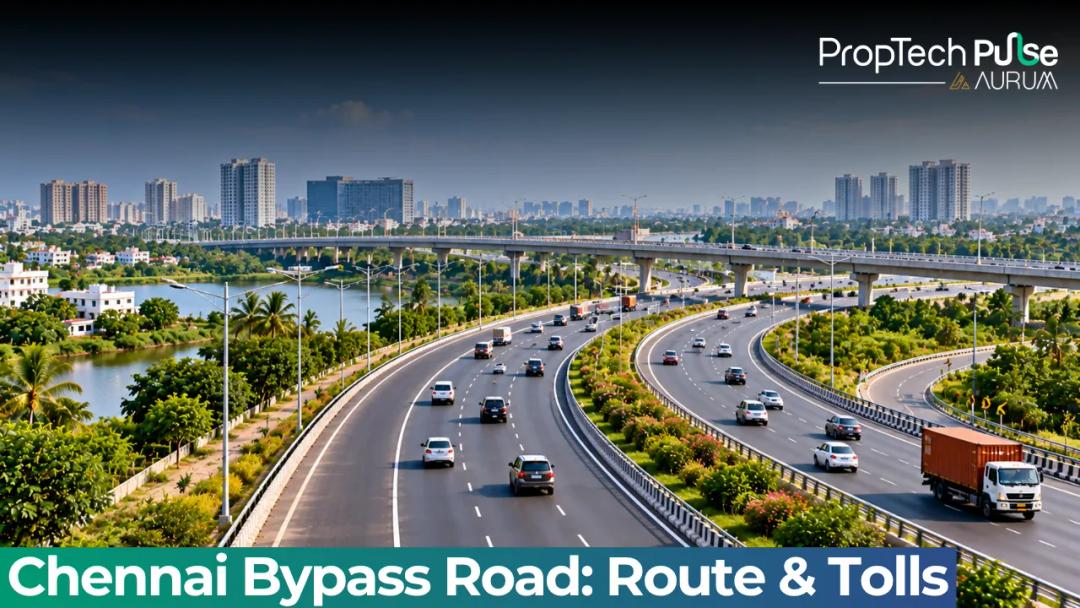
You can enter the Chennai Bypass at Perungalathur, speed past Porur and Maduravoyal, and exit at Puzhal. Pulling over mid-route remains impossible. Strict prohibitions on uncontrolled U-turns turn the city's main north-south artery into a daily logistical puzzle. Commuters depend on scattered service roads. A brief 2 kilometre detour often stretches into a 20 kilometre maze of congested surface streets. Anyone planning to buy land or invest near this corridor needs a clear grasp of how traffic actually flows. In this guide What is the Chennai Bypass Road? Chennai Bypass Route and Key Connections Chennai Bypass Phase 1 and Phase 2 Breakdown Chennai Bypass Tolls and Payment Updates Current Commuter Restrictions and Traffic Patterns Investing Near the Chennai Bypass: Opportunities and Risks Before You Commit to a Plot or Commute Plan Frequently asked questions What is the Chennai Bypass Road? Quick answer The chennai bypass road is a 32 km fully access-controlled expressway connecting NH 32 at Perungalathur to NH 16 at Puzhal. Built in two phases, it handles over 55,000 vehicles daily and currently operates two active toll plazas at Surapattu and Vanagaram. National Highways Authority of India staff manage this corridor as a core component of the East Coast Arterial Highway. It forms part of Asian Highway 20. Planners originally built it to relieve pressure on central grids like OMR and Velachery Main Road. Traffic moves freely between southern districts and northern industrial zones here. Most highways cut straight through residential neighbourhoods. This expressway sidesteps direct intersections entirely. Concrete dividers split the metropolitan area into separate micro-markets. Manufacturing belts and mid-range housing anchor the western side. Residential townships grow rapidly along the Grand Southern Trunk Road to the east. Direct visibility from the highway stays tightly controlled. Homes facing inward toward the concrete divider struggle to attract buyers. Properties bordering wider feeder roads perform significantly better. Distance to nearby entry ramps directly impacts delivery times and emergency access. Chennai Bypass Route and Key Connections Tracking the precise route helps investors follow nearby development projects. The expressway stays entirely within Greater Chennai boundaries while covering exactly 32 kilometres. Builders began the alignment at a complex interchange with the Grand Southern Trunk Road at Perungalathur. The corridor sweeps northwest past Ambattur's industrial zones before reaching Maduravoyal. Traffic never halts abruptly at Maduravoyal either. The alignment continues until merging cleanly into the Old Mahabalipuram Road corridor junction. Final integration happens directly with NH 16 at Puzhal in the far north. Several radial arteries tap into the expressway throughout this arc. A dedicated connection to NH 48 at Ambattur opens the corridor toward Tiruvallur and Bengaluru. Overlapping sections with NH 32 further south simplify connections heading toward Puducherry. Freight operators rely heavily on this intersection with NH 716 near Madhavaram. The dense network makes the expressway indispensable for cargo moving between Ennore port and Krishnapatnam. Chennai Bypass Phase 1 and Phase 2 Breakdown Construction teams did not build this infrastructure overnight. Planners realized basic widening could never handle the early 2000s surge in private vehicles. The NHAI divided the project into separate financial and engineering phases. Phase 1 delivered the baseline 32 kilometre carriageway. Officials opened this stretch in 2010. Initial construction introduced elevated structures specifically to navigate tight urban density. Phase 2 targeted grade separation needs further north. Designers extended the raised layout across the heavily congested Ambattur Industrial Estate. Engineers constructed roughly 13 kilometres of multi-lane flyovers, ramps, and interchanges. The most complex segment anchors right here. A 3.2 kilometre six-lane structure cuts through the industrial park center. Thousands of factory trucks now use alternate service lanes during peak hours. Buyers purchasing warehouse space alongside this zone should watch ramp completion schedules closely. Comparison of the Chennai bypass phases highlighting structural differences and focus areas Feature Phase 1 (Inaugurated 2010) Phase 2 (Under Development) Core Focus Area Purasaivakkam to Maduravoyal Maduravoyal extending to Thiruneermalai / Ambattur Industrial Zone Total Added Length Baseline 32 km carriageway Approximately 13 km elevated extension Crossings & Intersections Grade separation at major nodal points Complex flyovers and interchanges across factory gates Chennai Bypass Tolls and Payment Updates Driving this expressway personally exposes you to toll plazas more than once. Operators currently run two primary collection centers. Surapattu handles the southern approach while Vanagaram processes central traffic. Axle count and vehicle category determine exact charges for every registered car or truck. Mandatory FASTag adoption for commercial categories accelerated payment processing at both sites. Physical infrastructure still struggles to match rising volume. Indian Highway Management Company Limited installed advanced tracking systems in the collection booms earlier this year. Vanagaram Plaza now battles congestion from surrounding apartment complexes and retail malls. The Greater Chennai Corporation actively pushed to move the facility away from dense zones. Officials confirmed plans to relocate the collection point toward Thiruneermalai. Heavy queues between 6 PM and 8 PM will persist until relocation wraps up. Status of active Chennai bypass toll plazas and upcoming modifications Toll Plaza Name Location Relative to City Current Operational Status Surapattu Toll Plaza South Chennai (approaching GTR) Fully operational Vanagaram Toll Plaza Central Chennai fringe Operational pending relocation to Thiruneermalai Current Commuter Restrictions and Traffic Patterns This expressway reads perfectly on a map. Real-world commuting tells a different story. Concrete barriers block the edges with virtually no slip roads. Legal access stays locked behind specific service lanes at Ambattur, Patravakkam, Maduravoyal, and Madhavaram. Drivers routinely cover extra kilometres just to locate a legal ramp. Scarcity of ramps fuels widespread illegal U-turns. Night driving grows particularly hazardous because of this pattern. Motorcycle riders absorb the highest injury risk. Local police record over 140 serious accidents annually across the 32 kilometre stretch. Fatalities reach nearly 170 every seven years. The NHAI initially proposed a dedicated motorcycle lane to isolate two-wheelers from heavier traffic. Officials scrapped that concept in May 2024. Engineers warned that separating smaller bikes would likely trigger dangerous speeding trends and deadlier crashes. Public transit options face identical restrictions. The Metropolitan Transport Corporation buses originally faced a complete highway ban due to missing bus stops. Private cars and freight transport absorbed the displaced volume. Regulators partially lifted that prohibition in January 2024. Large commuter coaches still avoid the raised structure entirely. Most operators stick to wider parallel surface roads where parking rules stay predictable. Investing Near the Chennai Bypass: Opportunities and Risks Living close to this infrastructure delivers mixed returns for real estate buyers. Steady daily traffic above 55,000 vehicles confirms robust commercial demand. Cold storage facilities and logistics hubs naturally settle along this corridor. These operations depend heavily on fast NH 48 access. Industrial fringe properties typically secure higher business rental yields. Cargo operators continuously hunt for land within a five-kilometre ring. They require immediate NH 48 access for pan-India distribution networks. Residential plots here start cheaper per square foot. Renting those same parcels to logistics firms generates faster cash recovery than standard apartments. Never skip the environmental audit before signing long-term leases. Persistent noise and dust from heavy trucks degrade residential comfort scores significantly. Residential purchases face entirely different constraints. Houses pressed against the sound barrier endure constant noise pollution and zero backyard privacy. Frequent motorcycle collisions overwhelm nearby emergency clinics and trauma centres. Capital-focused buyers frequently miss planned Bus Rapid Transit System upgrades. Planners want to install a raised rail track along the Phase 2 median. Approved construction would permanently shadow view corridors for nearby towers. Improved transit access replaces lost daylight views. Scrutinize western industrial belt plots before committing funds. Cross-reference new connectivity maps with top 10 real estate companies in Chennai to verify they grasp local zoning limits. Developers must strictly follow Tamil Nadu RERA regulations. These rules enforce mandatory safety setbacks from high-speed roads. Factor in updated tamil nadu stamp duty and registration charges before running final acquisition math. Budget cushions protect against sudden municipal fee revisions. Before You Commit to a Plot or Commute Plan This expressway operates as a geographic divider rather than a community connector. Measure exact distances to legal service road entrances before signing lease deeds or booking commute plans. Half a kilometre versus two kilometres from a proper ramp changes everything. Peak gridlock shifts commutes by fifteen to forty-five minutes depending solely on ramp proximity. Municipal approval boards also update transit medians and toll relocation plans regularly. These infrastructure tweaks reshape traffic patterns and reset property valuations instantly. Frequently asked questions What is the total length and route of the Chennai bypass road? The Chennai bypass road spans approximately 32 kilometres. It runs from Perungalathur on the Grand Southern Trunk Road in the south to Puzhal on the old coastal highway. Traffic flows through Maduravoyal and Ambattur sectors en route. How many toll plazas are there on the Chennai bypass, and which ones are open? There are currently two active toll plazas operating on the expressway. The Surapattu plaza sits near the southern limit, while the Vanagaram plaza handles central traffic. The Vanagaram center faces urgent plans to relocate deeper into the Thiruneermalai zone to ease ongoing congestion. Why does the Chennai bypass get so many traffic jams despite being an expressway? Gridlock occurs because the expressway stays fully enclosed. Drivers searching for shortcuts frequently attempt illegal U-turns. Many waste hours circling to find the handful of permitted ramps at Ambattur or Maduravoyal. Can public buses travel on the Chennai bypass road right now? The Metropolitan Transport Corporation faced a total highway ban due to missing bus stops. Regulators partially lifted that restriction in January 2024. Large buses still prefer wider parallel surface roads to avoid complex highway rules. Will there be a dedicated two-wheeler lane added to the Chennai bypass? Engineers proposed isolated motorcycle lanes decades ago. National Highways Authority officials shelved that blueprint in May 2024. They concluded that segregating bikes would accidentally encourage dangerous speeding and trigger deadlier crash patterns. Sources National Highways Authority of India (NHAI): Project details and phase breakdowns regarding the East Coast Arterial Highway access control (accessed October 2026) Ministry of Road Transport and Highways: Baseline data on Asian Highway 20 corridor integration and national highway numbering (accessed October 2026) Government of India - Department of Infrastructure: Official records on national highway maintenance standards and toll policy frameworks (accessed October 2026) Enjoyed this blog article? Visit PropTech Pulse for more interesting blogs.

PropTech Pulse Editorial
22nd October 2026
Uncategorized
Patwari Meaning: Role, Duties & Property Title Impact
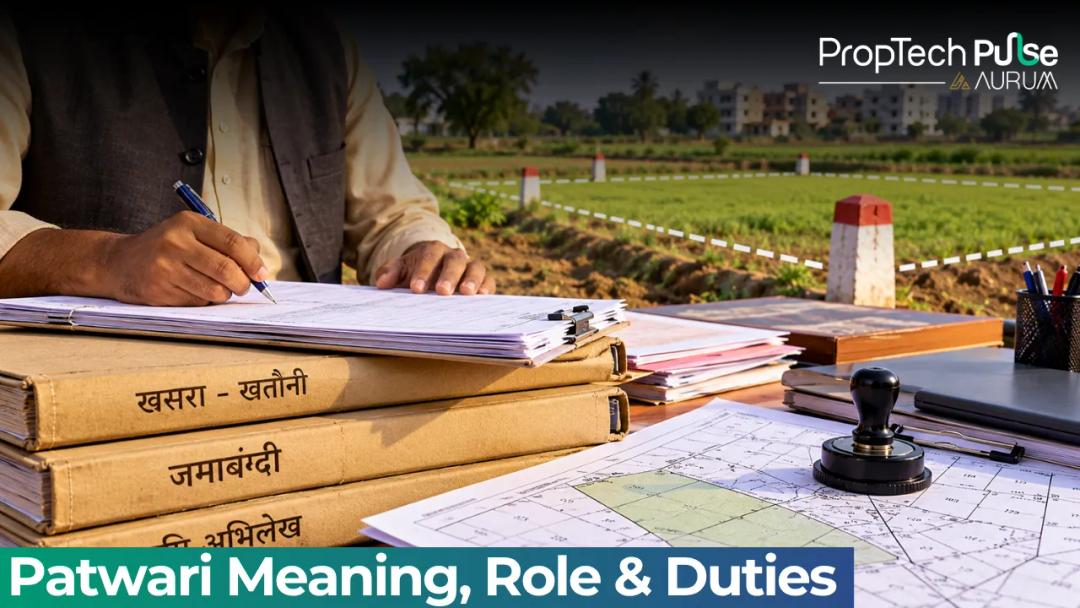
Many property buyers first encounter the Patwari during document verification for rural plots or semi-urban farmhouses. The term often triggers questions about the patwari meaning, leaving newcomers confused about why this specific official still holds decisive power over modern property transactions. The Patwari operates as the lowest-level government functionary tasked with maintaining land and crop records at the village or block level. Originally set up to organise colonial land tax collection, the officer now sits at the foundation of state revenue departments. They serve as the primary custodians of property ownership data and control the transition of legal titles in government ledgers. In this guide What is a Patwari in English? Key Duties and the Daily Patwari Work Patwari Role in Land Records and Mutations Comparing the Patwari vs Tehsildar Hierarchy How Digital Reform Is Changing the Revenue System Final Checks Before You Sign a Sale Deed Frequently asked questions What is a Patwari in English? Quick answer The official English translation of Patwari typically reads as Village Accountant or Revenue Inspector. The precise title shifts according to regional language and historical customs, functioning as the fundamental government representative for local property records and tax collection. Government gazettes rarely assign a single uniform title across India. Instead, the official designation adapts to local vernacular while preserving the same constitutional responsibilities. Understanding these regional variations helps buyers navigate rural transactions without confusion when consulting local revenue offices. In Uttar Pradesh and Haryana, the role operates under the name Lekhpal. Property seekers in Maharashtra and Gujarat will encounter the title Talati. Andhra Pradesh and Telangana utilise Karnam, while Tamil Nadu and Karnataka largely retain the colonial-era designation of Village Accountant. Despite the differing labels, every variant shares identical core obligations regarding land measurement and title updates. Key Duties and the Daily Patwari Work A Patwari maintains the Field Register, known locally as Fard or Form A. This document records every single parcel of land within their jurisdiction, listing the current owner, exact area measurements, and seasonal crop cycles. The officer visits designated plots periodically to observe harvest yields, calculations that dictate the annual land revenue payable to the state treasury. Beyond routine agricultural monitoring, the Patwari fulfils a critical function whenever property ownership changes hands. Executing a sale deed transfers legal possession, but the government ledger remains untouched until the Patwari initiates the mutation process. The officer physically verifies boundary markers and confirms the identities of the buyer and seller to prevent fraudulent transfers. Buyer Check Never rely exclusively on the previous owner's copy of the sale deed. Always request a recent extract of the Record of Rights directly from the local Patwari office to confirm the active holder of the title before releasing remaining payments. Daily operations also involve tracking unauthorised constructions and flagging disputed parcels for senior administrators. When neighbouring villages clash over shared irrigation channels or grazing lands, the Patwari compiles historical measurements and submits preliminary reports to the Naib Tehsildar for resolution. Patwari Role in Land Records and Mutations Mutation stands as the single most vital function connecting the Patwari to contemporary real estate deals. Technically termed 'Dakhil-Kharij', mutation officially updates the Record of Rights to reflect a new owner following a sale, inheritance, or gift agreement. Until the Patwari registers this specific change, the state government continues treating the deceased or selling owner as the liable taxpayer. This procedural gap separates legal title held in a private sale deed from fiscal recognition maintained in public revenue records. Mortgage lenders routinely refuse to sanction home loans against plots until the official mutation order arrives in the Patwari's register. Buyers purchasing semi-urban assets should calculate the timeline for these revenue updates to avoid unexpected financing delays. When navigating complicated rural transactions, executing thorough legal verification of property guarantees that no pending litigation or overlapping claims obscure the record before approaching the Patwari for mutation processing. Comparing the Patwari vs Tehsildar Hierarchy The revenue hierarchy positions the Patwari at the absolute foundation tier, operating under the direct oversight of the Kanungo and the Naib Tehsildar. The Tehsildar wields substantial administrative authority across an entire sub-district, managing dozens of Patwaris simultaneously and resolving high-stakes legal conflicts. Patwaris execute granular data entry, conduct routine field measurements, and process initial mutation requests. Tehsildars possess statutory powers to adjudicate severe boundary disputes, issue seizure orders for unpaid taxes, and authorise major land-use alterations. A Patwari supplies raw observational data; the Tehsildar makes binding administrative rulings based on that intelligence. Administrative comparison between Patwari and Tehsildar roles Function Patwari Tehsildar Administrative Rank Sub-divisional field officer Sub-divisional executive magistrate Area Jurisdiction Single block or clustered villages Entire tehsil or district subdivision Reporting Line Reports directly to the Kanungo Reports to the District Magistrate Dispute Authority Gathers physical evidence only Holds power to issue injunctions and attachment orders How Digital Reform Is Changing the Revenue System The National Land Records Modernisation Programme has successfully pushed India toward fully computerised land registries. Under the Digital Initiative for Land Records framework, state governments have systematically digitised survey maps, recorded rights, and historical ownership trails. Numerous states now host public portals allowing citizens to request mutations without waiting in government queues. E-Mutation workflows permit applicants to upload scanned sale documents and settle statutory fees entirely online. The backend software routes the application electronically to the assigned Patwari, who must subsequently upload geo-tagged photographs proving physical boundaries match the newly digitised map. Paperwork has virtually disappeared, yet the grassroots officer retains control over the physical verification node that blocks fraudulent digital approvals. Understanding the basic patwari meaning helps clarify why digital portals still route applications through the grassroots officer instead of bypassing them entirely. It also drastically shrinks the window for informal negotiations that historically defined rural property deals. Final Checks Before You Sign a Sale Deed A executed sale deed secures legal possession, but the Patwari holds the definitive fiscal truth of ownership. Verify the current holder of the Record of Rights bears your name well before clearing the final payment tranche. Cross-reference the Encumbrance Certificate history to detect hidden financial liens blocking the transfer. Building a functional rapport with the local patwari accelerates dispute resolution and future-proofs your tenure. One responsive officer ensures your names stay correctly linked to the record over decades. Investors operating outside metropolitan clusters should consult our Encumbrance Certificate (EC) guide to master how layered title checks protect capital allocation. Prior to sealing rural agreements, deploy a complete property due diligence strategy covering title chains, encumbrances, and municipal zoning approvals. Frequently asked questions What does a Patwari actually do every day? The officer maintains the official Field Register, recording land boundaries and agricultural output seasonally. They visit designated plots to measure shifting terrain, verify crop growth for tax assessment, and track ownership transfers. When a sale occurs, the Patwari physically inspects the site to confirm boundary markers align with the documented map before initiating the mutation entry. Without their field verification, revenue records remain outdated despite legal paperwork being signed. Is a Patwari the same person as a Tehsildar? No, they hold distinct ranks within the state revenue apparatus. A Patwari operates as a sub-divisional field clerk handling daily data logging and basic measurements. A Tehsildar commands administrative power over an entire district subdivision. While the Patwari gathers raw information, the Tehsildar interprets that data, resolves major boundary conflicts, issues legal injunctions, and signs off on high-value property alterations. Why does my name still not show up after buying a house? Signing a sale deed transfers legal possession, but it does not update the government's fiscal ownership ledger. The local Patwari must process a separate procedure called mutation to officially move the property name from the seller to your identity card. Lenders and subsequent buyers demand this updated Record of Rights to confirm you legally owe the land revenue. Skipping this step leaves the original owner liable for taxes. Can mutation applications be submitted online today? Nearly every Indian state now runs on the Digital Initiative for Land Records framework, letting you file e-Mutation requests online by uploading documents and paying fees securely. The portal routes these files directly to your local Patwari. Submitting the paperwork digitally only finishes half the job though. The designated officer must still verify boundaries physically and upload geo-tagged photos to approve the transfer. What happens if the Patwari refuses to update my land records? Revenue officers carry significant discretionary power, and delays sometimes stem from bureaucratic bottlenecks rather than technical failures. You can escalate unresolved mutation requests by filing an application with the Naib Tehsildar or the state's Land Records Grievance Redressal portal. Many districts enforce strict deadlines for completing field inspections, allowing applicants to lodge formal complaints if statutory timelines expire without action. Maintaining copies of all submission receipts strengthens your legal standing during appeals. Sources Uttar Pradesh Revenue Department: Operational guidelines for mutation processes managed by Lekhpals (accessed October 2026) https://revenue.up.gov.in/ Enjoyed this blog article? Visit PropTech Pulse for more interesting blogs.
PropTech Pulse Editorial
22nd October 2026
Uncategorized
BOCW Full Form: Meaning, Cess & Registration Guide
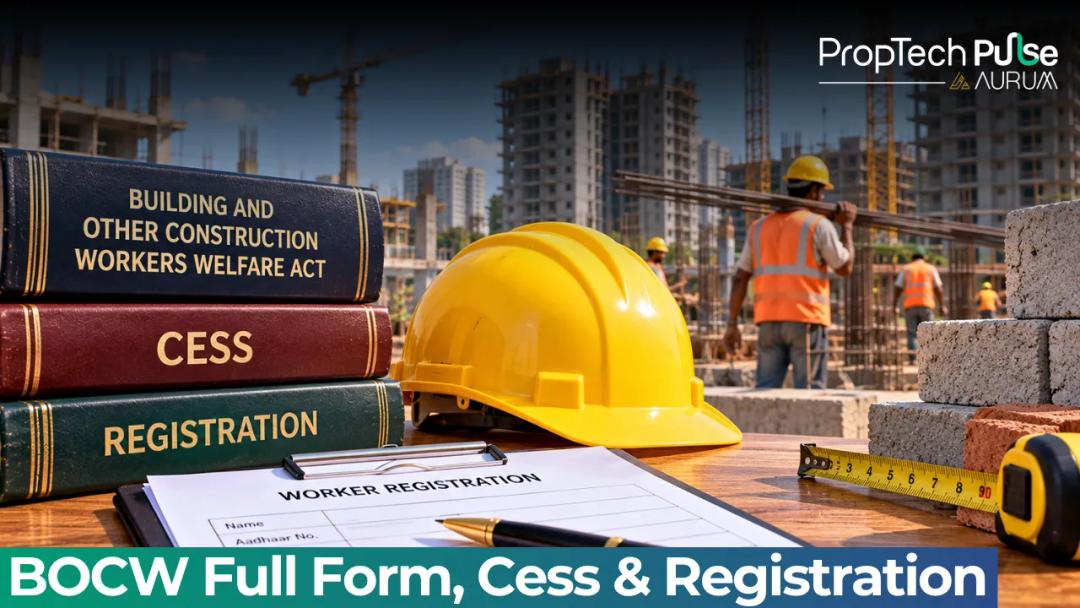
The BOCW full form stands for Building and Other Construction Workers Welfare Board. On site, it points to something far more practical. The fund pays for children's schooling and emergency healthcare. Developers track it for compliance while workers rely on it for labour cards. Grasping what these letters actually mean opens the door to benefits millions currently miss. In this guide Understanding the BOCW Full Form History of the BOCW Act, 1996 How the BOCW Cess Funds Your Benefits BOCW Welfare Board: Rights for Every Builder and Worker Employer Compliance: When Is BOCW Registration Mandatory? State-by-State Differences in Implementation Worker Registration: How to Get Your BOCW Labour Card BOCW Registration Documents and Fee Checklist Penalties and Non-Compliance Risks Next Steps for Employers and Workers Frequently asked questions Understanding the BOCW Full Form Quick answer BOCW stands for Building and Other Construction Workers Welfare Board. It is a statutory body created under the Central Government's Building and Other Construction Workers (Regulation of Employment and Conditions of Service) Act, 1996. Its primary goal is to provide financial aid, educational scholarships, and medical benefits to migrant construction workers and their families using funds collected via the 1% construction cess. Operations run through dedicated offices across every Indian state. In Hindi, officials list it as Bhavan Evam Anya Nirmaan Shramik Kalyan Board. You will spot that translation on site notice boards alongside the English version. The consistent naming prevents confusion when crews move between states for contracts. Developers use it daily during audit checks. Workers encounter it when applying for labour cards at district offices. This overlap between corporate compliance and personal welfare makes it a core framework in Indian real estate. History of the BOCW Act, 1996 The legislation passed in 1996. Before that act, crews moved between cities chasing contracts without any formal safety net. They lived in temporary shelters with zero legal recourse when scaffolding collapsed. Recognising that gap, Parliament drafted a unified statute protecting everyone working in building or demolition. The framework splits into two distinct tracks. The first track enforces basic working conditions. It covers rest periods, drinking water access, adequate latrines, and strict overtime caps. A separate funding track handles the money collection. Officials designed a dedicated model outside standard payroll taxes to reduce administrative strain on employers. Sites still run this split system today. One branch monitors physical conditions while another pushes state treasury funds into scholarships and medical camps. How the BOCW Cess Funds Your Benefits Every large project chips into the pot. Employers calculate the 1% BOCW cess on verified costs. That percentage looks modest until calculated against modern development numbers. Estimated cess collection based on average project valuations (Oct 2026) Project Value 1% Cess Payable Estimated Annual Worker Coverage Funded ₹10 Crore ₹1,00,000 Tuition fees for approx. 30 students ₹50 Crore ₹5,00,000 Medical kits, camp setups, and 6 scholarships ₹100 Crore+ ₹10,00,000+ Full-year accident insurance pool + higher ed grants Total Impact Collective pool drives state welfare budgets Direct financial relief for migrant families Money flows from developer accounts to state treasuries. Local managers then distribute grants based on demand. Skipping payment collapses the scheme before it reaches families. Steady payments build crew trust and prevent inspection delays. Fund Visibility You can trace how much your site paid into the scheme by asking your project administrator for the latest challan receipt. These receipts prove the 1% contribution went to the correct state treasury and qualify your team for immediate benefit activation. BOCW Welfare Board: Rights for Every Builder and Worker The welfare board works as a structured support system. Registered members claim tuition assistance for primary school, disability grants, and widow pensions if a breadwinner passes away on duty. State boards also deploy mobile medical units during peak monsoon months. Builders gain parallel advantages. Proper registration clears approved contractor lists and shields projects from sudden stop-work orders during labour audits. Tight compliance drops wage disputes because teams work off verified rosters. Employer Compliance: When Is BOCW Registration Mandatory? Compliance ignores tiny renovations. The rule triggers once an establishment employs ten workers over twelve months. Highway laying projects hit this threshold fast if manpower exceeds ten staff across the contract. Clearing that headcount forces employers to register online via state labour portals. Submitting Form 1 with site proof delivers a one-year validity certificate that demands annual renewal. Late filings invite fines scaled to unpaid cess amounts and halt subsequent permits. For developers managing multiple sites, tracking each contractor’s certificate remains vital for your property due diligence checklist. Missing a single renewal ripples across portfolios during quarterly audits. State-by-State Differences in Implementation While the parent law is central, execution diverges sharply across territories. Maharashtra runs its own portal through MahaRERA-linked labour databases. Tamil Nadu processes applications via TNPLMS with tighter monthly reporting requirements. Uttar Pradesh relies heavily on physical verification for card issuance, making remote tracking difficult. Karnataka has recently digitised payout transfers directly to beneficiary bank accounts. Employers handling inter-state projects must map these variations into their compliance calendars. A certificate valid in Bihar does not auto-transfer privileges in Kerala. Worker Registration: How to Get Your BOCW Labour Card Workers navigate BOCW full form requirements differently than corporate tax filers. They apply for a Labour Card linked directly to the state welfare board. Most states digitised the process to remove middlemen and cut processing time from weeks to minutes. You start by visiting the state labour website, selecting the construction category, and entering your Aadhaar number. The portal cross-checks identity, requests proof of ninety days continuous employment, and generates a unique card number instantly. Cards carry photos, fingerprints, employer names, and site addresses. Bihar retired its old portal entirely. All applications now route exclusively through bocwscheme.bihar.gov.in, requiring only a mobile number and date of birth to verify eligibility. Teams near metro corridors cross-reference nearby UP RERA registered projects to confirm whether lead developers cleared employer-side registration. BOCW Registration Documents and Fee Checklist Open a dedicated folder before the application screen. Rushing missing scans causes rejection flags that reset queue positions. Gather these core items: Aadhaar card (front and back scanned clearly) Cancelled cheque or front page of your savings bank passbook for scholarship transfers Employer declaration letter confirming your exact start date and site code Local municipal voter ID or ration card if your workplace lacks permanent records Past month's wage slip showing deductions or attendance marks Applying costs zero rupees. State portals process Labour Cards completely free. Cash demands from contractors or agents violate the law and warrant immediate reporting to the nearest labour inspectorate. Penalties and Non-Compliance Risks Ignorance carries severe consequences. Failure to register attracts monetary penalties that compound daily until regularisation occurs. Courts have upheld imprisonment terms up to three months for repeat offenders refusing to pay mandated cess. Larger projects face blocked NOCs if dues remain outstanding. Municipal corporations cross-check labour certificates before issuing completion certificates. A stalled handover due to unpaid welfare dues damages builder reputations permanently. Regular reconciliation with finance teams prevents these bottlenecks. Next Steps for Employers and Workers Site owners must update contractor databases and request fresh Form 1 copies before signing next-year agreements to avoid blind spots during government sweeps. Workers should verify labour card numbers on state portals before monsoon season arrives. Medical claims frequently fail when IDs expire mid-year or linked bank accounts sit inactive. Plan paperwork early. Map how state subsidies reduce overall debt burdens using a home loan emi calculator later. Organizing documents now saves months of administrative back-and-forth. Frequently asked questions BOCW kya hai aur ye kaun banata hai? BOCW ka matlab Building and Other Construction Workers Welfare Board hota hai. Ye Central Government ki Ministry of Labour and Employment ke tahat bana gaya ek statutory body hai. Iska maksad saal bhar chalne wale har construction site par lage mazdooron ke bachchon ki padhai, injury insurance aur emergency medical care ke liye funds jama karna hai. BOCW card se kya benefits milte hain? Labour card holders ko school tuition reimbursement milti hai, jo state ke hisaab se ₹5,000 se lekar ₹15,000 tak ho sakti hai. Iske alawa, agar site par koi haadsa ho to accidental death ya disability grants di jati hain. Kuch rajyon mein mritak mazdoor ke parivar ke liye widowed pension aur mobile medical camp ke liye priority booking bhi shamil hai. Kaun BOCW mein register kar sakta hai? Har construction worker jo kam se kam 90 din lagatar kisi construction site par kaam kar chuka ho, uske liye ye eligible hai. Umra aam taur par 18 se 60 saal ke beech honi chahiye. Employer tab hi register karta hai jab site par 10 ya usse zyada workers mausam ya contract ke dauran maujood rahein. BOCW registration fee kitni lagti hai? Labour card ya Beneficiary ID ke liye koi registration fee nahi hai. Yeh service bilkul free hoti hai kyunki ye public welfare scheme hai. Agar koi aap se cash mangta hai to ye illegal hai aur aap seedha apne state ke labour office ko complaint file kar sakte hain. Sirf documents ki self-printing aur scanning ki apni expense aayegi. Kya BOCW card sirf Bihar mein chalta hai? Nahi, ye poore India mein valid hai lekin har state ka alag management system chalta hai. Bihar ne apna purana port band karke naye platform par shift hone ka faisla kiya hai, jabki Maharastra, Tamil Nadu aur Karnataka ke paas apne alag state portals hain. Card ki basic validity same rehti hai, bas application ka tareeka aur document verification thoda alag ho sakta hai. Sources Ministry of Labour and Employment: Act details, applicability thresholds, and Form 1 requirements (accessed October 2026) Central Board of Indirect Taxes and Customs: Construction cess rules, rate structures, and collection procedures (accessed October 2026) Enjoyed this blog article? Visit PropTech Pulse for more interesting blogs.
PropTech Pulse Editorial
22nd October 2026
Uncategorized
Chennai Bypass Road: Route, Tolls & Latest Updates
You can enter the Chennai Bypass at Perungalathur, speed past Porur and Maduravoyal, and exit at Puzhal. Pulling over mid-route remains impossible. Strict prohibitions on uncontrolled U-turns turn the city's main north-south artery into a daily logistical puzzle. Commuters depend on scattered service roads. A brief 2 kilometre detour often stretches into a 20 kilometre maze of congested surface streets. Anyone planning to buy land or invest near this corridor needs a clear grasp of how traffic actually flows. In this guide What is the Chennai Bypass Road? Chennai Bypass Route and Key Connections Chennai Bypass Phase 1 and Phase 2 Breakdown Chennai Bypass Tolls and Payment Updates Current Commuter Restrictions and Traffic Patterns Investing Near the Chennai Bypass: Opportunities and Risks Before You Commit to a Plot or Commute Plan Frequently asked questions What is the Chennai Bypass Road? Quick answer The chennai bypass road is a 32 km fully access-controlled expressway connecting NH 32 at Perungalathur to NH 16 at Puzhal. Built in two phases, it handles over 55,000 vehicles daily and currently operates two active toll plazas at Surapattu and Vanagaram. National Highways Authority of India staff manage this corridor as a core component of the East Coast Arterial Highway. It forms part of Asian Highway 20. Planners originally built it to relieve pressure on central grids like OMR and Velachery Main Road. Traffic moves freely between southern districts and northern industrial zones here. Most highways cut straight through residential neighbourhoods. This expressway sidesteps direct intersections entirely. Concrete dividers split the metropolitan area into separate micro-markets. Manufacturing belts and mid-range housing anchor the western side. Residential townships grow rapidly along the Grand Southern Trunk Road to the east. Direct visibility from the highway stays tightly controlled. Homes facing inward toward the concrete divider struggle to attract buyers. Properties bordering wider feeder roads perform significantly better. Distance to nearby entry ramps directly impacts delivery times and emergency access. Chennai Bypass Route and Key Connections Tracking the precise route helps investors follow nearby development projects. The expressway stays entirely within Greater Chennai boundaries while covering exactly 32 kilometres. Builders began the alignment at a complex interchange with the Grand Southern Trunk Road at Perungalathur. The corridor sweeps northwest past Ambattur's industrial zones before reaching Maduravoyal. Traffic never halts abruptly at Maduravoyal either. The alignment continues until merging cleanly into the Old Mahabalipuram Road corridor junction. Final integration happens directly with NH 16 at Puzhal in the far north. Several radial arteries tap into the expressway throughout this arc. A dedicated connection to NH 48 at Ambattur opens the corridor toward Tiruvallur and Bengaluru. Overlapping sections with NH 32 further south simplify connections heading toward Puducherry. Freight operators rely heavily on this intersection with NH 716 near Madhavaram. The dense network makes the expressway indispensable for cargo moving between Ennore port and Krishnapatnam. Chennai Bypass Phase 1 and Phase 2 Breakdown Construction teams did not build this infrastructure overnight. Planners realized basic widening could never handle the early 2000s surge in private vehicles. The NHAI divided the project into separate financial and engineering phases. Phase 1 delivered the baseline 32 kilometre carriageway. Officials opened this stretch in 2010. Initial construction introduced elevated structures specifically to navigate tight urban density. Phase 2 targeted grade separation needs further north. Designers extended the raised layout across the heavily congested Ambattur Industrial Estate. Engineers constructed roughly 13 kilometres of multi-lane flyovers, ramps, and interchanges. The most complex segment anchors right here. A 3.2 kilometre six-lane structure cuts through the industrial park center. Thousands of factory trucks now use alternate service lanes during peak hours. Buyers purchasing warehouse space alongside this zone should watch ramp completion schedules closely. Comparison of the Chennai bypass phases highlighting structural differences and focus areas Feature Phase 1 (Inaugurated 2010) Phase 2 (Under Development) Core Focus Area Purasaivakkam to Maduravoyal Maduravoyal extending to Thiruneermalai / Ambattur Industrial Zone Total Added Length Baseline 32 km carriageway Approximately 13 km elevated extension Crossings & Intersections Grade separation at major nodal points Complex flyovers and interchanges across factory gates Chennai Bypass Tolls and Payment Updates Driving this expressway personally exposes you to toll plazas more than once. Operators currently run two primary collection centers. Surapattu handles the southern approach while Vanagaram processes central traffic. Axle count and vehicle category determine exact charges for every registered car or truck. Mandatory FASTag adoption for commercial categories accelerated payment processing at both sites. Physical infrastructure still struggles to match rising volume. Indian Highway Management Company Limited installed advanced tracking systems in the collection booms earlier this year. Vanagaram Plaza now battles congestion from surrounding apartment complexes and retail malls. The Greater Chennai Corporation actively pushed to move the facility away from dense zones. Officials confirmed plans to relocate the collection point toward Thiruneermalai. Heavy queues between 6 PM and 8 PM will persist until relocation wraps up. Status of active Chennai bypass toll plazas and upcoming modifications Toll Plaza Name Location Relative to City Current Operational Status Surapattu Toll Plaza South Chennai (approaching GTR) Fully operational Vanagaram Toll Plaza Central Chennai fringe Operational pending relocation to Thiruneermalai Current Commuter Restrictions and Traffic Patterns This expressway reads perfectly on a map. Real-world commuting tells a different story. Concrete barriers block the edges with virtually no slip roads. Legal access stays locked behind specific service lanes at Ambattur, Patravakkam, Maduravoyal, and Madhavaram. Drivers routinely cover extra kilometres just to locate a legal ramp. Scarcity of ramps fuels widespread illegal U-turns. Night driving grows particularly hazardous because of this pattern. Motorcycle riders absorb the highest injury risk. Local police record over 140 serious accidents annually across the 32 kilometre stretch. Fatalities reach nearly 170 every seven years. The NHAI initially proposed a dedicated motorcycle lane to isolate two-wheelers from heavier traffic. Officials scrapped that concept in May 2024. Engineers warned that separating smaller bikes would likely trigger dangerous speeding trends and deadlier crashes. Public transit options face identical restrictions. The Metropolitan Transport Corporation buses originally faced a complete highway ban due to missing bus stops. Private cars and freight transport absorbed the displaced volume. Regulators partially lifted that prohibition in January 2024. Large commuter coaches still avoid the raised structure entirely. Most operators stick to wider parallel surface roads where parking rules stay predictable. Investing Near the Chennai Bypass: Opportunities and Risks Living close to this infrastructure delivers mixed returns for real estate buyers. Steady daily traffic above 55,000 vehicles confirms robust commercial demand. Cold storage facilities and logistics hubs naturally settle along this corridor. These operations depend heavily on fast NH 48 access. Industrial fringe properties typically secure higher business rental yields. Cargo operators continuously hunt for land within a five-kilometre ring. They require immediate NH 48 access for pan-India distribution networks. Residential plots here start cheaper per square foot. Renting those same parcels to logistics firms generates faster cash recovery than standard apartments. Never skip the environmental audit before signing long-term leases. Persistent noise and dust from heavy trucks degrade residential comfort scores significantly. Residential purchases face entirely different constraints. Houses pressed against the sound barrier endure constant noise pollution and zero backyard privacy. Frequent motorcycle collisions overwhelm nearby emergency clinics and trauma centres. Capital-focused buyers frequently miss planned Bus Rapid Transit System upgrades. Planners want to install a raised rail track along the Phase 2 median. Approved construction would permanently shadow view corridors for nearby towers. Improved transit access replaces lost daylight views. Scrutinize western industrial belt plots before committing funds. Cross-reference new connectivity maps with top 10 real estate companies in Chennai to verify they grasp local zoning limits. Developers must strictly follow Tamil Nadu RERA regulations. These rules enforce mandatory safety setbacks from high-speed roads. Factor in updated tamil nadu stamp duty and registration charges before running final acquisition math. Budget cushions protect against sudden municipal fee revisions. Before You Commit to a Plot or Commute Plan This expressway operates as a geographic divider rather than a community connector. Measure exact distances to legal service road entrances before signing lease deeds or booking commute plans. Half a kilometre versus two kilometres from a proper ramp changes everything. Peak gridlock shifts commutes by fifteen to forty-five minutes depending solely on ramp proximity. Municipal approval boards also update transit medians and toll relocation plans regularly. These infrastructure tweaks reshape traffic patterns and reset property valuations instantly. Frequently asked questions What is the total length and route of the Chennai bypass road? The Chennai bypass road spans approximately 32 kilometres. It runs from Perungalathur on the Grand Southern Trunk Road in the south to Puzhal on the old coastal highway. Traffic flows through Maduravoyal and Ambattur sectors en route. How many toll plazas are there on the Chennai bypass, and which ones are open? There are currently two active toll plazas operating on the expressway. The Surapattu plaza sits near the southern limit, while the Vanagaram plaza handles central traffic. The Vanagaram center faces urgent plans to relocate deeper into the Thiruneermalai zone to ease ongoing congestion. Why does the Chennai bypass get so many traffic jams despite being an expressway? Gridlock occurs because the expressway stays fully enclosed. Drivers searching for shortcuts frequently attempt illegal U-turns. Many waste hours circling to find the handful of permitted ramps at Ambattur or Maduravoyal. Can public buses travel on the Chennai bypass road right now? The Metropolitan Transport Corporation faced a total highway ban due to missing bus stops. Regulators partially lifted that restriction in January 2024. Large buses still prefer wider parallel surface roads to avoid complex highway rules. Will there be a dedicated two-wheeler lane added to the Chennai bypass? Engineers proposed isolated motorcycle lanes decades ago. National Highways Authority officials shelved that blueprint in May 2024. They concluded that segregating bikes would accidentally encourage dangerous speeding and trigger deadlier crash patterns. Sources National Highways Authority of India (NHAI): Project details and phase breakdowns regarding the East Coast Arterial Highway access control (accessed October 2026) Ministry of Road Transport and Highways: Baseline data on Asian Highway 20 corridor integration and national highway numbering (accessed October 2026) Government of India - Department of Infrastructure: Official records on national highway maintenance standards and toll policy frameworks (accessed October 2026) Enjoyed this blog article? Visit PropTech Pulse for more interesting blogs.
PropTech Pulse Editorial
22nd October 2026
Uncategorized
Patwari Meaning: Role, Duties & Property Title Impact
Many property buyers first encounter the Patwari during document verification for rural plots or semi-urban farmhouses. The term often triggers questions about the patwari meaning, leaving newcomers confused about why this specific official still holds decisive power over modern property transactions. The Patwari operates as the lowest-level government functionary tasked with maintaining land and crop records at the village or block level. Originally set up to organise colonial land tax collection, the officer now sits at the foundation of state revenue departments. They serve as the primary custodians of property ownership data and control the transition of legal titles in government ledgers. In this guide What is a Patwari in English? Key Duties and the Daily Patwari Work Patwari Role in Land Records and Mutations Comparing the Patwari vs Tehsildar Hierarchy How Digital Reform Is Changing the Revenue System Final Checks Before You Sign a Sale Deed Frequently asked questions What is a Patwari in English? Quick answer The official English translation of Patwari typically reads as Village Accountant or Revenue Inspector. The precise title shifts according to regional language and historical customs, functioning as the fundamental government representative for local property records and tax collection. Government gazettes rarely assign a single uniform title across India. Instead, the official designation adapts to local vernacular while preserving the same constitutional responsibilities. Understanding these regional variations helps buyers navigate rural transactions without confusion when consulting local revenue offices. In Uttar Pradesh and Haryana, the role operates under the name Lekhpal. Property seekers in Maharashtra and Gujarat will encounter the title Talati. Andhra Pradesh and Telangana utilise Karnam, while Tamil Nadu and Karnataka largely retain the colonial-era designation of Village Accountant. Despite the differing labels, every variant shares identical core obligations regarding land measurement and title updates. Key Duties and the Daily Patwari Work A Patwari maintains the Field Register, known locally as Fard or Form A. This document records every single parcel of land within their jurisdiction, listing the current owner, exact area measurements, and seasonal crop cycles. The officer visits designated plots periodically to observe harvest yields, calculations that dictate the annual land revenue payable to the state treasury. Beyond routine agricultural monitoring, the Patwari fulfils a critical function whenever property ownership changes hands. Executing a sale deed transfers legal possession, but the government ledger remains untouched until the Patwari initiates the mutation process. The officer physically verifies boundary markers and confirms the identities of the buyer and seller to prevent fraudulent transfers. Buyer Check Never rely exclusively on the previous owner's copy of the sale deed. Always request a recent extract of the Record of Rights directly from the local Patwari office to confirm the active holder of the title before releasing remaining payments. Daily operations also involve tracking unauthorised constructions and flagging disputed parcels for senior administrators. When neighbouring villages clash over shared irrigation channels or grazing lands, the Patwari compiles historical measurements and submits preliminary reports to the Naib Tehsildar for resolution. Patwari Role in Land Records and Mutations Mutation stands as the single most vital function connecting the Patwari to contemporary real estate deals. Technically termed 'Dakhil-Kharij', mutation officially updates the Record of Rights to reflect a new owner following a sale, inheritance, or gift agreement. Until the Patwari registers this specific change, the state government continues treating the deceased or selling owner as the liable taxpayer. This procedural gap separates legal title held in a private sale deed from fiscal recognition maintained in public revenue records. Mortgage lenders routinely refuse to sanction home loans against plots until the official mutation order arrives in the Patwari's register. Buyers purchasing semi-urban assets should calculate the timeline for these revenue updates to avoid unexpected financing delays. When navigating complicated rural transactions, executing thorough legal verification of property guarantees that no pending litigation or overlapping claims obscure the record before approaching the Patwari for mutation processing. Comparing the Patwari vs Tehsildar Hierarchy The revenue hierarchy positions the Patwari at the absolute foundation tier, operating under the direct oversight of the Kanungo and the Naib Tehsildar. The Tehsildar wields substantial administrative authority across an entire sub-district, managing dozens of Patwaris simultaneously and resolving high-stakes legal conflicts. Patwaris execute granular data entry, conduct routine field measurements, and process initial mutation requests. Tehsildars possess statutory powers to adjudicate severe boundary disputes, issue seizure orders for unpaid taxes, and authorise major land-use alterations. A Patwari supplies raw observational data; the Tehsildar makes binding administrative rulings based on that intelligence. Administrative comparison between Patwari and Tehsildar roles Function Patwari Tehsildar Administrative Rank Sub-divisional field officer Sub-divisional executive magistrate Area Jurisdiction Single block or clustered villages Entire tehsil or district subdivision Reporting Line Reports directly to the Kanungo Reports to the District Magistrate Dispute Authority Gathers physical evidence only Holds power to issue injunctions and attachment orders How Digital Reform Is Changing the Revenue System The National Land Records Modernisation Programme has successfully pushed India toward fully computerised land registries. Under the Digital Initiative for Land Records framework, state governments have systematically digitised survey maps, recorded rights, and historical ownership trails. Numerous states now host public portals allowing citizens to request mutations without waiting in government queues. E-Mutation workflows permit applicants to upload scanned sale documents and settle statutory fees entirely online. The backend software routes the application electronically to the assigned Patwari, who must subsequently upload geo-tagged photographs proving physical boundaries match the newly digitised map. Paperwork has virtually disappeared, yet the grassroots officer retains control over the physical verification node that blocks fraudulent digital approvals. Understanding the basic patwari meaning helps clarify why digital portals still route applications through the grassroots officer instead of bypassing them entirely. It also drastically shrinks the window for informal negotiations that historically defined rural property deals. Final Checks Before You Sign a Sale Deed A executed sale deed secures legal possession, but the Patwari holds the definitive fiscal truth of ownership. Verify the current holder of the Record of Rights bears your name well before clearing the final payment tranche. Cross-reference the Encumbrance Certificate history to detect hidden financial liens blocking the transfer. Building a functional rapport with the local patwari accelerates dispute resolution and future-proofs your tenure. One responsive officer ensures your names stay correctly linked to the record over decades. Investors operating outside metropolitan clusters should consult our Encumbrance Certificate (EC) guide to master how layered title checks protect capital allocation. Prior to sealing rural agreements, deploy a complete property due diligence strategy covering title chains, encumbrances, and municipal zoning approvals. Frequently asked questions What does a Patwari actually do every day? The officer maintains the official Field Register, recording land boundaries and agricultural output seasonally. They visit designated plots to measure shifting terrain, verify crop growth for tax assessment, and track ownership transfers. When a sale occurs, the Patwari physically inspects the site to confirm boundary markers align with the documented map before initiating the mutation entry. Without their field verification, revenue records remain outdated despite legal paperwork being signed. Is a Patwari the same person as a Tehsildar? No, they hold distinct ranks within the state revenue apparatus. A Patwari operates as a sub-divisional field clerk handling daily data logging and basic measurements. A Tehsildar commands administrative power over an entire district subdivision. While the Patwari gathers raw information, the Tehsildar interprets that data, resolves major boundary conflicts, issues legal injunctions, and signs off on high-value property alterations. Why does my name still not show up after buying a house? Signing a sale deed transfers legal possession, but it does not update the government's fiscal ownership ledger. The local Patwari must process a separate procedure called mutation to officially move the property name from the seller to your identity card. Lenders and subsequent buyers demand this updated Record of Rights to confirm you legally owe the land revenue. Skipping this step leaves the original owner liable for taxes. Can mutation applications be submitted online today? Nearly every Indian state now runs on the Digital Initiative for Land Records framework, letting you file e-Mutation requests online by uploading documents and paying fees securely. The portal routes these files directly to your local Patwari. Submitting the paperwork digitally only finishes half the job though. The designated officer must still verify boundaries physically and upload geo-tagged photos to approve the transfer. What happens if the Patwari refuses to update my land records? Revenue officers carry significant discretionary power, and delays sometimes stem from bureaucratic bottlenecks rather than technical failures. You can escalate unresolved mutation requests by filing an application with the Naib Tehsildar or the state's Land Records Grievance Redressal portal. Many districts enforce strict deadlines for completing field inspections, allowing applicants to lodge formal complaints if statutory timelines expire without action. Maintaining copies of all submission receipts strengthens your legal standing during appeals. Sources Uttar Pradesh Revenue Department: Operational guidelines for mutation processes managed by Lekhpals (accessed October 2026) https://revenue.up.gov.in/ Enjoyed this blog article? Visit PropTech Pulse for more interesting blogs.
PropTech Pulse Editorial
22nd October 2026

Ask Pulse Ai anything about real estate

Unlock the Latest in Real Estate
News, Infographics, Blogs & More! Delivered to your inbox.

