

©PropTech Pulse 2025, All rights reserved.

What is a High-Rise?
A High-Rise is a tall building characterized by multiple levels, often employing elevator systems due to the structure’s height. While definitions vary, many jurisdictions consider around 7-10 floors and above as “high-rise.” Occupants or firms typically enjoy elevated city views and consolidated security or maintenance services.
Key Points:
- Vertical Living/Working: Compresses many units or offices into a smaller land footprint.
- Community Amenities: Could include shared recreation, parking decks, or sky lounges.
- Infrastructural Necessities: Fire safety, robust utilities, and effective elevator capacity.
- Design Innovation: Engineers must address wind loads, seismic resilience, and occupant flow.
High-rises embody efficient urban density, catering to growing population demands in major centers while contributing distinctive skylines or architectural statements.
Insight Pulse
Uncategorized
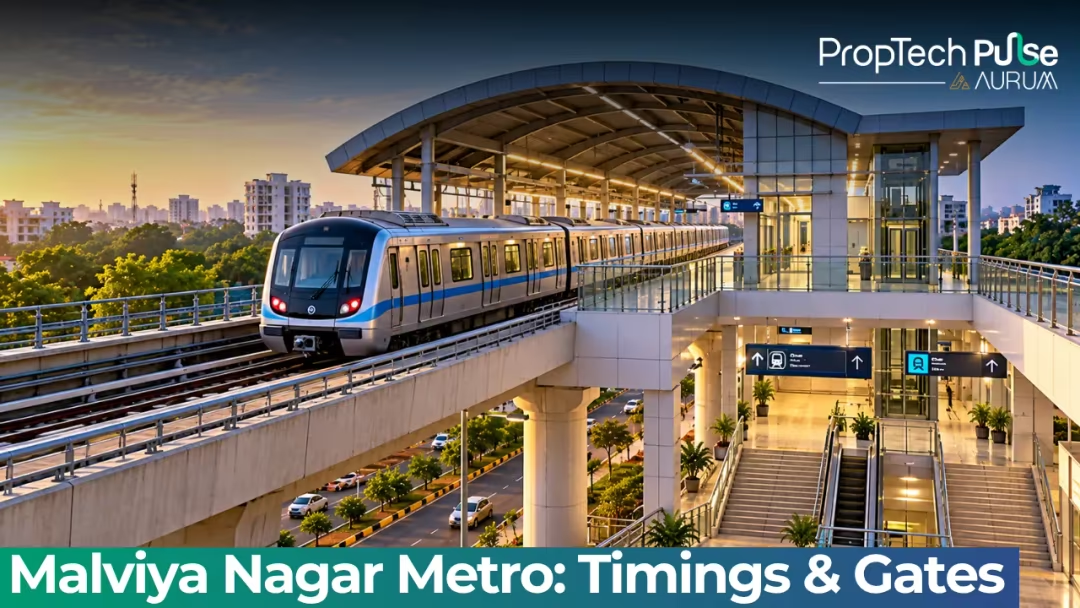
Malviya Nagar Metro Station: Timings, Gates & Connectivity
Mastering the exit layout at Malviya Nagar Metro Station cuts fifteen minutes off your rush-hour walk. Situated on Aurobindo Marg, the underground stop anchors everything from corporate runs to weekend shopping. Gate 3 drops you onto Select Citywalk and Max Hospital floors, while Gate 1 threads straight into the quieter Geetanjali Enclave pockets. Picking the wrong door means fighting traffic at every crossing. In this guide Malviya Nagar Metro Station on the Yellow Line Route Times and Direct Train Links Daily Train Timetables Which Exit Gate Serves Your Destination? Parking Capacity and Step-Free Access Landmarks and Transit-Oriented Impact Before You Book Property Near the Station Frequently asked questions Malviya Nagar Metro Station on the Yellow Line Quick answer Malviya Nagar is an underground station on the Delhi Metro Yellow Line, located on Aurobindo Marg. Platform 1 serves trains heading towards Qutub Sarak and Millennium City Centre Gurugram, while Platform 2 serves trains towards Vishwavidyalaya and Samaypur Badli. The station has four surface exits, though Gate 2 remains permanently closed to the public. Opened on 3 September 2010, the station sits geographically between Mandir Marg and Saket stations. The subterranean design places both platforms well below ground level, meaning commuters rely entirely on escalators or elevators to reach the concourse regardless of which entrance they choose. Because Aurobindo Marg handles heavy commercial traffic, the layout efficiently separates pedestrian footfall from vehicular bottlenecks during evening rush hours. Evaluating properties near the Malviya Nagar Metro Station requires understanding how Transit Oriented Development (TOD) policies have shaped the area. The station precinct falls within the government's designated high-density zone, encouraging vertical construction rather than horizontal sprawl. If you are evaluating the area for investment or a family home, proximity to this hub directly influences rental demand and capital appreciation trajectories. You can check current Malviya Nagar property rates to see how flat prices shift across different pockets depending on their walking distance to the station. Route Times and Direct Train Links The Yellow Line cuts through central Delhi, making this station a direct route to the city's major employment hubs. You do not need to change trains for any of the following stops: Rajiv Chowk: roughly 35 minutes towards Vishwavidyalaya/Samaypur Badli. Kashmere Gate: roughly 40 minutes (interchange point for Blue, Red, and Violet lines). Sarojini Nagar: roughly 25 minutes towards Vishwavidyalaya/Samaypur Badli. Metro Shivaji Stadium: roughly 30 minutes. Maharani Bagh: roughly 15 minutes towards Qutub Sarak/Gurugram. MG Road: roughly 18 minutes towards Qutub Sarak/Gurugram. Middle Floor: roughly 20 minutes towards Qutub Sarak/Gurugram. Khilauri Kalan: roughly 30 minutes towards Qutub Sarak/Gurugram. For investors tracking rental yields, homes within a 10-minute walk of the station typically command higher rents. Young professionals working in Central Delhi or the Dhaula Kuan tech corridors prefer these addresses because reliable transit links reduce commute friction significantly. Shorter travel windows translate directly into higher willingness to pay monthly premiums. Daily Train Timetables DMRC publishes fixed timetables that run through the day, though first and last train arrival times fluctuate seasonally based on summer and winter daylight hours. On average, the daily service window looks like this: First Train (Towards Samaypur Badli/Vishwavidyalaya): Arrives shortly after 05:30 AM. Last Train (Towards Samaypur Badli/Vishwavidyalaya): Departs around 23:44 PM. First Train (Towards Gurugram/Qutub Sarak): Arrives around 06:40 AM. Last Train (Towards Gurugram/Qutub Sarak): Departs around 23:40 PM. Frequency during peak morning hours between 08:00 and 10:00 AM drops to roughly two to three minutes between trains. This reduced headway prevents platform overcrowding and keeps queue times manageable compared to off-peak slots. Evening services backfill gradually after 18:00 PM as shoppers and hospital staff depart together. Which Exit Gate Serves Your Destination? Most commuter guides list the gates in order from east to west, but picking the wrong exit can add a 15-minute detour around traffic or through heavy pedestrian crossings. Here is exactly where each gate takes you on the ground. Malviya Nagar Metro Station gate breakdown by exit direction and nearest landmarks Gate Direction from Station Nearest Landmarks & Destinations Gate 1 East Side Geetanjali Enclave, Shivalik Enclave, MVNR Police Station, Aurbindo College Gate 2 Central-East Permanently Closed (Do not attempt to enter here) Gate 3 Central-West Select Citywalk Mall, Max Super Speciality Hospital, Saket Court, DLF Avenue Gate 4 West Side PVR Anupam Saket, Press Enclave Road, Saket District Centre approaches Closure of Gate 2 causes genuine confusion for newcomers who rely on older maps. Gate 2 previously opened straight into the road network linking Geetanjali and Select Citywalk. DMRC sealed the entrance to clear congestion near the main stairs. If your destination falls between Gate 1 and Gate 3, always use one of the flanking gates instead of circling around the fenced-off area. Families relocating to Malviya Nagar often prefer living close to Gate 1. These older colonies provide quicker access to established schools and community centres, whereas Gate 3 caters entirely to the commercial entertainment belt. Always review Delhi stamp duty and registration charges before booking, as transaction costs apply uniformly regardless of the locality you target. Parking Capacity and Step-Free Access Commuting by private vehicle means utilising the designated parking lot situated directly outside Gate 3. DMRC allocates space for approximately 27 cars and 282 two-wheelers. During weekday evenings, when shoppers return from Select Citywalk and Max Hospital visitors conclude their appointments, the car spaces fill up quickly. Early parking becomes a necessity rather than an option. Accessibility standards across the station are fully compliant. Lifts connect the street-level concourse down to both platforms, covering every requirement for Divyangjan passengers and senior citizens carrying luggage. Tactile paths also run along the platform edges to assist visually impaired commuters navigating towards the boarding zones. Security personnel routinely monitor lift functionality during midnight maintenance windows to prevent weekday breakdowns. Landmarks and Transit-Oriented Impact The station acts as the primary pivot for the entire southern pocket. On the east side, the grid-like layout of Geetanjali and Shivalik Enclaves offers quiet tree-lined streets dominated by independent bungalows and low-rise apartment blocks. This demographic skews older, with a steady pool of long-term tenants generating reliable rental income for investors. Properties here trade at slight discounts compared to newer constructions but deliver consistent occupancy. On the west side, the environment shifts sharply into high-density commercial use. Select Citywalk anchors the retail landscape, while Max Hospital draws medical tourism and patient accommodation traffic year-round. This constant flow sustains strong occupancy rates for serviced apartments and premium builder floors marketed to short-stay visitors or corporate transferees. Rental premiums typically hover between 12% and 15% above baseline market averages. Press Enclave Road, accessed via Gate 4, connects directly to National Highway 44 (old NH 2). This makes it a logical drop-off point for domestic travellers moving south towards Jaipur and Rajasthan, adding another layer of short-term letting potential for properties bordering the main carriageway. Night-shift workers at the hospital also drive demand for 24-hour security complexes nearby. When assessing any property listing in this corridor, confirm the project's compliance with Delhi RERA project registrations. Older societies built decades ago often lack mandatory developer approvals, while newer gated communities are fully registered and legally secure. Verifying the allotment letter prevents future disputes during resale. Before You Book Property Near the Station Stick to buildings constructed after 2005 if you want modern lift installations and dedicated covered parking. Pre-2000 societies are charming but frequently suffer from narrow internal roads that choke during monsoon rains. Use our home loan eligibility calculator early in your search to anchor your budget, then filter listings based strictly on the gate-to-work travel times listed above. Frequently asked questions What are the four gates at Malviya Nagar metro station? Gate 1 points towards Geetanjali and Shivalik Enclave on the east side. Gate 2 is permanently sealed off to public entry due to pedestrian safety protocols. Gate 3 leads directly to the Select Citywalk Mall complex and Max Hospital campus. Gate 4 provides straightforward access to PVR Anupam Saket and Press Enclave Road. Which gate should I use to reach Select Citywalk mall or Max Hospital? Always exit through Gate 3. It places you at the entrance of the commercial cluster immediately, giving you direct walking access to Select Citywalk Mall and the Max Super Speciality Hospital concourse. Using Gate 1 forces a lengthy crossing of the busy Aurobindo Marg road, increasing delay and safety risks. Is there parking available at Malviya Nagar metro station? Yes, the car park is situated adjacent to Gate 3. It accommodates roughly 27 private vehicles and 282 two-wheelers. Since the parking lot shares access with shoppers returning from the mall and patients leaving the hospital, vehicle slots frequently fill up during weekday evening rush hours between 6:00 PM and 8:00 PM. How long does it take to reach Rajiv Chowk from Malviya Nagar metro station? Travelling northbound on the Yellow Line towards Vishwavidyalaya, the journey to Rajiv Chowk takes approximately 35 minutes. Trains run frequently during business hours, usually every two to three minutes. You do not need to switch trains unless you plan to continue beyond Rajiv Chowk. Is Malviya Nagar metro station accessible for people with disabilities? Step-free travel standards apply here completely. Vertical lifts connect the street-level ticketing concourse down to both underground platforms, ensuring wheelchair users and passengers with limited mobility can board safely. Tactile warning tracks also guide visually impaired commuters along safe boarding routes. When was Malviya Nagar metro station opened? Operations began on September 3, 2010. It was inaugurated alongside several other stations on the eastern stretch of the Yellow Line, cementing the corridor as the primary transit artery for residents travelling between South Delhi and the northern industrial hubs. Sources Delhi Metro Rail Corporation Official Portal: Station layout, platform assignment, and general connectivity data (accessed October 2026) Enjoyed this blog article? Visit PropTech Pulse for more interesting blogs.

PropTech Pulse Editorial
29th October 2026

Uncategorized
House vs Home in India: Legal, Tax & Ownership Differences
The terms house vs home get tangled quickly when you start looking at property listings. Marketing brochures sell you a feeling. The sale deed treats it as a legal asset. In India, a house generally refers to a standalone structure built on your own plot of land. You control the ground and the superstructure completely. A home most commonly means a flat in a multistorey building. You hold exclusive possession of your unit, but the underlying land remains a shared asset. In this guide The Legal Reality: Independent House vs. Apartment Structure, Space, and Maintenance How Taxes Treat Your House and Your Home Differently The Indian Context: When Does a Physical House Become a Home? Quick Buyer's Checklist: Which One Suits You Best? Frequently asked questions What Is the Difference Between a House and a Home in India? Quick answer A house means a standalone structure on your own plot, giving you full control over the ground and building. A home usually refers to a flat in a multistorey building, where you own exclusive possession of the unit but only an undivided share of the land. The choice changes your legal title, monthly costs, and tax treatment. The line gets drawn at the registrar's office. State RERA rules treat independent houses and apartment projects differently during registration. Buying a standalone structure transfers the entire land parcel and the building on it to your name. Purchasing a flat creates a co-operative society relationship instead. You hold exclusive possession of your unit, but the underlying land remains a shared asset managed by the committee. The Legal Reality: Independent House vs. Apartment Read the property description in the registry before you make an offer. Marketing brochures sell feelings, but the sale deed treats everything as a legal asset. An independent house carries its own unique khata and assessment number. A flat shares a master khata with the wider society. Checking the difference between independent house and apartment investment models upfront saves headaches later. Exit liquidity shifts dramatically based on that initial classification. Structure, Space, and Maintenance Your daily routine hinges on physical boundaries. A standalone structure provides side setbacks, direct roof access, and breathing room for interior changes subject to municipal clearance. Flat living imposes strict limits. Fire safety codes and structural integrity rules block heavy renovations. Maintenance costs flip the script though. Society charges bundle security and lift servicing into one predictable monthly bill. Standalone owners hire contractors individually, so cash flow swings much wider depending on who fixes what. Square footage math breaks into two separate tracks. Developers inflate flat prices using super built-up area calculations that pad the cost with lobby and stairwell percentages. Standalone house purchases stick to carpet area and raw plot dimensions. Comparing usable space demands strict discipline here. Always verify the built up area vs carpet area numbers before crunching your final budget. Property comparison: Independent house vs flat in major Indian metros Feature Independent House Flat / Multistorey Apartment Land ownership model Freehold entire plot on registered title Undivided share of land + exclusive unit possession Maintenance responsibility Sole owner pays contractors directly Bundled in monthly society charge Modification permissions Easier to alter interiors with standard municipal NOCs Restricted by society resolution and fire safety codes Resale liquidity Takes longer to find qualified end-users Faster turnover in high-density neighbourhoods Typical buyer profile Long-term residents, large families Working professionals, young couples, NRIs Developer speak vs sale deed language Brokers will tell you everything is sold as "luxury living" or "affordable homes". Ignore the adjectives. Focus on the property type column in the draft agreement. It will say either "independent house" or "flat/apartment". Everything else follows from that single line. How Taxes Treat Your House and Your Home Differently The government does not care whether you call your property a house or a home. Income tax and municipal bodies measure value through physical metrics and financial flows rather than sentimental labels. House Rent Allowance under Section 10(13A) ignores structural labels. The Income Tax Act treats rented accommodation uniformly. You claim the lower of actual rent paid, ten percent of your basic salary, or the statutory city limit cap. Proof of payment matters far more than whether you live in a high-rise or a bungalow. The government focuses on financial flows rather than sentimental definitions. Visit incometax.gov.in to follow current deduction updates. Municipal property taxes expose the real financial divide. City corporations calculate annual dues using plinth area, exact location, building age, and on-site amenities. Independent houses receive a singular assessment number attached directly to the owner. Society flats operate under a massive bulk assessment handled by the managing secretary. Older structures face aggressive reassessments the moment renovations expand the plinth footprint. Annual rate revisions roll out constantly. Check your Nagar Nigam portal early to stop budget shocks closer to possession. Capital gains tax under Section 54 also treats both structures equally. Selling an independent house or a flat both allow you to reinvest proceeds into another residential asset within the statutory timeline to claim full exemption. The law recognises the flat and the standalone house as interchangeable residential assets for tax relief purposes. The Indian Context: When Does a Physical House Become a Home? Culture, Joint Families, and Griha Pravesh Indian property transactions rarely stay purely commercial. Vastu shastra principles heavily influence floor plans, kitchen locations, and even the orientation of main doors long before blueprints hit the paper. A raw structure built according to plot dimensions becomes a functional household only after a Griha Pravesh ceremony marks official occupancy. This ritual converts bricks and mortar into a lived-in space for joint family members. Cultural expectations also dictate architectural choices. Local job markets shape preferences too. A dual-income couple in Mumbai prioritises a compact two-bedroom flat near transit hubs. Extended families in smaller municipalities insist on standalone properties featuring dual kitchens and dedicated guest wings. No layout holds inherent moral superiority. Each design mirrors specific transport networks and inherited wealth habits. Running loans programs smoothly requires knowing your categories beforehand. Review a standard independent house definition before approaching lenders. Bank managers use heavy acronyms that confuse buyers mid-process. Knowing your classifications keeps the credit department focused on your actual eligibility. Quick Buyer's Checklist: Which One Suits You Best? Your choice hinges on three practical factors: tenure horizon, risk tolerance, and daily maintenance appetite. Twelve-year horizons favour standalone structures. You absorb renovation costs directly, yet you capture every rupee of land appreciation without fighting voting battles inside a congested managing committee. Pick a flat if predictable monthly outgoings matter more than private garden space. Elevator access upon purchase also removes the waiting period common in newer developments. Regardless of where you place yourself on the house vs home spectrum, legal protection stays non-negotiable. Draft the sale deed through a local property lawyer before handing over any token money. Standardised clauses handle every structural difference automatically. Frequently asked questions What is the legal difference between a house and an apartment in India? State RERA registries formally distinguish between independent houses and apartments based on land title. An independent house grants freehold ownership of the entire plot and structure. A flat provides exclusive possession of your unit alongside an undivided share of the collective land parcel. Is an independent house better than a flat for long-term investment? Both structures appreciate, but the exit strategy varies significantly. Independent houses typically take longer to resell because fewer buyers want to handle separate maintenance contracts. Flats in established societies tend to cycle faster due to bundled amenities and higher rental demand from corporate tenants. Do I get home loan interest benefits for a rented house vs a rented flat? Yes. Income tax regulations treat rented accommodation uniformly under Section 10(13A). You can claim the lower of actual rent paid, ten percent of basic salary, or standard city limit allowances regardless of whether the dwelling is a standalone house or a multistorey unit. How does property tax differ for an independent house versus a society flat? Municipal corporations levy taxes on physical measurements rather than ownership type. Standalone houses pay directly against a unique assessment number calculated via plinth area and local location rates. Flats fall under a bulk society assessment managed by the secretary, who passes individual bills to owners. Can I renovate the exterior walls of my property regardless of structure type? Renovation permissions depend entirely on municipal zoning laws and building bye-laws. Independent house owners must obtain structural modification clearance from their local engineering department before altering load-bearing facades. Flat owners face stricter limitations tied to society resolutions and centralised fire safety compliance. Sources Income Tax Department: Section 10(13A) provisions for House Rent Allowance and Section 54 capital gains exemptions (accessed October 2026) Mumbai Metro Rail Corporation: General transit connectivity impact on property valuation trends (accessed October 2026) Reserve Bank of India: Housing price index methodologies and lending guidelines for residential properties (accessed October 2026) Uttar Pradesh Real Estate Regulatory Authority: Project registration categories distinguishing independent houses from multi-storey apartments (accessed October 2026) Enjoyed this blog article? Visit PropTech Pulse for more interesting blogs.
PropTech Pulse Editorial
29th October 2026

Uncategorized
CSC Mahaonline Login 2026: Services, Certificates & Tracking
The single biggest reason people bounce off the CSC portal in Maharashtra isn't a broken website—it's confusion over which URL actually opens the right dashboard. If you're looking for income certificates, domicile proofs, or land record extracts, you need the Aaple Sarkar portal, not the base MahaOnline directory. CSC Mahaonline functions as the umbrella e-governance programme for the state, but citizens interact with it through 'Aaple Sarkar'. Navigating it requires knowing exactly where to register, how to log in, and where to find files once the district office approves them. Below is the clean path through the system, covering every stage from creating your account to troubleshooting why your PDF won't open. In this guide What is CSC Mahaonline and Which URL Should You Use? CSC Mahaonline Login Guide List of Mahaonline Services Available How to Apply and Track Your Application How to Perform mahaonline certificate download Troubleshooting Common Issues Before you start your next application Frequently asked questions What is CSC Mahaonline and Which URL Should You Use? Quick answer Maharashtra uses Aaple Sarkar as the main portal for citizen services. Visit aaplesarkar.mahaonline.gov.in to apply for income, domicile, and caste certificates online. The main gateway site, mahaonline.gov.in, serves as an overview hub, but the transactional work happens inside Aaple Sarkar. CSC stands for Centre for Civil Society, though it operates as a national network of common service centres. In Maharashtra, the entire architecture sits under the state's Mega ICT Programme. Understanding this hierarchy stops you from hitting dead ends immediately. mahaonline.gov.in acts as the overarching landing page. It showcases policies, infrastructure plans, and development statistics for analysts and researchers. Clicking links here rarely leads to the service form you actually need. Navigate straight to aaplesarkar.mahaonline.gov.in. That address hosts the secure dashboard where your applications live. This distinction matters when you encounter third-party aggregators on search engines. Many private finance sites redirect traffic to random corners of the government web. Sticking to the .gov.in extension guarantees you are working on the official server. The portal provides over 536 distinct services ranging from property tax assessments to railway bookings. You don't need physical CSC centres for basic digital requests, making it far faster than queuing at a local revenue office. For deeper dives into property documentation workflows, reviewing a property legal verification checklist alongside your portal tasks saves hours of back-and-forth later. CSC Mahaonline Login Guide How to Register as a New Citizen Registration does not happen on the Aaple Sarkar home screen. You must head to the registration microsite to create credentials. Enter your active mobile number, verify it via SMS OTP, and set a strong password. The system automatically pulls Aadhaar details, so the spelling and address on your ID card must align perfectly. Any discrepancy triggers an instant rejection flag at the district tehsil level. Once the profile loads, the account activates within minutes. mahaonline login Steps for Existing Users If you have used the portal previously, skip the registration page entirely. Most users navigate through the main state gateway and hit the blue 'Login' button in the top right header bar. Input your registered mobile number or email, followed by your password. The platform runs on Single Sign-On technology, meaning one credential set grants access to every linked departmental workspace. If the dashboard freezes after you hit enter, switch browsers. Firefox tends to handle the authentication encryption smoother than aggressive Chrome privacy modes on older hardware. CSC Mahaonline login for VLE/Kiosk Operators Operators running rural kiosks do not share the consumer pathway. They require the Vision Language Entrepreneur backend console designed for heavy throughput and bulk processing. Access demands specialized operator IDs provisioned directly by the district project coordinator. These terminals enforce tighter security protocols, often requiring smart-card insertion for financial movements. General citizens should ignore these technical instructions and focus on the dashboard pathways outlined above. List of Mahaonline Services Available Navigating a menu packed with hundreds of categories feels overwhelming until you understand how the government structures them. Services break down into four broad buckets that align with daily life and property management. Locate your department group first, then drill into the sub-category. Revenue files sit alongside tax inquiries, while education stipends nest within social welfare. Using this map eliminates aimless scrolling. You may also find value in understanding IGR Maharashtra document search tools to cross-reference your property status against independent government databases. Major service categories accessible via the MahaOnline portal Department / Category Typical Services Offered Revenue & Civil Supplies Income, Domicile, Caste, Nomination, Birth/Death certificates Land & Property Records 7/12 extract, Mutation status, Land tax assessment, Encumbrance data Social Welfare & Pensions Senior citizen pensions, Disability aid, Widow benefits, PMAY subsidies Utilities & Public Services Electricity bill payment, Metro rail tickets, RTO fee collection Total Active Service Lines 536+ Property developers and local brokers heavily utilize the land records cluster. While you cannot alter ownership titles purely through the website, pulling current ownership maps removes the guesswork from pre-purchase due diligence. Cross-checking these entries with the official CSC Mahaonline database ensures your paperwork matches land registry claims exactly. How to Apply and Track Your Application The digital workflow cuts out physical file movement, but it still requires disciplined uploads. Start by selecting your target service from the homepage grid. Verify the document checklist twice before gathering scans. Accepted formats usually cap file sizes below 2MB in JPEG or PDF variants. Uploading oversized or blurred attachments is the leading cause of silent rejections, leaving applicants staring at an unchanged status page. Double-check compression settings and upload clarity before sending anything. Once you hit 'Submit', the system instantly generates a unique Application ID. Copy this code into your own records immediately. You will never interact with the portal using your phone number again after this step. That code becomes your permanent tracking key. Return to your main dashboard and open the 'My Applications' tab to monitor movement. The interface displays a color-coded line moving through Submitted, Under Verification, Approved, and Finalized stages. District clerks process files during standard business windows. A status sitting on 'Under Verification' for forty-eight hours simply means the batch hasn't cleared yet. Check back late evening, as senior approvals routinely finalize after hours. How to Perform mahaonline certificate download Approvals trigger an automatic transfer to your personal repository. Locate the 'Download Documents' widget on the left-hand sidebar menu. Select the finished application from your history, and the encrypted PDF renders immediately. The digital signature stamped onto these files holds identical legal standing to a traditional wet-ink seal across banks, courts, and registrar offices. You may generate unlimited self-printed copies. Property agents and bank loan officers accept plain laser prints as long as the pixelated seal remains legible. Avoid photo captures of the screen, since scanners reject low-resolution smartphone snaps at verification counters. Troubleshooting Common Issues Government servers face predictable traffic spikes, turning minor coding quirks into major roadblocks. Mapping the error codes speeds up resolution significantly. Pop-up blockers refuse to release the secure window: Adjust your browser security settings to allow pop-ups exclusively for the .gov.in domain. Modern ad-blocking extensions aggressively flag legitimate government encryption layers. The PDF viewer crashes upon launch: Switch away from the default browser previewer. Install a dedicated PDF engine like Adobe Acrobat Reader and force the download option. Legacy templates often lack web-viewer compatibility. Files stuck permanently at 'Under Verification': If the timeline stretches beyond fourteen days without movement, the queue has likely overwhelmed the district clerk. Visit your nearest common service centre and demand a local escalation flag against your Application ID. Center-based interventions jump the queue ahead of generic digital requests. Document rejection loops: The OCR scanning tool fails silently on poorly cropped scans. Ensure all four corners of your submitted files are visible and free of shadows. Need Human Support? Toll-free assistance for Maharashtra portal issues is available at 1800-120-8040 or 1800-212-4040. Call early morning for shorter hold times. Before you start your next application Pacing prevents missed deadlines during critical moments like house sales or mortgage closings. Digital systems depend on physical human verification, so district teams conduct ground checks to validate rural claims. Build a ten-day buffer into your timeline before the receiving party actually demands the paper. Always confirm the precise layout requirements with your lender or buyer beforehand; a flawlessly generated certificate gets rejected if it violates the recipient's specific formatting demands. Treat the CSC Mahaonline system properly, and it accelerates paperwork. Ignore its timelines, and it creates artificial bottlenecks. Frequently asked questions How to login to CSC Mahaonline portal? Citizens simply enter the Aaple Sarkar URL into their browser and click the login button in the upper right corner. You will be prompted to type your registered mobile number and password. The system validates your credentials against your initial registration profile. If you recently changed devices or updated your browser software, clear your temporary cookies before attempting access again. What services are available under Mahaonline? The portal categorises more than 536 functions into broad sectors like revenue administration, civil supplies, social welfare, and utility billing. Property buyers primarily access land records extraction, mutation queries, and various income or domicile verification forms required for financing. Local residents use the platform heavily for pension disbursements and municipal tax payments. How to download certificate from Aaple Sarkar portal? Locate the My Applications section on your main dashboard once the verification status switches to Approved. Click the direct download icon beside the specific document to retrieve the encrypted PDF file. The file bears a government digital signature valid for banking and legal use. Print the final version cleanly on standard white bond paper. What is the Maharashtra Mahaonline helpline number? Support is reachable via the designated toll-free lines 1800-120-8040 and 1800-212-4040. These channels connect directly to the state technical helpdesk for severe portal crashes or unresolved application errors. Calling outside peak morning hours drastically reduces connection wait times during weekdays. How to track application status on CSC Mahaonline? Access the tracking feature by logging into your dashboard and selecting the My Applications tab. The interface displays a real-time pipeline showing whether your file sits in the submission queue, awaits officer review, or clears for publication. Use your generated Application ID as your primary reference code whenever calling customer support regarding these statuses. Sources Aaple Sarkar Portal: Service listings and navigation paths (accessed October 2026) CSC State Portal Registration: User account setup guidelines (accessed October 2026) Enjoyed this blog article? Visit PropTech Pulse for more interesting blogs.
PropTech Pulse Editorial
29th October 2026
Uncategorized
Malviya Nagar Metro Station: Timings, Gates & Connectivity
Mastering the exit layout at Malviya Nagar Metro Station cuts fifteen minutes off your rush-hour walk. Situated on Aurobindo Marg, the underground stop anchors everything from corporate runs to weekend shopping. Gate 3 drops you onto Select Citywalk and Max Hospital floors, while Gate 1 threads straight into the quieter Geetanjali Enclave pockets. Picking the wrong door means fighting traffic at every crossing. In this guide Malviya Nagar Metro Station on the Yellow Line Route Times and Direct Train Links Daily Train Timetables Which Exit Gate Serves Your Destination? Parking Capacity and Step-Free Access Landmarks and Transit-Oriented Impact Before You Book Property Near the Station Frequently asked questions Malviya Nagar Metro Station on the Yellow Line Quick answer Malviya Nagar is an underground station on the Delhi Metro Yellow Line, located on Aurobindo Marg. Platform 1 serves trains heading towards Qutub Sarak and Millennium City Centre Gurugram, while Platform 2 serves trains towards Vishwavidyalaya and Samaypur Badli. The station has four surface exits, though Gate 2 remains permanently closed to the public. Opened on 3 September 2010, the station sits geographically between Mandir Marg and Saket stations. The subterranean design places both platforms well below ground level, meaning commuters rely entirely on escalators or elevators to reach the concourse regardless of which entrance they choose. Because Aurobindo Marg handles heavy commercial traffic, the layout efficiently separates pedestrian footfall from vehicular bottlenecks during evening rush hours. Evaluating properties near the Malviya Nagar Metro Station requires understanding how Transit Oriented Development (TOD) policies have shaped the area. The station precinct falls within the government's designated high-density zone, encouraging vertical construction rather than horizontal sprawl. If you are evaluating the area for investment or a family home, proximity to this hub directly influences rental demand and capital appreciation trajectories. You can check current Malviya Nagar property rates to see how flat prices shift across different pockets depending on their walking distance to the station. Route Times and Direct Train Links The Yellow Line cuts through central Delhi, making this station a direct route to the city's major employment hubs. You do not need to change trains for any of the following stops: Rajiv Chowk: roughly 35 minutes towards Vishwavidyalaya/Samaypur Badli. Kashmere Gate: roughly 40 minutes (interchange point for Blue, Red, and Violet lines). Sarojini Nagar: roughly 25 minutes towards Vishwavidyalaya/Samaypur Badli. Metro Shivaji Stadium: roughly 30 minutes. Maharani Bagh: roughly 15 minutes towards Qutub Sarak/Gurugram. MG Road: roughly 18 minutes towards Qutub Sarak/Gurugram. Middle Floor: roughly 20 minutes towards Qutub Sarak/Gurugram. Khilauri Kalan: roughly 30 minutes towards Qutub Sarak/Gurugram. For investors tracking rental yields, homes within a 10-minute walk of the station typically command higher rents. Young professionals working in Central Delhi or the Dhaula Kuan tech corridors prefer these addresses because reliable transit links reduce commute friction significantly. Shorter travel windows translate directly into higher willingness to pay monthly premiums. Daily Train Timetables DMRC publishes fixed timetables that run through the day, though first and last train arrival times fluctuate seasonally based on summer and winter daylight hours. On average, the daily service window looks like this: First Train (Towards Samaypur Badli/Vishwavidyalaya): Arrives shortly after 05:30 AM. Last Train (Towards Samaypur Badli/Vishwavidyalaya): Departs around 23:44 PM. First Train (Towards Gurugram/Qutub Sarak): Arrives around 06:40 AM. Last Train (Towards Gurugram/Qutub Sarak): Departs around 23:40 PM. Frequency during peak morning hours between 08:00 and 10:00 AM drops to roughly two to three minutes between trains. This reduced headway prevents platform overcrowding and keeps queue times manageable compared to off-peak slots. Evening services backfill gradually after 18:00 PM as shoppers and hospital staff depart together. Which Exit Gate Serves Your Destination? Most commuter guides list the gates in order from east to west, but picking the wrong exit can add a 15-minute detour around traffic or through heavy pedestrian crossings. Here is exactly where each gate takes you on the ground. Malviya Nagar Metro Station gate breakdown by exit direction and nearest landmarks Gate Direction from Station Nearest Landmarks & Destinations Gate 1 East Side Geetanjali Enclave, Shivalik Enclave, MVNR Police Station, Aurbindo College Gate 2 Central-East Permanently Closed (Do not attempt to enter here) Gate 3 Central-West Select Citywalk Mall, Max Super Speciality Hospital, Saket Court, DLF Avenue Gate 4 West Side PVR Anupam Saket, Press Enclave Road, Saket District Centre approaches Closure of Gate 2 causes genuine confusion for newcomers who rely on older maps. Gate 2 previously opened straight into the road network linking Geetanjali and Select Citywalk. DMRC sealed the entrance to clear congestion near the main stairs. If your destination falls between Gate 1 and Gate 3, always use one of the flanking gates instead of circling around the fenced-off area. Families relocating to Malviya Nagar often prefer living close to Gate 1. These older colonies provide quicker access to established schools and community centres, whereas Gate 3 caters entirely to the commercial entertainment belt. Always review Delhi stamp duty and registration charges before booking, as transaction costs apply uniformly regardless of the locality you target. Parking Capacity and Step-Free Access Commuting by private vehicle means utilising the designated parking lot situated directly outside Gate 3. DMRC allocates space for approximately 27 cars and 282 two-wheelers. During weekday evenings, when shoppers return from Select Citywalk and Max Hospital visitors conclude their appointments, the car spaces fill up quickly. Early parking becomes a necessity rather than an option. Accessibility standards across the station are fully compliant. Lifts connect the street-level concourse down to both platforms, covering every requirement for Divyangjan passengers and senior citizens carrying luggage. Tactile paths also run along the platform edges to assist visually impaired commuters navigating towards the boarding zones. Security personnel routinely monitor lift functionality during midnight maintenance windows to prevent weekday breakdowns. Landmarks and Transit-Oriented Impact The station acts as the primary pivot for the entire southern pocket. On the east side, the grid-like layout of Geetanjali and Shivalik Enclaves offers quiet tree-lined streets dominated by independent bungalows and low-rise apartment blocks. This demographic skews older, with a steady pool of long-term tenants generating reliable rental income for investors. Properties here trade at slight discounts compared to newer constructions but deliver consistent occupancy. On the west side, the environment shifts sharply into high-density commercial use. Select Citywalk anchors the retail landscape, while Max Hospital draws medical tourism and patient accommodation traffic year-round. This constant flow sustains strong occupancy rates for serviced apartments and premium builder floors marketed to short-stay visitors or corporate transferees. Rental premiums typically hover between 12% and 15% above baseline market averages. Press Enclave Road, accessed via Gate 4, connects directly to National Highway 44 (old NH 2). This makes it a logical drop-off point for domestic travellers moving south towards Jaipur and Rajasthan, adding another layer of short-term letting potential for properties bordering the main carriageway. Night-shift workers at the hospital also drive demand for 24-hour security complexes nearby. When assessing any property listing in this corridor, confirm the project's compliance with Delhi RERA project registrations. Older societies built decades ago often lack mandatory developer approvals, while newer gated communities are fully registered and legally secure. Verifying the allotment letter prevents future disputes during resale. Before You Book Property Near the Station Stick to buildings constructed after 2005 if you want modern lift installations and dedicated covered parking. Pre-2000 societies are charming but frequently suffer from narrow internal roads that choke during monsoon rains. Use our home loan eligibility calculator early in your search to anchor your budget, then filter listings based strictly on the gate-to-work travel times listed above. Frequently asked questions What are the four gates at Malviya Nagar metro station? Gate 1 points towards Geetanjali and Shivalik Enclave on the east side. Gate 2 is permanently sealed off to public entry due to pedestrian safety protocols. Gate 3 leads directly to the Select Citywalk Mall complex and Max Hospital campus. Gate 4 provides straightforward access to PVR Anupam Saket and Press Enclave Road. Which gate should I use to reach Select Citywalk mall or Max Hospital? Always exit through Gate 3. It places you at the entrance of the commercial cluster immediately, giving you direct walking access to Select Citywalk Mall and the Max Super Speciality Hospital concourse. Using Gate 1 forces a lengthy crossing of the busy Aurobindo Marg road, increasing delay and safety risks. Is there parking available at Malviya Nagar metro station? Yes, the car park is situated adjacent to Gate 3. It accommodates roughly 27 private vehicles and 282 two-wheelers. Since the parking lot shares access with shoppers returning from the mall and patients leaving the hospital, vehicle slots frequently fill up during weekday evening rush hours between 6:00 PM and 8:00 PM. How long does it take to reach Rajiv Chowk from Malviya Nagar metro station? Travelling northbound on the Yellow Line towards Vishwavidyalaya, the journey to Rajiv Chowk takes approximately 35 minutes. Trains run frequently during business hours, usually every two to three minutes. You do not need to switch trains unless you plan to continue beyond Rajiv Chowk. Is Malviya Nagar metro station accessible for people with disabilities? Step-free travel standards apply here completely. Vertical lifts connect the street-level ticketing concourse down to both underground platforms, ensuring wheelchair users and passengers with limited mobility can board safely. Tactile warning tracks also guide visually impaired commuters along safe boarding routes. When was Malviya Nagar metro station opened? Operations began on September 3, 2010. It was inaugurated alongside several other stations on the eastern stretch of the Yellow Line, cementing the corridor as the primary transit artery for residents travelling between South Delhi and the northern industrial hubs. Sources Delhi Metro Rail Corporation Official Portal: Station layout, platform assignment, and general connectivity data (accessed October 2026) Enjoyed this blog article? Visit PropTech Pulse for more interesting blogs.
PropTech Pulse Editorial
29th October 2026
Uncategorized
House vs Home in India: Legal, Tax & Ownership Differences
The terms house vs home get tangled quickly when you start looking at property listings. Marketing brochures sell you a feeling. The sale deed treats it as a legal asset. In India, a house generally refers to a standalone structure built on your own plot of land. You control the ground and the superstructure completely. A home most commonly means a flat in a multistorey building. You hold exclusive possession of your unit, but the underlying land remains a shared asset. In this guide The Legal Reality: Independent House vs. Apartment Structure, Space, and Maintenance How Taxes Treat Your House and Your Home Differently The Indian Context: When Does a Physical House Become a Home? Quick Buyer's Checklist: Which One Suits You Best? Frequently asked questions What Is the Difference Between a House and a Home in India? Quick answer A house means a standalone structure on your own plot, giving you full control over the ground and building. A home usually refers to a flat in a multistorey building, where you own exclusive possession of the unit but only an undivided share of the land. The choice changes your legal title, monthly costs, and tax treatment. The line gets drawn at the registrar's office. State RERA rules treat independent houses and apartment projects differently during registration. Buying a standalone structure transfers the entire land parcel and the building on it to your name. Purchasing a flat creates a co-operative society relationship instead. You hold exclusive possession of your unit, but the underlying land remains a shared asset managed by the committee. The Legal Reality: Independent House vs. Apartment Read the property description in the registry before you make an offer. Marketing brochures sell feelings, but the sale deed treats everything as a legal asset. An independent house carries its own unique khata and assessment number. A flat shares a master khata with the wider society. Checking the difference between independent house and apartment investment models upfront saves headaches later. Exit liquidity shifts dramatically based on that initial classification. Structure, Space, and Maintenance Your daily routine hinges on physical boundaries. A standalone structure provides side setbacks, direct roof access, and breathing room for interior changes subject to municipal clearance. Flat living imposes strict limits. Fire safety codes and structural integrity rules block heavy renovations. Maintenance costs flip the script though. Society charges bundle security and lift servicing into one predictable monthly bill. Standalone owners hire contractors individually, so cash flow swings much wider depending on who fixes what. Square footage math breaks into two separate tracks. Developers inflate flat prices using super built-up area calculations that pad the cost with lobby and stairwell percentages. Standalone house purchases stick to carpet area and raw plot dimensions. Comparing usable space demands strict discipline here. Always verify the built up area vs carpet area numbers before crunching your final budget. Property comparison: Independent house vs flat in major Indian metros Feature Independent House Flat / Multistorey Apartment Land ownership model Freehold entire plot on registered title Undivided share of land + exclusive unit possession Maintenance responsibility Sole owner pays contractors directly Bundled in monthly society charge Modification permissions Easier to alter interiors with standard municipal NOCs Restricted by society resolution and fire safety codes Resale liquidity Takes longer to find qualified end-users Faster turnover in high-density neighbourhoods Typical buyer profile Long-term residents, large families Working professionals, young couples, NRIs Developer speak vs sale deed language Brokers will tell you everything is sold as "luxury living" or "affordable homes". Ignore the adjectives. Focus on the property type column in the draft agreement. It will say either "independent house" or "flat/apartment". Everything else follows from that single line. How Taxes Treat Your House and Your Home Differently The government does not care whether you call your property a house or a home. Income tax and municipal bodies measure value through physical metrics and financial flows rather than sentimental labels. House Rent Allowance under Section 10(13A) ignores structural labels. The Income Tax Act treats rented accommodation uniformly. You claim the lower of actual rent paid, ten percent of your basic salary, or the statutory city limit cap. Proof of payment matters far more than whether you live in a high-rise or a bungalow. The government focuses on financial flows rather than sentimental definitions. Visit incometax.gov.in to follow current deduction updates. Municipal property taxes expose the real financial divide. City corporations calculate annual dues using plinth area, exact location, building age, and on-site amenities. Independent houses receive a singular assessment number attached directly to the owner. Society flats operate under a massive bulk assessment handled by the managing secretary. Older structures face aggressive reassessments the moment renovations expand the plinth footprint. Annual rate revisions roll out constantly. Check your Nagar Nigam portal early to stop budget shocks closer to possession. Capital gains tax under Section 54 also treats both structures equally. Selling an independent house or a flat both allow you to reinvest proceeds into another residential asset within the statutory timeline to claim full exemption. The law recognises the flat and the standalone house as interchangeable residential assets for tax relief purposes. The Indian Context: When Does a Physical House Become a Home? Culture, Joint Families, and Griha Pravesh Indian property transactions rarely stay purely commercial. Vastu shastra principles heavily influence floor plans, kitchen locations, and even the orientation of main doors long before blueprints hit the paper. A raw structure built according to plot dimensions becomes a functional household only after a Griha Pravesh ceremony marks official occupancy. This ritual converts bricks and mortar into a lived-in space for joint family members. Cultural expectations also dictate architectural choices. Local job markets shape preferences too. A dual-income couple in Mumbai prioritises a compact two-bedroom flat near transit hubs. Extended families in smaller municipalities insist on standalone properties featuring dual kitchens and dedicated guest wings. No layout holds inherent moral superiority. Each design mirrors specific transport networks and inherited wealth habits. Running loans programs smoothly requires knowing your categories beforehand. Review a standard independent house definition before approaching lenders. Bank managers use heavy acronyms that confuse buyers mid-process. Knowing your classifications keeps the credit department focused on your actual eligibility. Quick Buyer's Checklist: Which One Suits You Best? Your choice hinges on three practical factors: tenure horizon, risk tolerance, and daily maintenance appetite. Twelve-year horizons favour standalone structures. You absorb renovation costs directly, yet you capture every rupee of land appreciation without fighting voting battles inside a congested managing committee. Pick a flat if predictable monthly outgoings matter more than private garden space. Elevator access upon purchase also removes the waiting period common in newer developments. Regardless of where you place yourself on the house vs home spectrum, legal protection stays non-negotiable. Draft the sale deed through a local property lawyer before handing over any token money. Standardised clauses handle every structural difference automatically. Frequently asked questions What is the legal difference between a house and an apartment in India? State RERA registries formally distinguish between independent houses and apartments based on land title. An independent house grants freehold ownership of the entire plot and structure. A flat provides exclusive possession of your unit alongside an undivided share of the collective land parcel. Is an independent house better than a flat for long-term investment? Both structures appreciate, but the exit strategy varies significantly. Independent houses typically take longer to resell because fewer buyers want to handle separate maintenance contracts. Flats in established societies tend to cycle faster due to bundled amenities and higher rental demand from corporate tenants. Do I get home loan interest benefits for a rented house vs a rented flat? Yes. Income tax regulations treat rented accommodation uniformly under Section 10(13A). You can claim the lower of actual rent paid, ten percent of basic salary, or standard city limit allowances regardless of whether the dwelling is a standalone house or a multistorey unit. How does property tax differ for an independent house versus a society flat? Municipal corporations levy taxes on physical measurements rather than ownership type. Standalone houses pay directly against a unique assessment number calculated via plinth area and local location rates. Flats fall under a bulk society assessment managed by the secretary, who passes individual bills to owners. Can I renovate the exterior walls of my property regardless of structure type? Renovation permissions depend entirely on municipal zoning laws and building bye-laws. Independent house owners must obtain structural modification clearance from their local engineering department before altering load-bearing facades. Flat owners face stricter limitations tied to society resolutions and centralised fire safety compliance. Sources Income Tax Department: Section 10(13A) provisions for House Rent Allowance and Section 54 capital gains exemptions (accessed October 2026) Mumbai Metro Rail Corporation: General transit connectivity impact on property valuation trends (accessed October 2026) Reserve Bank of India: Housing price index methodologies and lending guidelines for residential properties (accessed October 2026) Uttar Pradesh Real Estate Regulatory Authority: Project registration categories distinguishing independent houses from multi-storey apartments (accessed October 2026) Enjoyed this blog article? Visit PropTech Pulse for more interesting blogs.
PropTech Pulse Editorial
29th October 2026

Ask Pulse Ai anything about real estate

Unlock the Latest in Real Estate
News, Infographics, Blogs & More! Delivered to your inbox.

