

©PropTech Pulse 2025, All rights reserved.

What does Expense ratio for rental property management mean in real estate?
The expense ratio for rental property management measures operating expenses as a percentage of gross rental income, helping owners assess how efficiently a property is being managed.
How the Expense Ratio Is Calculated
- Total operating expenses are divided by gross rental income to produce the expense ratio percentage.
- Operating expenses typically include maintenance, management fees, insurance, and property taxes.
- Capital expenditures are usually excluded from the standard operating expense ratio calculation.
Benchmarking and Interpretation of Ratios
- Typical expense ratios range between 35% and 50% depending on property type and age.
- Higher ratios may indicate inefficient management or an aging property requiring frequent repairs.
- Comparing ratios across similar properties helps identify management performance outliers.
Applications for Owners and Investors
- Investors use the ratio to evaluate potential acquisition targets against portfolio benchmarks.
- Rising expense ratios over time can signal the need for management or operational changes.
- Owners should track ratio trends regularly to identify cost control opportunities.
the expense ratio provides a clear measure of rental property management efficiency, helping owners and investors benchmark performance and identify areas for cost improvement.

Insight Pulse
Uncategorized
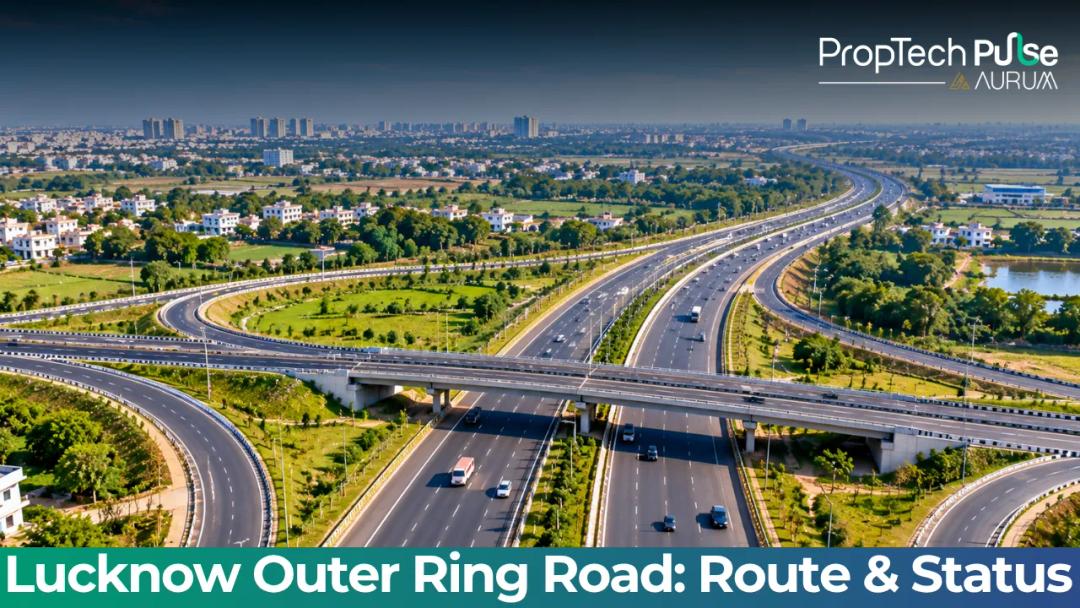
Lucknow Outer Ring Road: Full Route Map, Latest Status & Investment Guide (2026)
The Lucknow Outer Ring Road has completed its final stretch, turning a years-long construction project into a fully operational circular highway as of early 2026. For commuters and investors alike, the physical infrastructure is finally set, shifting the conversation from broken ground to finished asphalt. The loop changes how people move across the city and drastically alters land valuations across multiple suburbs. This guide covers the corridor's current operational status. It maps the exact route and exit points, then breaks down the specific real estate implications for homebuyers and commercial investors targeting the Lucknow market. You will find actionable data on which micro-markets are poised for appreciation and what the infrastructure actually means for your daily commute and property portfolio. In this guide Current Status of Lucknow Outer Ring Road Detailed Lucknow Ring Road Route and Connectivity Strategic Real Estate Nodes Along the Kisan Path Lucknow Route Impact on Property Prices and Commercial Viability Practical Tips for Buyers Using the Lucknow Outer Ring Road Before You Make a Decision Current Status of Lucknow Outer Ring Road Quick answer The 104 km Lucknow Outer Ring Road, officially designated as NH 230 and branded as Kisan Path, opened to public traffic following its inauguration in March 2026. Designed by NHAI, the corridor runs an 8-lane dual carriageway. Width expands to 10 lanes at major intersections, creating a reliable bypass around the northern capital of Uttar Pradesh. The project was executed in phases over several years to manage disruption while linking critical industrial zones and suburban clusters. Completion of the approach roads in early 2026 marked the transition from fragmented construction zones to a continuous circular movement network. It is not merely a perimeter track; the corridor acts as the primary arterial spine, diverting heavy freight and passenger vehicles away from the congested core. Daily vehicle capacity reaches roughly 1.6 lakh, reducing pressure on legacy routes like the Gomti Expressway and older Kanpur alignments. Minor finishing work and signage updates continue in the months following inauguration. Residents inside the new boundary get immediate access upgrades, while commuters outside mark a permanent shift in Lucknow’s urban footprint. Detailed Lucknow Ring Road Route and Connectivity Understanding the layout requires mapping how the alignment connects to existing national and state highways. The loop spans roughly 104 kilometres, wrapping around Lucknow district and dipping slightly into Barabanki and Amethi, though the primary impact zone stays within municipal limits. Aligning the 104 Km Corridor Design priorities focus on uninterrupted flow rather than dense interchanges at every village. Entry and exit points sit at strategic intervals that allow regional traffic to merge cleanly. The corridor functions as NH 230, ensuring long-term maintenance funding and federal-level governance instead of relying solely on state budgets. Major Junctions and Highway Connections A functioning bypass must connect to the broader transport grid. The Lucknow ORR achieves this by intersecting five national highways and six state highways, creating logical hubs for logistics, warehouses, and distribution centres. Plots at these junctions command premium rates compared to sites ten kilometres off track. Physical Structure: Lane Count, Flyovers, and Entry/Exit Points Engineers planned structural specs for future-proofing rather than immediate demand. At major choke points, such as the intersections with Sultanpur Road and Sitapur Road alignments, the width expands to ten lanes. Widened segments sit beneath extensive flyovers, underpasses, and railway bridges designed to eliminate signal stops along the route. The base configuration runs eight lanes across the dual carriageway. Key Project Specifications for the Lucknow Outer Ring Road Loop (NH 230) Metric Specification Total Length 104 km circular loop Carriageway Width 8 lanes (expanding to 10 at major intersections) Daily Vehicle Capacity Approximately 1.6 lakh vehicles Connecting National Highways 5 direct interchanges Structural Assets Multiple flyovers, underpasses, and railway bridges Project Execution Agency National Highways Authority of India (NHAI) Budgets scaling this high guarantee a toll-free or economically viable corridor for decades. Surrounding land becomes a far more stable asset class. Strategic Real Estate Nodes Along the Kisan Path Lucknow Route Investment logic along a ring road differs completely from city-centre rules. Core locations charge premiums for established amenities and density, whereas the ORR charges for future potential and accessibility instead. Specific corridors offer distinct advantages depending on whether you buy residential carpet area or commercial warehouse space. Sultanpur Road and Wellness City Axis This eastern quadrant connects heavily with the upcoming wellness city developments and IT expansions. Plots near the ORR interface on the Sultanpur side are seeing aggressive price adjustments because they sit at the intersection of two high-growth zones. The proposed expansion of the dedicated IT and precision electronics park nearby acts as a magnet for young professionals, driving up demand for gated communities with clubhouses and schools. Land that sold for roughly ₹15 lakh per biswa a few years ago now commands significantly higher rates due to this clustering effect. Sitapur Road and Industrial Linkages Evaluating land for manufacturing or cold storage makes the Sitapur Road exit a clear winner. Power grids and water pipelines run parallel to the older rail lines here, creating a prime location for B2B showrooms receiving materials overnight. Kanpur Road and Logistics Density The western connection drives hard goods towards Delhi and Jharkhand. Land adjacent to the Kanpur Road interchange is rapidly transforming from farmland to logistics parks, offering reliable footfall from trucks and corporate fleets. real estate developers in Lucknow are actively acquiring large tracts here for mega-planned communities that cater to corporate executives relocating for these supply chain roles. Ayodhya Road and Eastern Growth The southern and eastern trajectories benefit from religious tourism combined with administrative decentralisation. Properties here command steady appreciation alongside government dispersal of ministries and satellite offices outward, making it a safer option compared to the explosive growth on industrial axes. Navigation tip Even with the loop closed, many local village roads leading to specific plots remain narrow during monsoon months. Always drive the exact entrance road during heavy rain before committing to a site visit. What looks wide on a dry map can turn into mud quickly on unpaved service stretches. Impact on Property Prices and Commercial Viability Opening a ring road invariably creates a wave of speculation, followed by reality-based valuation corrections. Within the first few months of the Lucknow ORR becoming fully operational, land bank valuations in the fringe villages jumped by double-digit percentages. Residential projects launching near the new exits are marketing heavily on commute times. A flat located four kilometres off the ORR exit typically sees a twenty per cent premium over comparable units sitting closer to the old city limit, helping professionals avoid the two-hour city traffic slog to reach their desks. Many buyers compare the ORR with the existing Gomati Expressway. The expressway cuts diagonally across the city, offering speed but terminating abruptly at specific gateways. A continuous wrap eliminates the return-trip congestion that plagues radial roads when your destination shifts frequently. Commercial viability tracks exactly where the flyovers are placed. Warehouses and showrooms need quick ingress and egress, meaning a plot right at the ROBs moves product much faster than one back within the inner service lane. Factor in your inventory turnover when calculating ROI, and frontage becomes non-negotiable for active businesses. Taking a home loan for a unit in these zones? Factor extra travel costs into your monthly budget until your workplace shifts to the corridor. You can model your financing accurately using a home loan EMI calculator before locking in a high-value mortgage. Practical Tips for Buyers Using the Lucknow Outer Ring Road The physical road is finished, but the surrounding ecosystems take years to mature. Buyers looking to purchase a plot or an apartment along the Kisan Path loop must look past the glossy brochures and verify three specific things before transferring funds. Service Road vs Main Carriageway: Ensure the listing specifies whether you are getting a strip along the restricted-access main highway or the commercial-grade service road. You cannot buy a car at the main carriageway, but you can park safely on the service lane. Encumbrance Check: Rapid land acquisition waves sometimes lead to overlapping ownership claims in rural pockets. Run a full title verification and encumbrance certificate check through a local advocate before paying any token amount. Keeping track of registered builder credentials via the Lucknow Kisan Path locality guide is also essential to avoid rogue developers. Flooding Margins: Parts of the alignment dip close to natural drainage lines originating from the Gomti river basin. During intense July to September rainfall, low-lying plots near the service roads can retain standing water. Inspect the spot at eye level during peak monsoon to confirm the elevation matches the developer's drawings. Verifying that a project complies with local zoning regulations prevents costly legal tangles down the line. Projects falling under the northern jurisdiction must align strictly with the master plan, so cross-referencing approved plans against the state portal removes guesswork entirely. Before You Make a Decision The Lucknow Outer Ring Road is no longer a promise; it is a functional reality that dictates the next decade of urban expansion in Uttar Pradesh's capital. If you are investing, match your goal to the geography. Pick the Sitapur or Kanpur road interfaces for logistics and commercial returns, and lean toward the Sultanpur or Ayodhya road alignments for residential stability and lifestyle townships. Do not rush into a speculative plot purchase simply because a sales agent promises rapid appreciation. Walk the land, check the exact distance to the nearest township grocery store and hospital, and calculate your actual commute time from your current job location. Infrastructure adds value, but only if the neighbourhood develops around it to support daily living. Frequently asked questions Is Lucknow outer ring road completely open now? Yes, the 104 km circular loop was formally inaugurated in March 2026, completing all final approach roads and connecting sections. While minor roadside landscaping and signposting updates continue, the highway itself is fully operational for regular and commercial traffic. Commuters can now use the entire bypass to move between key districts without entering the city limits. What is the full route map of Kisan Path Lucknow? The route follows the NH 230 designation and spans 104 kilometres around the northern capital. It intersects five national highways and six state highways, connecting critical zones like Sultanpur Road, Sitapur Road, Kanpur Road, and Ayodhya Road. The loop dips slightly into neighbouring districts but remains anchored within the Lucknow metropolitan planning area. Which areas are best to buy property near Lucknow outer ring road? Investment strategy depends on your goal. For commercial ventures like warehouses, the Kanpur and Sitapur road junctions offer superior logistics access. For residential homes seeking rapid appreciation, the Sultanpur Road and Wellness City extensions represent the strongest growth corridors. Ayodhya Road provides steady, lower-volatility residential growth backed by ongoing government dispersal policies. How many lanes is the Lucknow outer ring road? The primary configuration runs as an eight-lane dual carriageway designed to handle massive daily volumes. At major choke points and interstate intersections, the structure widens to accommodate ten lanes. This layout is supported by numerous flyovers and underpasses to ensure continuous movement without relying on traffic signals. Sources National Highways Authority of India: General project execution details and agency involvement (accessed October 2026) Ministry of Road Transport and Highways: NH 230 numbering and national highway connectivity frameworks (accessed October 2026) Uttar Pradesh Real Estate Regulatory Authority: Builder compliance and project registration standards for Lucknow region (accessed October 2026) Enjoyed this blog article? Visit PropTech Pulse for more interesting blogs.

PropTech Pulse Editorial
23rd October 2026
Uncategorized
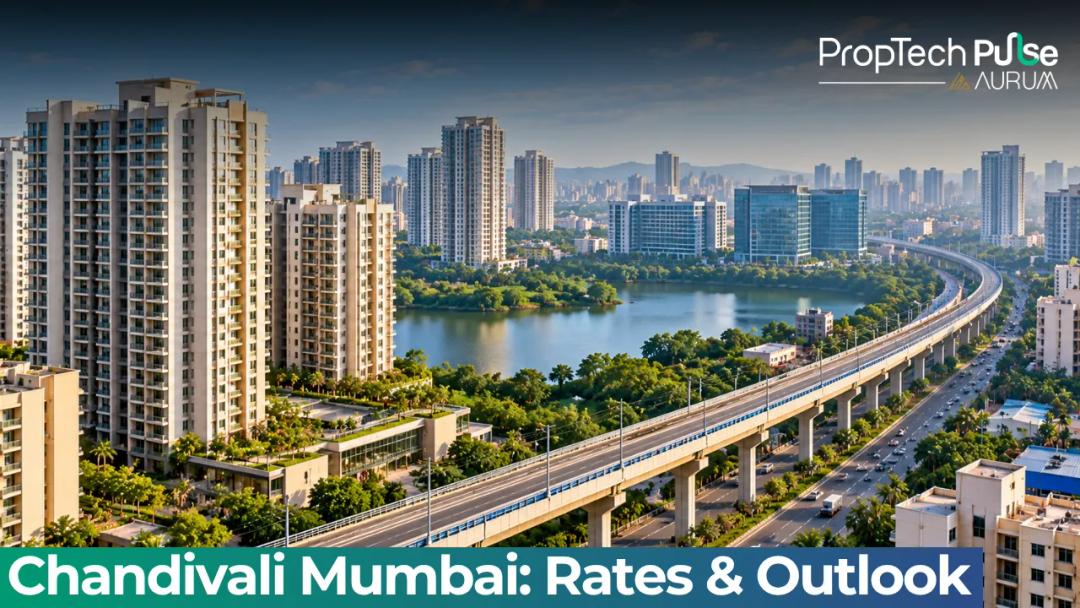
Chandivali Mumbai Locality Guide: Property Rates, Connectivity And Investment Outlook
Avoid chasing branded premiums. Instead, target the adjacent catchment that feeds the same employment hubs. Chandivali functions as the arbitrage zone for developers and families targeting SEEPZ, Powai CBD, and BKC. You get the same commuter geography, younger inventory, and tighter capex on day one. In this guide Where is Chandivali Mumbai? Neighbourhood ecosystems and daily commute realities Flats in Chandivali: Current pricing breakdown Chandivali versus Chandivali Powai: Commute and cost Metro Line 6 timeline and liquidity impact How to buy: RERA compliance and due diligence Final verdict: Who should buy right now? Frequently asked questions Where is Chandivali Mumbai? Boundaries and core connectivity Quick answer Chandivali sits on the eastern edge of the SV Road-VJF-Rajiv Gandhi Phirozshah Mehta Marg corridor, sandwiched between Powai lake to the south and the JVPDUK/JVLR commercial spine to the north. It delivers direct rail access at Saki Naka, highway exits for WEH and EWH within two kilometres, and a twenty-minute drive to SEEPZ and Andheri MIDC. Chandivali acts as the residential overflow valley for three massive employment nodes. SEEPZ hosts IT and manufacturing companies. Powai CBD draws financial firms and tech campuses. BKC is expanding westward. Living inside Chandivali puts you inside the same commuting gravity well as those centres. It strips away the heritage society premiums that dominate Powai proper. JVLR, Highway Access and Railway Links The Junction of Ville Parle and Deonar cuts straight through the neighbourhood. Traffic flows shift constantly, but the geometry is simple. Heading west takes you to Saki Naka and the Western Express Highway ramp in ten minutes. Heading east pushes you toward Deonar flyover and the Eastern Express Highway exit. Saki Naka railway station sits roughly twelve hundred metres from the main residential belt. Commuters walk, cycle, or take local e-rickshaws to reach the line connecting to Dadar, Kurla, and Thane. Auto stands proliferate along Raheja Vihar and Nahar Marg. This reduces dependency on the local train during peak shifts. Investors tracking locality details across the Chandivali and Powai stretch usually find that proximity to JVLR carries less noise penalty than people assume. Side streets branch quickly off the arterial road. Most housing blocks sit on quieter grids. Neighbourhood ecosystems and daily commute realities Daily life in Chandivali hinges on micro-infrastructure reliability rather than luxury branding. Water supply remains stable due to mandatory borewells and rooftop storage mandated by MahaRERA for all post-2015 towers. Power fluctuations are rare, though most societies rely on DG sets covering only common areas and elevators. Interior wiring checks should always precede purchase, especially in inherited flats where previous owners upgraded kitchens or installed heavy air conditioning units without load calculations. Medical access is genuinely strong. Lilavati Hospital, Sishir Multi-Specialty Hospital, and Fortis Hiranandani sit within a five-kilometre radius. Emergency response times rarely exceed twelve minutes from the heart of Raheja Vihar. Schools cluster around the Saki Naka and Hiranandani Gardens periphery. St Mary Convent High School, Glenfield School, and Vibgyor High are reachable via the internal road network. Parents prefer the shorter bus routes because municipal school buses face heavy JVLR congestion during drop-off hours. Commercial ecosystems operate on convenience tiers. Daily groceries come from neighbourhood mandis and modern retail chains along Nahar Marg. Higher-end retail requires a short hop to Hiranandani Gardens or Inorbit Mall. Dine-out options concentrate near Ramkrishna Dhoom Singh Marg. Entertainment stays limited to multiplexes inside nearby commercial plazas. Residents treat Chandivali as a functional base rather than a lifestyle destination. That realism keeps expectations aligned with actual living conditions. Flats in Chandivali: Current property rates breakdown Transacted rates tell a different story than brochure quotes. Brokers list aggressively. Buyers negotiate down. The actual closing gap hovers around twelve to fifteen percent beneath asking prices. Branded tower launches hold their pricing firmer. Market estimates place typical transacted averages around ₹30,500 per square foot for standard apartments completed within the last seven years. Resale inventory predating 2015 lacks centralised parking and upgraded lobbies. Those societies trade closer to ₹18,000 to ₹26,000 per square foot. Maintenance culture and lift capacity dictate the final number. Premium gated communities command a distinct band. Developments with larger carpet coverage, clubhouses, and established landscaping regularly close above ₹41,000 per square foot. Budget caps below ₹1.5 crore point toward older stock or smaller unit types. Asking versus transacted rates and resale arbitrage New launch bookings lock in at prevailing builder rates plus GST. Resale allows immediate possession but introduces renovation risk. Many inherited flats in the older segment feature dated kitchen layouts or non-compliant bathroom plumbing upgrades. Factoring in even a basic ₹8 lakh renovation budget changes the effective per-square-foot math considerably. To gauge whether a specific society aligns with your capital outlay, compare its floor-wise demand curves against nearby transactions. Pulling up our market snapshot of Swaraj Homes West End and adjacent Chandivali listings shows how macro rates diverge block-by-block. Pricing by micro-pocket (JVLR frontage, Raheja Vihar, legacy stock) Properties lining JVLR carry a visibility premium but absorb road noise until monsoon hits. Raheja Vihar sits further inland. It offers calmer environments and slightly tighter pricing per carpet unit. Legacy pockets towards the Powai lake fringe retain lake-facing premiums that rarely dip. Market corrections hit inner blocks harder than lakeside towers. Micro-pocket variance means blanket averages mislead. A single compound containing both lake-facing towers and inner-street blocks often spans a ₹12,000 per square foot spread. Always validate the specific block, not just the development name. Chandivali versus Chandivali Powai: The real commute and cost gap The terms Chandivali and Chandivali Powai overlap geographically but split sharply on price architecture. Powai proper holds mature societies built before 2010. Parking remains tight. Society transfer fees weigh down resale margins. Chandivali offers newer lifts, dedicated parking, and faster sales processing. Builders and sellers face less legacy friction. Metric comparison: Chandivali versus established Powai residential pockets (current market averages) Metric Chandivali Established Powai Avg transacted rate (standard) ₹30,500 per sq ft ₹38,000 to ₹45,000 per sq ft Typical 2BHK monthly rent ₹65,000 to ₹80,000 ₹85,000 to ₹1,10,000 Gross rental yield 3.0% to 4.0% 2.2% to 3.1% Commute time to BKC 20 to 25 mins 25 to 30 mins Society transfer timelines 7 to 10 working days 15 to 30+ working days Capital saved entering Chandivali rather than Powai compounds meaningfully over loan tenures. A ₹2.5 crore purchase versus a ₹3.5 crore entry reduces interest burden by nearly ₹6 lakh to ₹8 lakh across a standard 20-year floating-rate mortgage. That interest saving frequently exceeds the entire interior fit-out budget. Rental yields and tenant demand Tenant profiles dictate vacancy risk. Chandivali pulls heavily from mid-level IT professionals, project managers, and support staff working inside SEEPZ and Powai IT parks. These groups prioritize commute reliability over architectural heritage. They accept smaller carpet areas if parking and lobby amenities function smoothly. Corporate relocation cycles run six-month to eighteen-month bands. Serviced apartments absorb short stays during transition phases. Traditional rentals remain exposed to sudden vacancies. Understanding how corporate housing pipelines interact with local supply prevents oversupply misreads. Review the regional rate trajectories and demographic overlays to map your own monthly cash flow expectations early. Club membership transfers form another hidden cost layer. Premium societies often charge ₹5 lakh to ₹10 lakh for secondary buyers. Verify transferability rules before folding amenity value into your purchase calculation. Some developers waive the fee if the original buyer never utilized the membership slot. Paperwork matters more than promises here. Infrastructure catalyst: Metro Line 6 timeline and liquidity impact The upcoming Pink Line extension reconfigures travel geometry entirely. Stations positioned along JVLR intersect directly with the residential spine. This cuts reliance on road networks that choke during afternoon office shifts. Completion targets indicate operational readiness by December 2027. Station mapping and interchanges Saki Naka currently anchors the Blue Line, serving daily commuters bound south toward Colaba and north toward Kandivali. The forthcoming interchange node moves traffic away from surface bottlenecks. Direct underground links to proposed airport connectors and lower Parel business districts shorten cross-city trips substantially. When the line opens, properties located within walking distance of the JVLR stations typically see a liquidity bump. Prices lag behind availability. Resale velocity increases because tenant eligibility expands beyond road-bound commuters to metro-dependent workers. Track the latest progress reports on official transit portals to monitor civil work milestones. How to buy: RERA compliance, builder reputation and due diligence checklist Buying here demands discipline. New launch bookings require proof of RERA registration and escrow account verification. Older resale deals require encumbrance certificate checks, OC verification, and society approval stamps. Skipping one step delays closure months later. Step-by-step buyer checklist Confirm the project RERA number on the developer website and match it against the Maharashtra real estate authority registry. Request the approved building plan and check carpet area disclosures against the sale agreement. For resale units, obtain the latest municipal tax receipts and water-sewerage clearance letters. Verify society no-objection certificates for name transfers and parking allotment assignments. Engage a property lawyer to review the builder agreement clauses regarding delayed possession penalties. Builder track records matter more in newer corridors where fast approvals sometimes outpace foundation curing standards. Check past handover dates, defect resolution response times, and maintenance fund utilisation before committing funds. Delayed handovers are contractually penalised, but recovery becomes difficult once the entity dissolves or merges. Demand third-party audit reports for major societies before buying second-hand units. Final verdict: Who should buy in Chandivali right now? Chandivali suits salaried professionals earning inside the eastern corridor. First-time family upgraders seeking modern layouts avoid heritage society politics. Institutional landlords targeting predictable rental absorption find steady ground here. Speculators chasing immediate double-digit flip returns will struggle. Buyers demanding sprawling garden landscapes or quiet hillside environments should look elsewhere. Use a structured ROI calculator alongside a bank pre-approval limit. Align your budget against the transacted ceiling rather than the asking floor. Factor in Metro Line 6 opening timelines when modelling holding periods. Buying the efficiency layer near Powai consistently outperforms chasing the premium tier for middle-income capital stacks. Frequently asked questions Is Chandivali a good place to buy a flat in Mumbai? Yes, particularly for investors and IT professionals working in SEEPZ, Powai CBD, or BKC. The area offers a lower entry price compared to prime Powai while maintaining high liquidity due to strong rental demand from tech parks. With Metro Line 6 approaching in late 2027, long-term capital appreciation remains on track. How much does a 1 BHK and 2 BHK flat cost in Chandivali? Transacted rates currently average around thirty thousand five hundred rupees per square foot for standard projects. Compact 1 BHK units typically trade between ₹1.2 crore and ₹1.8 crore. Larger 2 BHKs start at ₹2 crore and reach ₹3.2 crore. Premium towers with bigger layouts often exceed ₹3.5 crore. What is the average price appreciation in Chandivali over the last 5 years? Over the past five years, the pocket has delivered approximately twenty-five percent aggregate growth. Shorter cycles show roughly seven percent annualized appreciation, driven by stable employment hubs nearby and steady migration into Mumbai’s eastern corridor. New supply keeps pace with demand in mid-tier segments. When will Metro Line 6 open near Chandivali? The Pink Line extension is targeted for completion by December 2027. Saki Naka station currently anchors the Blue Line, serving daily commuters bound south toward Colaba and north toward Kandivali. The forthcoming interchange node moves traffic away from surface bottlenecks and will drastically cut commute times to Andheri, Lower Parel, and the proposed new airport node. Which is better for investment: Chandivali or Powai? For pure rental yield and affordability, Chandivali wins. It typically offers gross yields between three percent and four percent, fueled by constant IT workforce migration. Powai commands higher absolute rents but requires significantly more upfront capital, compressing the effective yield percentage for many first-time investors. Sources Maharashtra Metro Rail Corporation Limited (MMRC): Pink Line construction progress and station mapping details (accessed October 2026) Enjoyed this blog article? Visit PropTech Pulse for more interesting blogs.
PropTech Pulse Editorial
23rd October 2026
Uncategorized
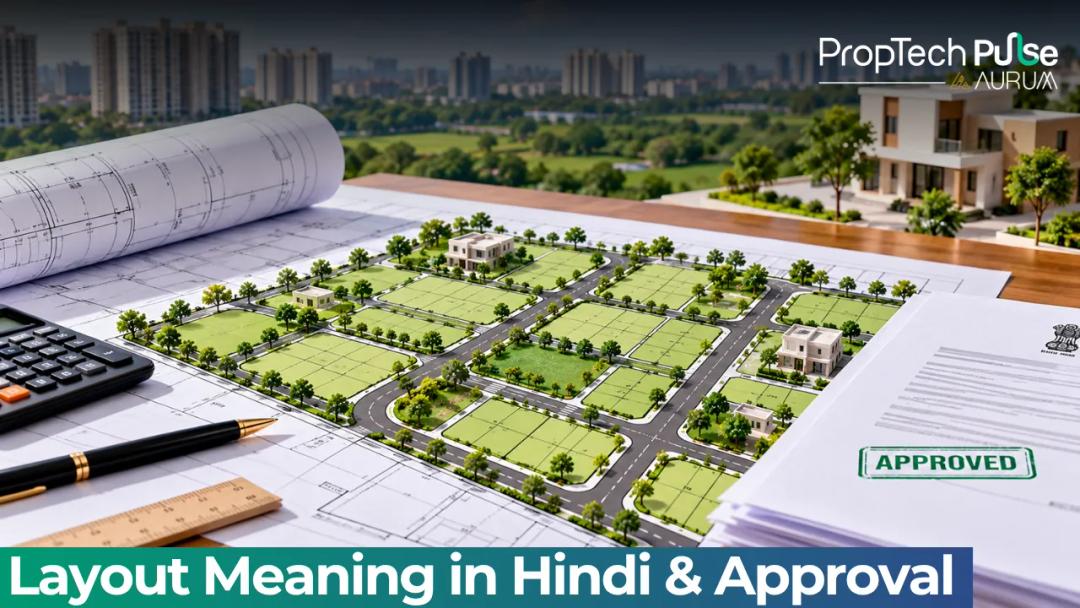
Layout Meaning In Hindi: Understanding The Plot Layout Plan & Approval
If you are searching for layout meaning in Hindi while looking at land advertisements, you are not alone. Developers often use the term loosely on posters, but legally, a layout means something very specific. It is the formal division of agricultural or revenue land into smaller sellable plots, backed by shared roads, drainage, parks, and basic civic amenities. A layout is not a flat floor plan. It is the subdivision of an entire field or farm. Before you hand over ₹5 lakh towards a token amount, you need to understand the difference between a developer's brochure map and a legally binding layout plan. Locals across North India usually call these subdivisions colonies, patti, or mohalla. Municipal authorities mean something stricter. Only a registered map triggers formal infrastructure budgets. You need the sanction files, not a poster. In this guide What Is "Layout" In Hindi? Real Estate Meaning Explained What Exactly Constitutes A Layout Plan In India? The Layout Approval Process: How Land Becomes Sellable Why Verifying Your Plot Layout Plan Matters Step-by-Step: How To Check Layout Validity Online Frequently asked questions What Is "Layout" In Hindi? Real Estate Meaning Explained Quick answer A layout is the subdivision of a large land parcel into individual residential or commercial plots, complete with dedicated access roads, sewerage lines, and community spaces like parks. Unlike a simple floor plan, a layout represents a regulated town-planning framework. When an investor searches for the layout meaning in Hindi, they are usually trying to understand the underlying definition of the map shown on a builder's poster. While the direct translation in Hindi dictionaries typically maps "layout" to रूपरेखा (framework or schematic), the real estate usage is purely technical. Think of it as carving a single field into smaller lots. The leftover slices get locked away strictly for public use. Skip those shared spaces, and the land stays just a plot of dirt. No civic value follows without them. Difference between a standard flat floor plan and a residential layout plan Feature Flat / Apartment Floor Plan Residential Layout Plan Scale Covering a single building's height and breadth. Covers multiple acres of land containing numerous buildings and open areas. Primary Purpose Shows room dimensions, walls, kitchen corners, and balcony placements. Shows plot boundaries, road width classifications, park locations, and utility routes. Regulatory Focus Approved by local municipality under building bye-laws. Must comply with state Town & Country Planning (TCP) Acts and requires separate layout approval. Buyer Risk Level Low to Medium (depends on builder reputation). High risk if the layout itself lacks proper conversion and TCP clearance. If you are exploring plot investment opportunities in India, distinguishing these two documents immediately prevents future litigation. Many first-time buyers mistake the architectural elevation of the house they will eventually build for the actual map of the society. Never confuse the two. Developers in Uttar Pradesh, Bihar, and Madhya Pradesh often pitch a new patti, or lane, running through village land. A local road does not equal a marketable plot. Banks refuse to disburse funds against land without a revenue department file. Ask for the official layout plan on day one. What Exactly Constitutes A Layout Plan In India? A valid layout plan is not drawn arbitrarily by a salesperson. It is a scaled engineering drawing submitted to local development authorities that dictates how an entire neighbourhood will function. To get cleared, every approved layout plan must meet strict norms regarding infrastructure allocation. Typically, a developer must set aside a specific percentage of the total area, usually 5% to 10%, for public parks, children's play areas, and open-to-sky ventilation zones. Roads are the most critical component. Standard bye-laws mandate primary access roads to be at least 18 metres wide, extending up to 30 metres for major arterial connections. Risk Alert Never buy a plot based on a hand-drawn map or a rough CAD sketch sent via WhatsApp. Always demand the official layout plan stamped and signed by the local survey department or the Regional Survey Officer. Beyond just roads and parks, the map needs community halls, fire stations, and bus stops for large schemes. It also mandates sewage treatment tanks to guarantee clean water and garbage pickup later. The Layout Approval Process: How Land Becomes Sellable Getting a green signal to turn farmland into a plot market is a rigorous bureaucratic journey. Who grants layout approval? The authority depends entirely on your location. In cities governed by Municipal Corporations, the development control department handles approvals. Outside city limits, State Development Authorities such as the BDA (Bangalore), DTCP (Telangana), or DDA (Delhi) take the lead. First comes the draft. The promoter files it under the state TCP Act. Inspectors then walk the site to confirm it isn't tucked away in a forest reserve or a flood zone. Clear that check, and the authority stamps it official. That signed paper is the layout approval itself. Advertising plots without it breaks the law. Getting the Completion Certificate comes much later, once the roads and drains actually work. Until builders hand that over, you'll just see temporary streetlights going in. For deeper guidance, you can review the detailed process for obtaining a layout approval. Before even filing for a layout, the land use must be converted. Agricultural land cannot simply be sold as residential plots. The owner must secure conversion permission from the district collector's office. If you are curious how prior authorizations shape property worth, see our glossary entry on Y-plan apartment layout requirements. Also cross-check the standard process for obtaining building plan approval to distinguish preliminary construction permissions from initial land carving permissions. Finally, always learn how to verify land use conversion before putting down any token money. Why Verifying Your Plot Layout Plan Matters Unplanned land sales trip up buyers outside metro cities regularly. Locals often call these setups kacha colonies or unauthorized muaffi. The pitfalls show up fast: Denial of Electricity and Water: Power boards will refuse a permanent meter connection if the locality does not appear on the sanctioned layout map. Loan Refusal: No bank will finance a plot purchase without an approved layout sanction letter from the local development authority. Encroachment Issues: Because there is no fixed grid system enforced by the government, neighbours often shift boundary stones and steal adjacent land. Title fraud goes deeper. Judges routinely cancel sale deeds if the original owner skipped conversion paperwork. Always pull the Encumbrance Certificate too. It tracks money trails on the property for decades. Compare that record against the seller's claim. If their paperwork says Plot 45 but the government ledger still lists one person owning all ten acres, the layout simply doesn't exist legally. That gap blocks financing instantly. Step-by-Step: How To Check Layout Validity Online You do not need to stand in line at the municipal office anymore. Most states now allow developers to register their plotted developments directly on state RERA portals. Here is how you verify the plan yourself: Ask for the Project Registration Number: Legally, any plotted development of more than eight plots must register on the state RERA website to market its properties. Visit the specific state RERA portal: For instance, up-rera.in for Uttar Pradesh. Navigate to the Projects tab. Search by the developer's name: If your project appears, click the project details. The Sanctioned Layout document should be available for download under the compliance section. Municipal lines belong in the past. State RERA portals hold the real data for plotted projects. Type the developer's name in. Grab the layout PDF straight from the compliance tab. Match those numbers against the district surveyor's Khata database. A blank sub-ID tells you everything: the soil is still farming land. Check local pin code information right after to gauge actual population density there. Before You Sign The Agreement Do not rely solely on the sales brochure's glossy pictures of wide tree-lined avenues. Those visuals come after the layout gets approved and the landscaping begins. Before paying a token amount, insist on seeing the physical copy of the layout sanction order from the local town planning committee. Keep that document safe. It is your ultimate shield against fraudulent claims. Frequently asked questions What is the full form of layout plan? There is no single expanded acronym for layout plan. In real estate, it simply stands for a standardized urban design blueprint. The term describes the graphical representation of a large land parcel divided into smaller saleable plots, along with reserved zones for roads, parks, and civic utilities. Who grants layout approval in India? Layout approval is granted by the local town and country planning authority. In municipal cities, this is handled by the Chief Municipal Commissioner or the Development Control Department. In peri-urban and rural regions, State Development Authorities such as the BDA in Karnataka or DTCP in Telangana issue the official sanction letters. Can I get a loan for a plot in an unapproved layout? No, virtually all nationalized and private banks will reject a home loan application for a plot residing in an unapproved layout. Banks require the physical Sanction Order from the local planning authority as a mandatory eligibility criterion to secure the collateral value of the asset. What is the difference between a site plan and a layout plan? A site plan focuses on a single building, detailing its position within a specific plot, setbacks, and internal parking. A layout plan zooms out completely, showing the macro division of hundreds of acres into an entire village-like structure, managing traffic flow, main roads, and community infrastructure. Sources Uttar Pradesh Real Estate Regulatory Authority (up-rera.in): Guidelines for registered plotted developments and required compliance documents (accessed October 2026) Ministry of Housing and Urban Affairs (mohua.gov.in): National town planning directives and model building bye-laws for infrastructure allocation (accessed October 2026) Enjoyed this blog article? Visit PropTech Pulse for more interesting blogs.
PropTech Pulse Editorial
23rd October 2026
Uncategorized
Lucknow Outer Ring Road: Full Route Map, Latest Status & Investment Guide (2026)
The Lucknow Outer Ring Road has completed its final stretch, turning a years-long construction project into a fully operational circular highway as of early 2026. For commuters and investors alike, the physical infrastructure is finally set, shifting the conversation from broken ground to finished asphalt. The loop changes how people move across the city and drastically alters land valuations across multiple suburbs. This guide covers the corridor's current operational status. It maps the exact route and exit points, then breaks down the specific real estate implications for homebuyers and commercial investors targeting the Lucknow market. You will find actionable data on which micro-markets are poised for appreciation and what the infrastructure actually means for your daily commute and property portfolio. In this guide Current Status of Lucknow Outer Ring Road Detailed Lucknow Ring Road Route and Connectivity Strategic Real Estate Nodes Along the Kisan Path Lucknow Route Impact on Property Prices and Commercial Viability Practical Tips for Buyers Using the Lucknow Outer Ring Road Before You Make a Decision Current Status of Lucknow Outer Ring Road Quick answer The 104 km Lucknow Outer Ring Road, officially designated as NH 230 and branded as Kisan Path, opened to public traffic following its inauguration in March 2026. Designed by NHAI, the corridor runs an 8-lane dual carriageway. Width expands to 10 lanes at major intersections, creating a reliable bypass around the northern capital of Uttar Pradesh. The project was executed in phases over several years to manage disruption while linking critical industrial zones and suburban clusters. Completion of the approach roads in early 2026 marked the transition from fragmented construction zones to a continuous circular movement network. It is not merely a perimeter track; the corridor acts as the primary arterial spine, diverting heavy freight and passenger vehicles away from the congested core. Daily vehicle capacity reaches roughly 1.6 lakh, reducing pressure on legacy routes like the Gomti Expressway and older Kanpur alignments. Minor finishing work and signage updates continue in the months following inauguration. Residents inside the new boundary get immediate access upgrades, while commuters outside mark a permanent shift in Lucknow’s urban footprint. Detailed Lucknow Ring Road Route and Connectivity Understanding the layout requires mapping how the alignment connects to existing national and state highways. The loop spans roughly 104 kilometres, wrapping around Lucknow district and dipping slightly into Barabanki and Amethi, though the primary impact zone stays within municipal limits. Aligning the 104 Km Corridor Design priorities focus on uninterrupted flow rather than dense interchanges at every village. Entry and exit points sit at strategic intervals that allow regional traffic to merge cleanly. The corridor functions as NH 230, ensuring long-term maintenance funding and federal-level governance instead of relying solely on state budgets. Major Junctions and Highway Connections A functioning bypass must connect to the broader transport grid. The Lucknow ORR achieves this by intersecting five national highways and six state highways, creating logical hubs for logistics, warehouses, and distribution centres. Plots at these junctions command premium rates compared to sites ten kilometres off track. Physical Structure: Lane Count, Flyovers, and Entry/Exit Points Engineers planned structural specs for future-proofing rather than immediate demand. At major choke points, such as the intersections with Sultanpur Road and Sitapur Road alignments, the width expands to ten lanes. Widened segments sit beneath extensive flyovers, underpasses, and railway bridges designed to eliminate signal stops along the route. The base configuration runs eight lanes across the dual carriageway. Key Project Specifications for the Lucknow Outer Ring Road Loop (NH 230) Metric Specification Total Length 104 km circular loop Carriageway Width 8 lanes (expanding to 10 at major intersections) Daily Vehicle Capacity Approximately 1.6 lakh vehicles Connecting National Highways 5 direct interchanges Structural Assets Multiple flyovers, underpasses, and railway bridges Project Execution Agency National Highways Authority of India (NHAI) Budgets scaling this high guarantee a toll-free or economically viable corridor for decades. Surrounding land becomes a far more stable asset class. Strategic Real Estate Nodes Along the Kisan Path Lucknow Route Investment logic along a ring road differs completely from city-centre rules. Core locations charge premiums for established amenities and density, whereas the ORR charges for future potential and accessibility instead. Specific corridors offer distinct advantages depending on whether you buy residential carpet area or commercial warehouse space. Sultanpur Road and Wellness City Axis This eastern quadrant connects heavily with the upcoming wellness city developments and IT expansions. Plots near the ORR interface on the Sultanpur side are seeing aggressive price adjustments because they sit at the intersection of two high-growth zones. The proposed expansion of the dedicated IT and precision electronics park nearby acts as a magnet for young professionals, driving up demand for gated communities with clubhouses and schools. Land that sold for roughly ₹15 lakh per biswa a few years ago now commands significantly higher rates due to this clustering effect. Sitapur Road and Industrial Linkages Evaluating land for manufacturing or cold storage makes the Sitapur Road exit a clear winner. Power grids and water pipelines run parallel to the older rail lines here, creating a prime location for B2B showrooms receiving materials overnight. Kanpur Road and Logistics Density The western connection drives hard goods towards Delhi and Jharkhand. Land adjacent to the Kanpur Road interchange is rapidly transforming from farmland to logistics parks, offering reliable footfall from trucks and corporate fleets. real estate developers in Lucknow are actively acquiring large tracts here for mega-planned communities that cater to corporate executives relocating for these supply chain roles. Ayodhya Road and Eastern Growth The southern and eastern trajectories benefit from religious tourism combined with administrative decentralisation. Properties here command steady appreciation alongside government dispersal of ministries and satellite offices outward, making it a safer option compared to the explosive growth on industrial axes. Navigation tip Even with the loop closed, many local village roads leading to specific plots remain narrow during monsoon months. Always drive the exact entrance road during heavy rain before committing to a site visit. What looks wide on a dry map can turn into mud quickly on unpaved service stretches. Impact on Property Prices and Commercial Viability Opening a ring road invariably creates a wave of speculation, followed by reality-based valuation corrections. Within the first few months of the Lucknow ORR becoming fully operational, land bank valuations in the fringe villages jumped by double-digit percentages. Residential projects launching near the new exits are marketing heavily on commute times. A flat located four kilometres off the ORR exit typically sees a twenty per cent premium over comparable units sitting closer to the old city limit, helping professionals avoid the two-hour city traffic slog to reach their desks. Many buyers compare the ORR with the existing Gomati Expressway. The expressway cuts diagonally across the city, offering speed but terminating abruptly at specific gateways. A continuous wrap eliminates the return-trip congestion that plagues radial roads when your destination shifts frequently. Commercial viability tracks exactly where the flyovers are placed. Warehouses and showrooms need quick ingress and egress, meaning a plot right at the ROBs moves product much faster than one back within the inner service lane. Factor in your inventory turnover when calculating ROI, and frontage becomes non-negotiable for active businesses. Taking a home loan for a unit in these zones? Factor extra travel costs into your monthly budget until your workplace shifts to the corridor. You can model your financing accurately using a home loan EMI calculator before locking in a high-value mortgage. Practical Tips for Buyers Using the Lucknow Outer Ring Road The physical road is finished, but the surrounding ecosystems take years to mature. Buyers looking to purchase a plot or an apartment along the Kisan Path loop must look past the glossy brochures and verify three specific things before transferring funds. Service Road vs Main Carriageway: Ensure the listing specifies whether you are getting a strip along the restricted-access main highway or the commercial-grade service road. You cannot buy a car at the main carriageway, but you can park safely on the service lane. Encumbrance Check: Rapid land acquisition waves sometimes lead to overlapping ownership claims in rural pockets. Run a full title verification and encumbrance certificate check through a local advocate before paying any token amount. Keeping track of registered builder credentials via the Lucknow Kisan Path locality guide is also essential to avoid rogue developers. Flooding Margins: Parts of the alignment dip close to natural drainage lines originating from the Gomti river basin. During intense July to September rainfall, low-lying plots near the service roads can retain standing water. Inspect the spot at eye level during peak monsoon to confirm the elevation matches the developer's drawings. Verifying that a project complies with local zoning regulations prevents costly legal tangles down the line. Projects falling under the northern jurisdiction must align strictly with the master plan, so cross-referencing approved plans against the state portal removes guesswork entirely. Before You Make a Decision The Lucknow Outer Ring Road is no longer a promise; it is a functional reality that dictates the next decade of urban expansion in Uttar Pradesh's capital. If you are investing, match your goal to the geography. Pick the Sitapur or Kanpur road interfaces for logistics and commercial returns, and lean toward the Sultanpur or Ayodhya road alignments for residential stability and lifestyle townships. Do not rush into a speculative plot purchase simply because a sales agent promises rapid appreciation. Walk the land, check the exact distance to the nearest township grocery store and hospital, and calculate your actual commute time from your current job location. Infrastructure adds value, but only if the neighbourhood develops around it to support daily living. Frequently asked questions Is Lucknow outer ring road completely open now? Yes, the 104 km circular loop was formally inaugurated in March 2026, completing all final approach roads and connecting sections. While minor roadside landscaping and signposting updates continue, the highway itself is fully operational for regular and commercial traffic. Commuters can now use the entire bypass to move between key districts without entering the city limits. What is the full route map of Kisan Path Lucknow? The route follows the NH 230 designation and spans 104 kilometres around the northern capital. It intersects five national highways and six state highways, connecting critical zones like Sultanpur Road, Sitapur Road, Kanpur Road, and Ayodhya Road. The loop dips slightly into neighbouring districts but remains anchored within the Lucknow metropolitan planning area. Which areas are best to buy property near Lucknow outer ring road? Investment strategy depends on your goal. For commercial ventures like warehouses, the Kanpur and Sitapur road junctions offer superior logistics access. For residential homes seeking rapid appreciation, the Sultanpur Road and Wellness City extensions represent the strongest growth corridors. Ayodhya Road provides steady, lower-volatility residential growth backed by ongoing government dispersal policies. How many lanes is the Lucknow outer ring road? The primary configuration runs as an eight-lane dual carriageway designed to handle massive daily volumes. At major choke points and interstate intersections, the structure widens to accommodate ten lanes. This layout is supported by numerous flyovers and underpasses to ensure continuous movement without relying on traffic signals. Sources National Highways Authority of India: General project execution details and agency involvement (accessed October 2026) Ministry of Road Transport and Highways: NH 230 numbering and national highway connectivity frameworks (accessed October 2026) Uttar Pradesh Real Estate Regulatory Authority: Builder compliance and project registration standards for Lucknow region (accessed October 2026) Enjoyed this blog article? Visit PropTech Pulse for more interesting blogs.
PropTech Pulse Editorial
23rd October 2026
Uncategorized
Chandivali Mumbai Locality Guide: Property Rates, Connectivity And Investment Outlook
Avoid chasing branded premiums. Instead, target the adjacent catchment that feeds the same employment hubs. Chandivali functions as the arbitrage zone for developers and families targeting SEEPZ, Powai CBD, and BKC. You get the same commuter geography, younger inventory, and tighter capex on day one. In this guide Where is Chandivali Mumbai? Neighbourhood ecosystems and daily commute realities Flats in Chandivali: Current pricing breakdown Chandivali versus Chandivali Powai: Commute and cost Metro Line 6 timeline and liquidity impact How to buy: RERA compliance and due diligence Final verdict: Who should buy right now? Frequently asked questions Where is Chandivali Mumbai? Boundaries and core connectivity Quick answer Chandivali sits on the eastern edge of the SV Road-VJF-Rajiv Gandhi Phirozshah Mehta Marg corridor, sandwiched between Powai lake to the south and the JVPDUK/JVLR commercial spine to the north. It delivers direct rail access at Saki Naka, highway exits for WEH and EWH within two kilometres, and a twenty-minute drive to SEEPZ and Andheri MIDC. Chandivali acts as the residential overflow valley for three massive employment nodes. SEEPZ hosts IT and manufacturing companies. Powai CBD draws financial firms and tech campuses. BKC is expanding westward. Living inside Chandivali puts you inside the same commuting gravity well as those centres. It strips away the heritage society premiums that dominate Powai proper. JVLR, Highway Access and Railway Links The Junction of Ville Parle and Deonar cuts straight through the neighbourhood. Traffic flows shift constantly, but the geometry is simple. Heading west takes you to Saki Naka and the Western Express Highway ramp in ten minutes. Heading east pushes you toward Deonar flyover and the Eastern Express Highway exit. Saki Naka railway station sits roughly twelve hundred metres from the main residential belt. Commuters walk, cycle, or take local e-rickshaws to reach the line connecting to Dadar, Kurla, and Thane. Auto stands proliferate along Raheja Vihar and Nahar Marg. This reduces dependency on the local train during peak shifts. Investors tracking locality details across the Chandivali and Powai stretch usually find that proximity to JVLR carries less noise penalty than people assume. Side streets branch quickly off the arterial road. Most housing blocks sit on quieter grids. Neighbourhood ecosystems and daily commute realities Daily life in Chandivali hinges on micro-infrastructure reliability rather than luxury branding. Water supply remains stable due to mandatory borewells and rooftop storage mandated by MahaRERA for all post-2015 towers. Power fluctuations are rare, though most societies rely on DG sets covering only common areas and elevators. Interior wiring checks should always precede purchase, especially in inherited flats where previous owners upgraded kitchens or installed heavy air conditioning units without load calculations. Medical access is genuinely strong. Lilavati Hospital, Sishir Multi-Specialty Hospital, and Fortis Hiranandani sit within a five-kilometre radius. Emergency response times rarely exceed twelve minutes from the heart of Raheja Vihar. Schools cluster around the Saki Naka and Hiranandani Gardens periphery. St Mary Convent High School, Glenfield School, and Vibgyor High are reachable via the internal road network. Parents prefer the shorter bus routes because municipal school buses face heavy JVLR congestion during drop-off hours. Commercial ecosystems operate on convenience tiers. Daily groceries come from neighbourhood mandis and modern retail chains along Nahar Marg. Higher-end retail requires a short hop to Hiranandani Gardens or Inorbit Mall. Dine-out options concentrate near Ramkrishna Dhoom Singh Marg. Entertainment stays limited to multiplexes inside nearby commercial plazas. Residents treat Chandivali as a functional base rather than a lifestyle destination. That realism keeps expectations aligned with actual living conditions. Flats in Chandivali: Current property rates breakdown Transacted rates tell a different story than brochure quotes. Brokers list aggressively. Buyers negotiate down. The actual closing gap hovers around twelve to fifteen percent beneath asking prices. Branded tower launches hold their pricing firmer. Market estimates place typical transacted averages around ₹30,500 per square foot for standard apartments completed within the last seven years. Resale inventory predating 2015 lacks centralised parking and upgraded lobbies. Those societies trade closer to ₹18,000 to ₹26,000 per square foot. Maintenance culture and lift capacity dictate the final number. Premium gated communities command a distinct band. Developments with larger carpet coverage, clubhouses, and established landscaping regularly close above ₹41,000 per square foot. Budget caps below ₹1.5 crore point toward older stock or smaller unit types. Asking versus transacted rates and resale arbitrage New launch bookings lock in at prevailing builder rates plus GST. Resale allows immediate possession but introduces renovation risk. Many inherited flats in the older segment feature dated kitchen layouts or non-compliant bathroom plumbing upgrades. Factoring in even a basic ₹8 lakh renovation budget changes the effective per-square-foot math considerably. To gauge whether a specific society aligns with your capital outlay, compare its floor-wise demand curves against nearby transactions. Pulling up our market snapshot of Swaraj Homes West End and adjacent Chandivali listings shows how macro rates diverge block-by-block. Pricing by micro-pocket (JVLR frontage, Raheja Vihar, legacy stock) Properties lining JVLR carry a visibility premium but absorb road noise until monsoon hits. Raheja Vihar sits further inland. It offers calmer environments and slightly tighter pricing per carpet unit. Legacy pockets towards the Powai lake fringe retain lake-facing premiums that rarely dip. Market corrections hit inner blocks harder than lakeside towers. Micro-pocket variance means blanket averages mislead. A single compound containing both lake-facing towers and inner-street blocks often spans a ₹12,000 per square foot spread. Always validate the specific block, not just the development name. Chandivali versus Chandivali Powai: The real commute and cost gap The terms Chandivali and Chandivali Powai overlap geographically but split sharply on price architecture. Powai proper holds mature societies built before 2010. Parking remains tight. Society transfer fees weigh down resale margins. Chandivali offers newer lifts, dedicated parking, and faster sales processing. Builders and sellers face less legacy friction. Metric comparison: Chandivali versus established Powai residential pockets (current market averages) Metric Chandivali Established Powai Avg transacted rate (standard) ₹30,500 per sq ft ₹38,000 to ₹45,000 per sq ft Typical 2BHK monthly rent ₹65,000 to ₹80,000 ₹85,000 to ₹1,10,000 Gross rental yield 3.0% to 4.0% 2.2% to 3.1% Commute time to BKC 20 to 25 mins 25 to 30 mins Society transfer timelines 7 to 10 working days 15 to 30+ working days Capital saved entering Chandivali rather than Powai compounds meaningfully over loan tenures. A ₹2.5 crore purchase versus a ₹3.5 crore entry reduces interest burden by nearly ₹6 lakh to ₹8 lakh across a standard 20-year floating-rate mortgage. That interest saving frequently exceeds the entire interior fit-out budget. Rental yields and tenant demand Tenant profiles dictate vacancy risk. Chandivali pulls heavily from mid-level IT professionals, project managers, and support staff working inside SEEPZ and Powai IT parks. These groups prioritize commute reliability over architectural heritage. They accept smaller carpet areas if parking and lobby amenities function smoothly. Corporate relocation cycles run six-month to eighteen-month bands. Serviced apartments absorb short stays during transition phases. Traditional rentals remain exposed to sudden vacancies. Understanding how corporate housing pipelines interact with local supply prevents oversupply misreads. Review the regional rate trajectories and demographic overlays to map your own monthly cash flow expectations early. Club membership transfers form another hidden cost layer. Premium societies often charge ₹5 lakh to ₹10 lakh for secondary buyers. Verify transferability rules before folding amenity value into your purchase calculation. Some developers waive the fee if the original buyer never utilized the membership slot. Paperwork matters more than promises here. Infrastructure catalyst: Metro Line 6 timeline and liquidity impact The upcoming Pink Line extension reconfigures travel geometry entirely. Stations positioned along JVLR intersect directly with the residential spine. This cuts reliance on road networks that choke during afternoon office shifts. Completion targets indicate operational readiness by December 2027. Station mapping and interchanges Saki Naka currently anchors the Blue Line, serving daily commuters bound south toward Colaba and north toward Kandivali. The forthcoming interchange node moves traffic away from surface bottlenecks. Direct underground links to proposed airport connectors and lower Parel business districts shorten cross-city trips substantially. When the line opens, properties located within walking distance of the JVLR stations typically see a liquidity bump. Prices lag behind availability. Resale velocity increases because tenant eligibility expands beyond road-bound commuters to metro-dependent workers. Track the latest progress reports on official transit portals to monitor civil work milestones. How to buy: RERA compliance, builder reputation and due diligence checklist Buying here demands discipline. New launch bookings require proof of RERA registration and escrow account verification. Older resale deals require encumbrance certificate checks, OC verification, and society approval stamps. Skipping one step delays closure months later. Step-by-step buyer checklist Confirm the project RERA number on the developer website and match it against the Maharashtra real estate authority registry. Request the approved building plan and check carpet area disclosures against the sale agreement. For resale units, obtain the latest municipal tax receipts and water-sewerage clearance letters. Verify society no-objection certificates for name transfers and parking allotment assignments. Engage a property lawyer to review the builder agreement clauses regarding delayed possession penalties. Builder track records matter more in newer corridors where fast approvals sometimes outpace foundation curing standards. Check past handover dates, defect resolution response times, and maintenance fund utilisation before committing funds. Delayed handovers are contractually penalised, but recovery becomes difficult once the entity dissolves or merges. Demand third-party audit reports for major societies before buying second-hand units. Final verdict: Who should buy in Chandivali right now? Chandivali suits salaried professionals earning inside the eastern corridor. First-time family upgraders seeking modern layouts avoid heritage society politics. Institutional landlords targeting predictable rental absorption find steady ground here. Speculators chasing immediate double-digit flip returns will struggle. Buyers demanding sprawling garden landscapes or quiet hillside environments should look elsewhere. Use a structured ROI calculator alongside a bank pre-approval limit. Align your budget against the transacted ceiling rather than the asking floor. Factor in Metro Line 6 opening timelines when modelling holding periods. Buying the efficiency layer near Powai consistently outperforms chasing the premium tier for middle-income capital stacks. Frequently asked questions Is Chandivali a good place to buy a flat in Mumbai? Yes, particularly for investors and IT professionals working in SEEPZ, Powai CBD, or BKC. The area offers a lower entry price compared to prime Powai while maintaining high liquidity due to strong rental demand from tech parks. With Metro Line 6 approaching in late 2027, long-term capital appreciation remains on track. How much does a 1 BHK and 2 BHK flat cost in Chandivali? Transacted rates currently average around thirty thousand five hundred rupees per square foot for standard projects. Compact 1 BHK units typically trade between ₹1.2 crore and ₹1.8 crore. Larger 2 BHKs start at ₹2 crore and reach ₹3.2 crore. Premium towers with bigger layouts often exceed ₹3.5 crore. What is the average price appreciation in Chandivali over the last 5 years? Over the past five years, the pocket has delivered approximately twenty-five percent aggregate growth. Shorter cycles show roughly seven percent annualized appreciation, driven by stable employment hubs nearby and steady migration into Mumbai’s eastern corridor. New supply keeps pace with demand in mid-tier segments. When will Metro Line 6 open near Chandivali? The Pink Line extension is targeted for completion by December 2027. Saki Naka station currently anchors the Blue Line, serving daily commuters bound south toward Colaba and north toward Kandivali. The forthcoming interchange node moves traffic away from surface bottlenecks and will drastically cut commute times to Andheri, Lower Parel, and the proposed new airport node. Which is better for investment: Chandivali or Powai? For pure rental yield and affordability, Chandivali wins. It typically offers gross yields between three percent and four percent, fueled by constant IT workforce migration. Powai commands higher absolute rents but requires significantly more upfront capital, compressing the effective yield percentage for many first-time investors. Sources Maharashtra Metro Rail Corporation Limited (MMRC): Pink Line construction progress and station mapping details (accessed October 2026) Enjoyed this blog article? Visit PropTech Pulse for more interesting blogs.
PropTech Pulse Editorial
23rd October 2026

Ask Pulse Ai anything about real estate

Unlock the Latest in Real Estate
News, Infographics, Blogs & More! Delivered to your inbox.

